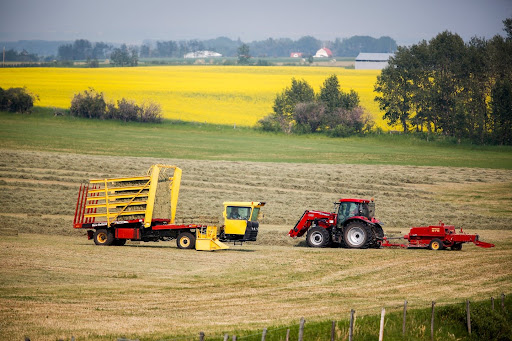
Near Cremona, Alberta, a farmer loads hay bales onto a wagon as a canola field stretches out behind him, while wildfire smoke casts a hazy layer over the scene. THE CANADIAN PRESS/Jeff McIntosh
China has imposed steep temporary anti-dumping duties on Canadian canola imports, sharply intensifying tensions between the two nations. The Chinese Ministry of Commerce announced on Tuesday that starting Thursday, Canadian canola will face a provisional duty of 75.8%, a move that could effectively shut the Chinese market to Canada’s exports.
This step follows a trade dispute that began last August when Canada placed tariffs on Chinese electric vehicles. Ottawa has condemned Beijing’s decision, with Trade Minister Maninder Sidhu and Agriculture Minister Heath MacDonald stressing Canada does not dump canola and expressing “deep disappointment” over the move. They reiterated the country’s willingness to engage in “constructive dialogue” to resolve trade issues.
The decision comes as Canada is also embroiled in tariff disputes with the United States, its largest canola meal and oil buyer. China, however, is Canada’s primary customer for canola seed, importing nearly $5 billion worth in 2024 alone. Industry leaders say the duty rate is so high it renders exports to China unviable.
“This came as a shock,” said trader Tony Tryhuk of RBC Dominion Securities. Chris Davison, president of the Canola Council of Canada, warned the market is “effectively closed” under the current duty. Analysts note that China, the world’s largest importer of canola, relies heavily on Canada for supply. Replacing these volumes quickly would be difficult, especially for products like cooking oil and animal feed.
Some experts believe Australia could benefit if it regains access to China’s market later this year, after being shut out since 2020 over plant disease concerns. But fully replacing Canadian supply would be challenging without a major drop in demand.
China claims its investigation found Canada’s canola industry received significant government subsidies, creating unfair competition. Canada and its industry reject these accusations, suggesting political factors may be driving the decision. The announcement caused November canola futures to fall by about $30 to $650.30 per metric ton.
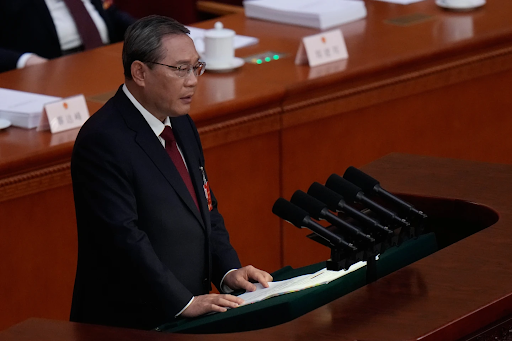
While this is only a preliminary ruling, a final decision could maintain, reduce, or overturn the duty. The development contrasts sharply with recent diplomatic exchanges in June, when Chinese Premier Li Qiang told Canadian Prime Minister Mark Carney there were no deep-rooted conflicts between the nations.
China has also launched anti-dumping investigations into other Canadian products, including pea starch, and has placed provisional duties on halogenated butyl rubber.
Canadian farmers, about to begin harvest, now face falling prices due to the announcement and an expected bumper crop. “It’s going to hurt farmers,” said Rick White, president of the Canadian Canola Growers Association. Market players remain unsure whether this is a negotiation tactic or a long-term policy shift, but the uncertainty is already weighing heavily on the canola trade.