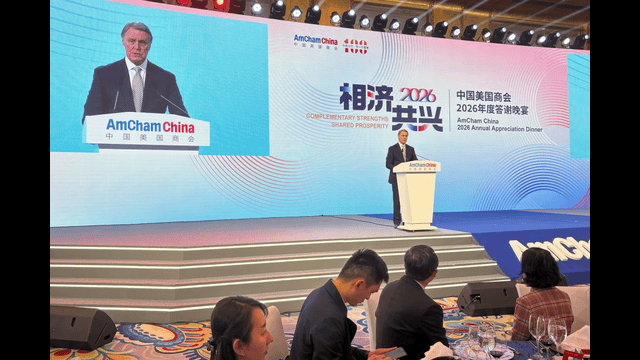
U.S. ambassador to China David Perdue speaks during an AmCham event in Beijing, Thursday, Jan 29, 2025.
The United States has raised fresh concerns over China’s expanding industrial power.
Washington fears China’s manufacturing dominance could reshape global trade unfairly.
The warning comes as both nations try to stabilize a tense economic relationship.
Speaking in Beijing on Thursday, the top U.S. envoy urged balance.
He called for trade that is fair, reciprocal, and sustainable.
His remarks highlighted growing unease across Western economies.
A Direct Message From Washington
U.S. Ambassador to China David Perdue addressed business and government leaders.
He spoke at the annual American Chamber of Commerce dinner.
The setting reflected deep commercial ties between the two nations.
Perdue acknowledged China’s success as a manufacturing powerhouse.
He said the achievement deserved recognition.
However, he warned that unchecked growth could hurt others.
Concerns Over Global Impact
The ambassador pointed to projections showing China’s manufacturing dominance expanding further.
Such growth, he said, threatens factories and jobs worldwide.
European nations share similar fears.
“This is not healthy for the rest of the world,” Perdue stated.
He emphasized that global trade needs balance.
Overconcentration in one country risks long-term instability.
Trump’s Trade Strategy Shapes Policy
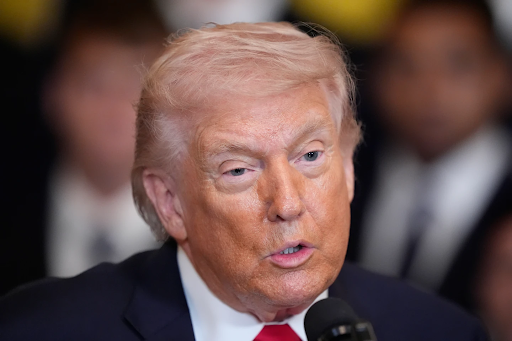
Perdue was appointed by President Donald Trump.
Trump has taken a tough stance on trade.
His administration imposed tariffs on Chinese imports.
The goal was to revive U.S. manufacturing.
The policy aimed to bring factory jobs back home.
Several other countries were also targeted.
China responded swiftly with its own tariffs.
This triggered a prolonged trade dispute.
Both sides escalated duties in rapid succession.
From Tariff War to Temporary Calm
The tit-for-tat measures sent tariffs soaring.
Global markets reacted with uncertainty.
Businesses faced rising costs and disrupted supply chains.
Eventually, both governments sought breathing space.
They agreed to a series of 90-day truces.
These pauses helped reopen dialogue.
In late October, progress followed.
Trump met President Xi Jinping in South Korea.
Both leaders agreed to a one-year pause in new tariffs.
Room for Difficult Conversations
Perdue described the pause as essential.
He said it created space for serious negotiations.
Many issues remain complex and unresolved.
Trade barriers remain a key concern.
Perdue argued China benefited greatly from free trade.
Meanwhile, U.S. firms faced restricted access to Chinese markets.
He cited regulatory hurdles and unequal treatment.
Such barriers, he said, undermine true reciprocity.
Call for Fair and Reciprocal Trade
The ambassador stressed Washington’s position clearly.
“America’s not looking for a trade war,” he said.
The U.S. wants fair and free trade instead.
Reciprocity remains the core demand.
U.S. officials want equal market access.
They also seek predictable rules for businesses.
Diplomatic Engagement Continues
Despite tensions, diplomacy remains active.
Perdue confirmed preparations for high-level visits.
Trump is expected to visit China in 2026.
President Xi is also likely to visit the U.S. this year.
Trump has mentioned an April trip to China.
However, no dates have been officially confirmed.
A Delicate Economic Balance
China manufacturing dominance continues to shape global debate.
The issue goes beyond tariffs and trade figures.
It touches jobs, supply chains, and economic security.
For now, both sides appear committed to dialogue.
Whether concerns turn into reforms remains uncertain.
The world will be watching the next moves closely.