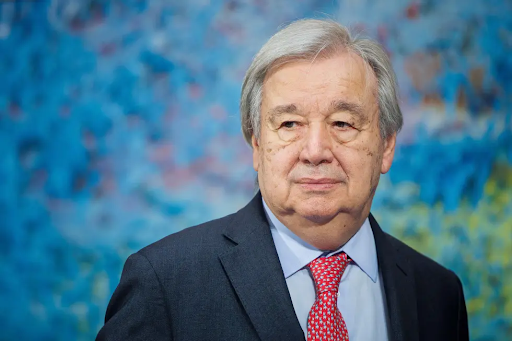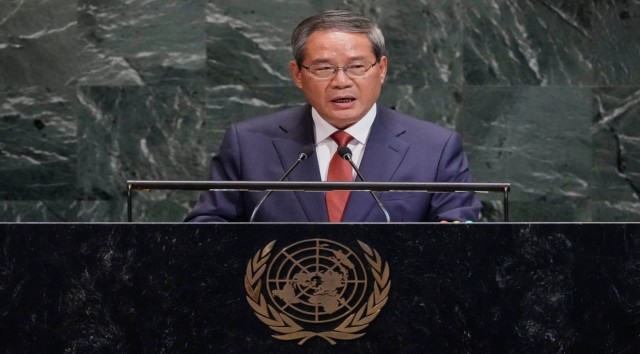
China’s Premier Li Qiang addresses the 80th session of the United Nations General Assembly, Friday, 26, 2025.
China’s second-in-command, Premier Li Qiang, stepped into the global spotlight at the United Nations, delivering a speech that reflected Beijing’s growing concerns over unilateralism and global disorder. His remarks, though not policy-heavy, marked his most visible appearance on the world stage since his promotion more than two years ago.
Li, considered China’s No. 2 leader after President Xi Jinping, stressed cooperation, multilateralism, and respect for sovereignty. Without directly naming the United States, his words echoed long-standing Chinese criticism of U.S. policies, especially those tied to former President Donald Trump’s administration.
China’s Premier Warns of Rising Division
Li Qiang used strong language to warn against the return of “Cold War mentality” and unilateral dominance. He stated that history shows dangerous consequences when “might dictates right,” suggesting the world risks deeper division and regression if such trends continue.
China, he emphasized, sees itself as a defender of global order, calling for dialogue instead of confrontation. His remarks resonated at a time when China and the United States are attempting to stabilize relations, strained by disputes over trade, technology, and tariffs.
A Carefully Worded Global Debut
Unlike Xi Jinping, who addressed the UN during the pandemic via video, Li’s live speech was symbolic. It suggested Beijing’s intention to showcase him as a strong international voice.
At 66, Li has long been seen as a loyalist to Xi but has carved out influence by overseeing economic policies. His address was filled with imagery rooted in Chinese culture. He described arriving at the UN headquarters and reflecting on the sight of flags, sculptures, and staff of diverse backgrounds. He said these images embodied “peace, progress, and development,” inspiring nations to work together.
Multilateralism at the Core of China’s Message
China often uses the United Nations as a platform to counterbalance U.S. dominance. Li reaffirmed this stance, presenting multilateralism and cooperation as the foundation for peace and growth.
Still, Beijing’s own record often clashes with this rhetoric. From its repression of Uyghurs in Xinjiang to its policies in Hong Kong and Taiwan, China’s internal actions raise questions about the consistency of its message.
Even so, Li doubled down on opposing protectionism and tariffs, noting that such measures “erect walls and barriers” that harm global trade. The remark was a thinly veiled criticism of Trump-era policies, including tariffs on Chinese goods.
Sharp Messages Without Naming the U.S.
Li’s speech avoided directly mentioning the “United States,” a diplomatic gesture in itself. Yet, his pointed phrases clearly addressed U.S.-China tensions.
Among his strongest lines were:
- “Persisting in camp-based confrontation or willful resort to force only drives peace further away.”
- “Obsession with civilizational superiority only breeds more division and confrontation.”
- “Solidarity lifts everyone up while division drags all down.”
These statements reinforced China’s message that unilateralism threatens global security.
Beijing’s Balancing Act on the World Stage
Li’s remarks also carried domestic symbolism. Earlier this year, his address to China’s National People’s Congress focused narrowly on economic issues. At the UN, however, his tone was broader, more assertive, and filled with cultural flourishes — a sharp contrast to his domestic image.
Xi Jinping’s decision to give Li the international spotlight signals trust in his leadership role. Unlike previous premiers who were overshadowed, Li’s loyalty to Xi ensures he remains central in China’s global diplomacy.
China Positions Itself as a Global Stabilizer
Li Qiang’s UN debut may not have introduced new policies, but it underscored China’s strategy. Beijing continues to present itself as a champion of multilateralism and a counterbalance to U.S. dominance, even as its actions sometimes contradict its words.
By warning against unilateralism and calling for unity, Li reinforced China’s narrative of being a defender of world order in turbulent times. His speech, though careful in diplomacy, made clear that China wants its voice heard more strongly in shaping global politics.