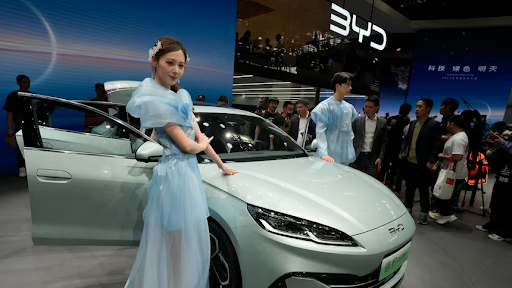
Models pose near the BYD Seal 06 Dmi, unveiled during the Auto China 2024 show in Beijing, on April 25, 2024. China's largest EV maker has been expanding rapidly into overseas markets, and could reach Canadian shores shortly following Ottawa's recent deal with Beijing. (AP Photo)
Canada is preparing to welcome Chinese-made electric vehicles, as Prime Minister Mark Carney lowers the tariff on imports from 100% to six per cent. The move is aimed at boosting affordability, expanding consumer choice, and supporting Canada’s emissions reduction goals.
A Growing EV Market
China has shaken up the global EV landscape with over 100 brands, though 15 dominate the market, including BYD, Geely, Chery, MG, and Tesla, which also manufactures some models in China. Last year, BYD surpassed Tesla as the world’s top EV seller.
Canada will initially allow up to 49,000 Chinese EVs per year, less than three per cent of the country’s total car market, gradually rising to around 70,000 over five years. Prior to this tariff rollback, Polestar, Volvo, and Tesla had already exported vehicles from China to Canada.
Timeline and Arrival
While exact models and timelines remain unconfirmed, analysts say new vehicles could reach Canadian ports within weeks. BYD operates its own cargo ships, potentially shortening transit times. Regulatory approvals and compliance checks remain a key step before sales can begin. Some expect arrivals as early as March or April.
Pricing Advantage
Chinese EVs are expected to undercut Canadian models by $10,000 to $15,000. BYD’s compact Seagull/Dolphin Mini starts below $30,000, appealing to first-time buyers and those looking to upgrade. Experts say this may push other automakers to reduce prices, making EVs more accessible nationwide.
Dealerships and Availability
Currently, no branded dealerships for Chinese EVs exist in Canada. However, companies like BYD have moved quickly in other markets, opening dozens of dealerships in Australia since 2022 and selling over 52,000 vehicles there. Canada could see similar rapid rollout once the market opens.
Performance and Safety
Chinese EVs have made strides in battery range and safety. Tests in extreme cold show some models, including BYD, outperforming Tesla vehicles. Safety ratings from the European New Car Assessment Programme rank models such as the BYD Seal 6 and Volvo EX90 among the safest EVs.
People charge their Tesla vehicles inside a mall in Shanghai in 2017. (Getty Images)
Security Concerns
Concerns remain over cybersecurity and connections to Chinese government-backed companies. Critics, including Opposition Leader Pierre Poilievre and Ontario Premier Doug Ford, have warned of potential risks. Experts stress the government must address these issues carefully as AI and digital features play a growing role in modern EVs.
A Turning Point for Canadian EVs
Analysts say the tariff reduction could significantly ease affordability constraints, expand choice, and accelerate Canada’s transition to electric vehicles. With demand already strong, the move is expected to reshape the Canadian EV market in the coming months.