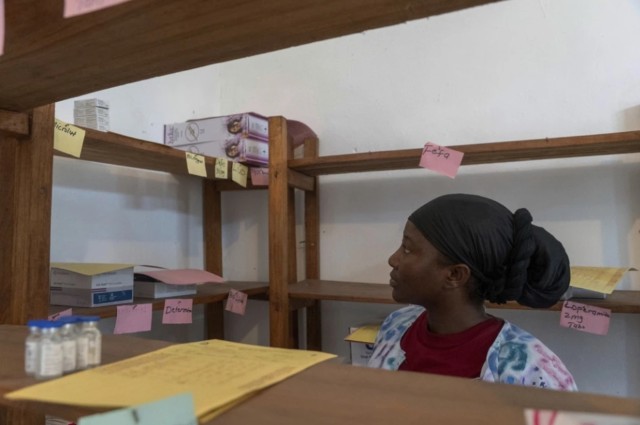
Irene A Kerkulah, the health officer in charge at the Palala Clinic, looks at an almost-empty shelf at the clinic that once held contraceptives, in Bong County, Friday, June 13, 2025.
A massive stockpile of U.S.-funded contraceptives stored in Belgium is at the center of a growing controversy. Valued at over $9 million, the supplies—meant for women in war zones and crisis areas—now face possible incineration.
The Trump administration has yet to decide the fate of these essential family planning tools. Advocates and lawmakers across the U.S. and Europe are urging officials to stop what they call a senseless and harmful move.
Supplies Meant to Protect Women’s Health
Stored in a U.S.-funded warehouse in Geel, Belgium, the stockpile includes contraceptive pills, long-acting IUDs, and implants. These supplies were designed to prevent unwanted pregnancies in high-risk regions, including refugee camps and war-torn countries.
Family planning advocates fear these life-saving resources could soon be destroyed. Reports suggest they might even be incinerated in France—a claim fueling public outrage and political pressure.
Administration’s Silence Raises Eyebrows
U.S. State Department Deputy Spokesman Tommy Pigott confirmed the issue remains unresolved. “We’re still in the process here in terms of determining the way forward,” he said on Thursday. No further details were provided, though he added an update would come “when available.”
Pigott also hinted that some of the contraceptives might include abortion-inducing drugs. That uncertainty, he said, may affect the administration’s stance.
Lawmakers Demand Action, Not Waste
Senators Jeanne Shaheen (Democrat, New Hampshire) and Lisa Murkowski (Republican, Alaska) are leading the pushback. In a joint letter to Secretary of State Marco Rubio, they slammed the potential destruction of the stockpile.
Calling it “a waste of U.S. taxpayer dollars,” they argued that the move would undermine America’s global leadership in preventing unintended pregnancies, unsafe abortions, and maternal deaths. The senators called for the supplies to be handed over to international partners or other countries for distribution.
Belgium, EU, and Aid Groups Join the Fight
Belgium has been in talks with U.S. diplomats to save the supplies, possibly by relocating them. Belgian Foreign Ministry spokesperson Florinda Baleci declined to share details, citing the sensitive nature of the discussions.
Meanwhile, the European Commission has also taken notice. “We continue to monitor the situation closely to explore the most effective solutions,” EU spokesperson Guillaume Mercier said.
Aid groups aren’t staying silent either. MSI Reproductive Choices, a U.S. nonprofit, offered to buy, repackage, and distribute the contraceptives—at their own cost. Their proposal, however, was turned down.
Doctors Without Borders condemned the potential incineration. They called it “an intentionally reckless and harmful act against women and girls everywhere.”
Global Pressure Mounts on France
France, where the supplies might be incinerated, is under increasing pressure to intervene. Charles Dallara, the grandson of a French contraception pioneer, issued a public appeal to President Emmanuel Macron.
“Do not allow France to take part in the destruction of essential health tools for millions of women,” Dallara wrote. He urged Macron not to become “an accomplice to this scandal,” emphasizing France’s “moral and historical responsibility.”
Contraceptives Still Usable—Why Destroy Them?
According to MSI, many of the contraceptives have long shelf lives—some lasting until 2031. This strengthens the argument for redistributing rather than destroying them. Experts say repurposing the supplies could save thousands of lives.
The Trump administration’s dismantling of the U.S. Agency for International Development (USAID), which oversaw the procurement, left the supplies’ future in limbo.
Now, all eyes are on Washington. Will it act to preserve a vital health resource or allow it to go up in smoke?