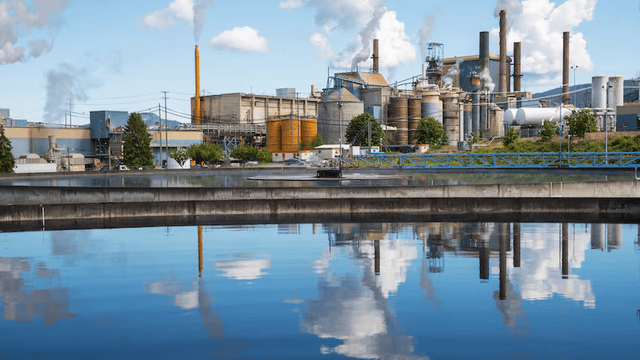
Domtar says the pulp mill in Crofton, B.C., on Vancouver Island is closing permanently, affecting around 350 employees.
Domtar has confirmed the permanent closure of its Crofton mill in British Columbia, ending decades of pulp production on Vancouver Island. The shutdown will impact around 350 employees, marking one of the region’s most significant industrial losses in recent years.
Struggles Behind the Crofton Mill Closure
In its announcement, Domtar said the Crofton pulp mill had faced long-term challenges, including rising operational costs and shrinking profit margins. The company highlighted poor global pulp pricing and limited access to affordable fibre in B.C. as the main reasons for the decision.
Domtar’s paper and packaging president, Steve Henry, praised employees for their efforts over the past 18 months. He said staff worked tirelessly to reduce costs and improve efficiency but added that the market conditions still made the mill unsustainable.
Last year, Domtar halted paper production at the same site, affecting 75 workers. That suspension has now evolved into a full-site closure.
What Happens Next for the Crofton Site
Domtar says full operations at the Crofton mill will stop on December 15. However, many employees will continue working into early 2026 to support decommissioning, site maintenance, and compliance requirements.
A small number will remain until February, and others until April, depending on their roles.
Domtar spokesperson Chris Stoicheff said the company plans to maintain the site under environmental regulations while exploring future uses. Domtar still operates three other pulp mills in British Columbia.
‘Devastating News’: Local Leaders React
The shutdown hit the community of North Cowichan hard. Mayor Rob Douglas described the closure as “devastating,” especially as families head into the holiday season.
“These are people with mortgages, families to support, and bills to pay,” he said.
Douglas added that the mill contributed an estimated $5 million in annual property taxes, a loss that will create immediate pressures on municipal services. Local businesses that relied on mill traffic and economic activity will also face a financial blow.
Political Fallout: Opposition Calls for Accountability
The B.C. Conservatives issued a strong statement, demanding the resignation of Forests Minister Ravi Parmar.
They argued that the Crofton mill closure demonstrates what they call the collapse of B.C.’s coastal forest sector. The statement blamed “regulatory uncertainty, slow permitting, and policy failures” for pushing investment out of the province.
The Opposition recommended several actions, including:
- Faster forest-sector permitting
- Workforce training programs
- Addressing trade barriers and foreign tariffs
Forests Minister Responds: ‘Gut-Punching News’
Forests Minister Ravi Parmar said the announcement was heartbreaking for Crofton workers. He acknowledged the sector’s long-standing challenges but said the issues were driven largely by global market conditions and low pulp prices.
Parmar noted that the forestry industry has followed a “boom-and-bust” pattern for decades and stressed the need for long-term stabilization and transformation.
He also said there are currently few logging permits awaiting approval, primarily because low lumber prices and U.S. tariffs have discouraged production.
Larger Challenges Facing B.C.’s Forestry Sector
The Crofton mill closure adds to a series of shutdowns across British Columbia tied to the province’s shrinking fibre supply, international tariffs, market volatility, and environmental restrictions.
Both provincial and federal governments recently formed a working group aimed at supporting the struggling forestry sector. However, Parmar emphasized that there is no simple solution to the industry’s ongoing crisis.
A Community Braces for Change
With Domtar’s permanent closure now confirmed, Crofton and the wider Cowichan Valley face an uncertain economic future. Workers, families, and local businesses must now navigate job losses, reduced municipal revenue, and a major industrial shift.
Yet Domtar says it remains open to exploring new opportunities for the Crofton site—offering a small glimmer of hope as the community absorbs the impact of the mill’s final chapter.