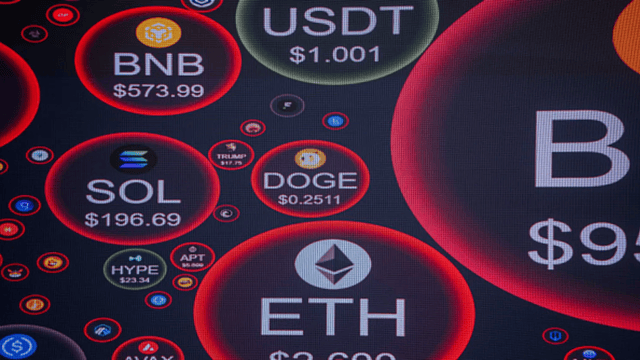
A screen at the Crypto Panda store in Hong Kong shows the latest prices of different cryptocurrencies in U.S. dollars. Photo Credit: Lam Yik | Bloomberg | Getty Images
The cryptocurrency market stumbled into August, with major digital coins taking a hit after former U.S. President Donald Trump announced a new wave of tariffs. These revised “reciprocal” tariffs, targeting multiple countries, sparked fear among investors, who quickly shifted their focus away from high-risk assets.
On Friday, Bitcoin's price dropped 3%, landing at $113,231.41. Ethereum fell even further, losing 6% of its value, while Solana slipped by 5%. These sharp declines set off a chain reaction of long liquidations. That means many traders were forced to sell off their holdings at market prices to cover their debts, adding more pressure to already falling prices.
According to data from CoinGlass, Bitcoin saw $228 million in liquidations over the past 24 hours. Ethereum faced even more — about $262 million — as investors rushed to exit positions and avoid further losses.
Stocks tied to the crypto industry also took a hit. Coinbase, one of the most prominent crypto exchanges, led the downturn with a 16% plunge after releasing an underwhelming second-quarter earnings report. Other related companies didn’t fare much better. Circle dropped by 8.4%, Galaxy Digital by 5.4%, and Bitmine Immersion, which manages Ethereum reserves, tumbled by 7.4%. MicroStrategy — known for holding large amounts of Bitcoin — saw its shares dip by 8.7%.
This sudden drop in both cryptocurrencies and crypto-related stocks came right after Trump’s announcement of new tariffs ranging from 10% to 41%. These policy changes have fueled concerns about rising inflation and whether the Federal Reserve will still have room to cut interest rates in the future. Whenever the market adopts a “risk-off” mood, investors tend to pull out of volatile assets like crypto and move toward safer options.
Despite the drop, some market experts remain optimistic. Ben Kurland, CEO of the crypto analysis firm DYOR, believes this isn't a sign of panic but rather a natural breather. “After running red hot in July, this is a healthy strategic cooldown,” he said. “Markets aren’t reacting to a crisis; they’re responding to the lack of one. With no new major events in sight, capital is simply shifting away from speculation for now.”
Just a few days ago, things looked much rosier for crypto. July had been a strong month, with Bitcoin up by 8% and Ethereum soaring 49%, according to Coin Metrics. Ethereum exchange-traded funds (ETFs) saw more than $5 billion in inflows in July, with only a single day of outflows — $1.8 million on July 2. This pushed total Ethereum ETF inflows to $9.64 billion to date. In contrast, Bitcoin ETFs experienced $114 million in outflows on the last day of July, but still managed to bring in nearly $6 billion for the month, contributing to a total of $55 billion so far.
With August typically known for lighter trading and unpredictable swings, investors might be in for a bumpy ride. As Trump’s tariffs shake confidence and global uncertainties rise, the crypto market may face continued turbulence — at least until the next big shift in the economic landscape.