A dearth of foreign currency has seen a steep decline Cuba's medical services and prevention programs such as mosquito fumigation. medicalxpress
Cuba is confronting a fast-spreading chikungunya outbreak at a time when the island is already battling severe shortages of food, clean water, fuel and essential medicines. The health emergency has intensified the daily hardships faced by millions, leaving vulnerable residents with little relief from the painful mosquito-borne illness.
Eighty-one-year-old Pilar Alcantara lies almost motionless in her Old Havana home. She says everything hurts. She cannot walk. She also lives alone. Like many Cubans, she can only wait for the fever and joint pain to subside. Treatment options are limited. Pharmacies remain empty.
A Rapidly Expanding Outbreak
The virus first appeared in Matanzas province in July. Within weeks, it spread to all 15 provinces, affecting communities across the island’s 9.7 million residents. Health officials say the situation worsened sharply in recent days.
Francisco Durán, the national head of epidemiology, reported that more than 47,000 new chikungunya cases were confirmed this week—twice the number recorded the week before. Nearly one-third of the population has contracted chikungunya or dengue in recent weeks, he said.
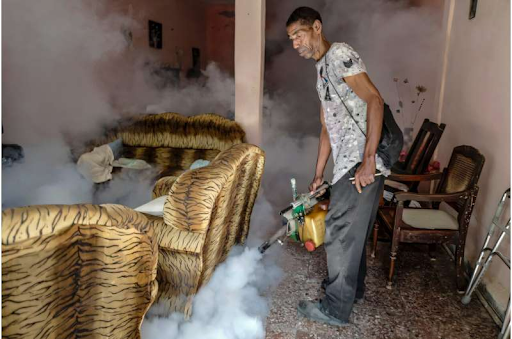
Residents describe the scale as overwhelming. “Everyone here has gotten it,” said 74-year-old Eva Cristina Quiroga, standing outside her building in Havana as workers carried out mosquito fumigation.
Pilar Alcantara, 81, is one of thousands of Cubans afflicted by a chikungunya outbreak.
Medicines Hard to Find
Basic painkillers remain scarce. Many patients can’t even find acetaminophen to reduce fever or ease pain. “You can’t even buy chicken,” said 61-year-old Fidela Freire, who is enduring the illness with no medication and very little food.
Years of economic strain have crippled public health programs. US sanctions and the collapse of Cuba’s tourism-driven revenue after COVID-19 left the country short of foreign currency. As a result, mosquito-control operations have declined, and medical supplies have dwindled. Even routine fumigation has become inconsistent.
Growing Sanitation Challenges
Waste collection has slowed in many neighbourhoods. In Jesus Maria, a dense district in Havana, garbage piles high on street corners. Fuel shortages have grounded waste-removal trucks, leaving breeding grounds for mosquitoes everywhere.
Conditions are worse in Cuba’s eastern regions. Hurricane Melissa struck three weeks ago, damaging homes, power lines and at least 642 clinics. The destruction further weakened an already fragile health system.
A Contrast With Past Success
Cuba once prided itself on strong public health measures. The country successfully contained a major chikungunya outbreak in 2014 through rapid response and aggressive mosquito control. But this year, officials admit that the situation spiralled beyond control. They cite poor hygiene, large piles of trash and widespread water storage practices caused by unreliable tap water.
These factors created ideal conditions for mosquitoes to thrive and spread chikungunya, along with other viruses such as dengue, Zika, Oropouche and yellow fever.
Rising Hospitalizations, No Reported Deaths
The health ministry says at least 20 patients are in critical condition. Hospitals are stretched but managing. Despite the high infection rate, authorities report no deaths linked to the current outbreak.
Still, the crisis shows no sign of easing. With limited medicine, rising food insecurity and a public health system under strain, Cubans are left to endure each wave of illness with patience and resilience. The virus may be rarely fatal, but for many, the pain, uncertainty and scarcity have turned this outbreak into a defining national ordeal.