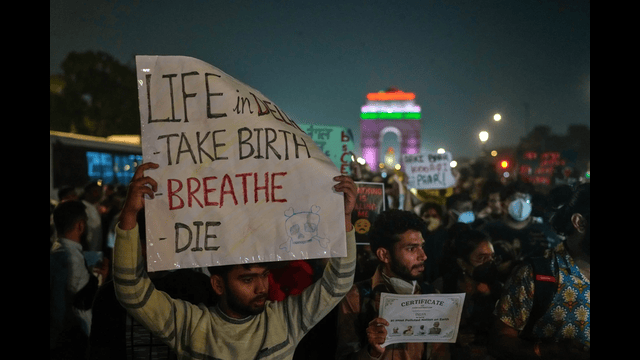
Citizens protest against what they called the government’s lack of action to combat air pollution in the capital city New Delhi, India, Sunday, Nov. 9, 2025.
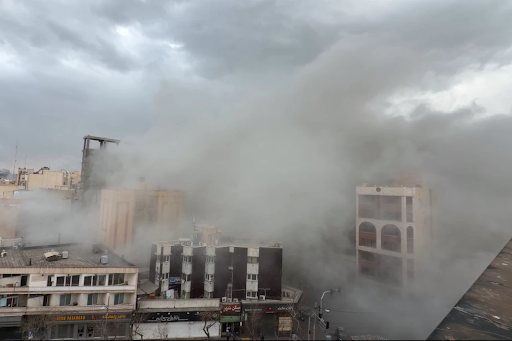
A dense, choking smog blanketed New Delhi on Monday, turning the skyline gray and the air toxic. The Indian capital’s air quality index (AQI) hit 344, a “severe” level that the World Health Organization deems dangerous to human health. Residents, tired of breathing poisoned air, took to the streets in rare public protests, demanding government action.
Delhi Turns Into a Gas Chamber
By dawn, the city was engulfed in a thick haze with a sharp, acrid smell. Commuters covered their faces with masks, while visibility dropped across several areas. For many, the polluted air triggered burning eyes, coughing, and headaches — symptoms that have become alarmingly common in Delhi’s annual smog season.
The crisis pushed hundreds of citizens, including parents, students, and environmental activists, to gather at India Gate late Sunday. Holding placards reading “I miss breathing,” they urged authorities to act decisively.
“I came here because I’m scared for our future,” said Meghna, one of the protesters. “We deserve clean air. This isn’t normal anymore.”
Police later confiscated banners and dispersed the crowd, citing a lack of protest permits.
A City on Edge Over Toxic Air
Delhi’s residents are growing increasingly frustrated. Many blame political inaction and endless blame games between state and central authorities for the recurring environmental crisis.
The city — home to over 30 million people — has become synonymous with pollution. According to IQAir, a Switzerland-based air quality database, India hosts six of the world’s ten most polluted cities, with New Delhi topping the list of polluted capitals.
Each year, as temperatures drop, smog blankets northern India. The primary culprit: crop burning in nearby states like Punjab and Haryana. Farmers set fire to crop residue to clear fields quickly for the next planting season, releasing massive amounts of smoke that drift into Delhi.
This, combined with vehicle emissions, industrial fumes, and construction dust, traps toxic particles in the air. Cooler, windless winters make the pollution linger longer — sometimes reaching 20 times the WHO’s safe limit.
Health Emergency Amid Political Stalemate
Hospitals in Delhi have reported a spike in respiratory illnesses, particularly among children and the elderly. Doctors warn that prolonged exposure could lead to chronic lung diseases, heart problems, and reduced life expectancy.
Despite repeated health warnings, authorities continue to struggle with enforcement. Short-term measures like banning construction, halting diesel generators, and restricting vehicles provide only temporary relief.
Experts argue that India needs a long-term emissions strategy, focusing on public transport, renewable energy, and sustainable farming practices. Without structural reforms, they warn, Delhi’s air will remain hazardous every winter.
Citizens Demand Accountability
This year’s protests signal a shift in public sentiment. Many Delhiites no longer accept the smog as an unavoidable seasonal event. Parents, especially, fear for their children’s future in a city where clean air feels like a luxury.
“Our kids wear masks to school, not for viruses, but for air,” said one parent at the protest. “If this isn’t a crisis, what is?”
While government officials promise tighter pollution controls, residents remain skeptical. As one environmental activist put it, “Air pollution in Delhi isn’t just an environmental issue anymore — it’s a human rights issue.”
The Road Ahead for Delhi
Experts believe only coordinated, long-term action can rescue Delhi from its pollution trap. Measures must include reducing vehicle emissions, shifting to cleaner fuels, regulating industrial pollution, and supporting farmers with sustainable alternatives to stubble burning.
Until then, the world’s most polluted capital continues to gasp for air — with millions of citizens trapped in a cycle of toxic winters, weak policies, and fading hope for a cleaner tomorrow.