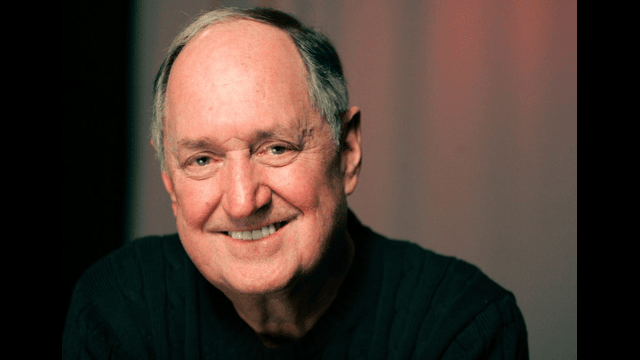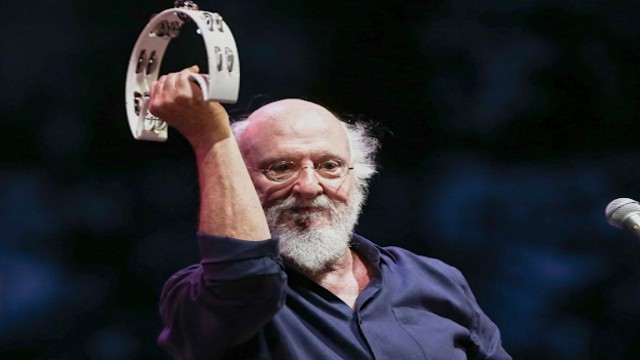
Greek singer-songwriter Dionysis Savvopoulos on stage at the Athens Concert Hall in 2020, known for his influential music and poetic lyrics. (InTime News via AP)
Dionysis Savvopoulos, one of Greece’s most influential singer-songwriters, has died at the age of 80. The family confirmed his passing on his official social media account, revealing he had been hospitalized in recent days. Savvopoulos had been battling cancer for several years.
Known for his poetic and allegorical lyrics, Savvopoulos reflected on Greek politics, identity, and society through his music. A prominent figure in the country’s cultural and intellectual life, he became an enduring voice of artistic resistance.
Voice of a Generation
Nicknamed Nionios, Savvopoulos first rose to prominence in the 1960s. His subtly revolutionary songs captured the spirit of Greece during the 1967-1974 military dictatorship. He was briefly imprisoned by the junta, and his music became anthems for young dissidents and those opposing the regime.
Prime Minister Kyriakos Mitsotakis paid tribute on social media, writing, “I don’t want to believe it, but our Dionysis is no longer here. He left a strong imprint on music, lyrics, and public style. He proved to be a wonderful songwriter and a sensitive Greek.”
Early Life and Musical Journey
Born in Thessaloniki on December 2, 1944, Savvopoulos studied law but never completed his degree. In 1963, he moved to Athens to pursue music, performing in small clubs across the capital. His early works combined Greek popular music with folk-rock, rock influences from artists like Bob Dylan and Frank Zappa, and traditional Greek sounds.
Savvopoulos wrote both the lyrics and music for most of his songs, often blending political commentary with humor and romance. His debut album, Fortigo (Truck), released in 1966, became an instant success. Its mix of folk idioms, rock influences, and social critique propelled him into the national spotlight.
He cemented his influence with The Fool’s Garden in 1969, producing some of the most recognized protest songs of the era. By the fall of the junta in 1974, Savvopoulos was regarded as one of Greece’s most original and important songwriters.
Legacy and Influence
Savvopoulos continued to innovate throughout his career. His 1972 album The Dirty Bread included The Angel Herald, inspired by Dylan’s The Wicked Messenger. In 1997, he released The Hotel, honoring artists who had influenced him, such as Nick Cave, Van Morrison, and Lucio Dalla.
Greek President Konstantinos Tassoulas described him as “a remarkable man, loved for his personality, work, and artistic contribution. Uncompromising, daring, and poetic, he questioned the world through music that shaped modern Greek culture.”
A Lifelong Performer
Savvopoulos was celebrated for his stage presence and storytelling. He performed for audiences of all ages and continued appearing at live concerts, including a summer festival near Athens earlier this year.
In early 2025, he published his autobiography, Why The Years Fly By, where he candidly discussed his battle with lung cancer, diagnosed in 2020. “Death is an unacceptable thing. But once you accept it, that’s when you begin living,” he told a television interviewer.
Savvopoulos is survived by his wife, Aspa, two sons, and two grandsons. Funeral arrangements are yet to be announced. Tributes from across Greece’s cultural and political circles have celebrated a life devoted to music, resistance, and creativity.