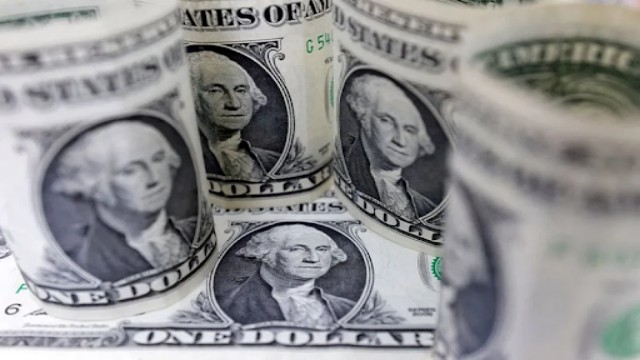
FILE PHOTO: Illustration shows U.S. Dollar banknotes · Reuters
The U.S. dollar strengthened this week, marking its sharpest gain in over a month as tensions in the Middle East rattled global markets and steered investors towards safer assets. The ongoing conflict between Israel and Iran has heightened fears of a broader war, prompting a rush for the greenback, a traditional safe haven in times of geopolitical turmoil.
Throughout the week, Israel and Iran exchanged airstrikes, intensifying their long-standing rivalry. As Tel Aviv continues to counter Tehran’s nuclear advancements, anxiety over a potential U.S. intervention has grown. Although the White House announced that President Trump would decide within two weeks whether to join Israel militarily, the possibility alone has kept financial markets on edge.
The dollar index, which tracks the U.S. dollar against six major currencies like the euro, yen, and Swiss franc, jumped by 0.45% over the week. This rally reflected investor fears about regional instability and the broader impact on the global economy.
Meanwhile, Brent Crude Oil prices, after recent surges, dropped by over 2% but stayed near their January high at around $77 per barrel. Rising oil prices have stirred fresh concerns about inflation, complicating decisions for central banks that were already grappling with slow economic growth.
Charu Chanana, chief strategist at Saxo, explained, “Higher oil prices bring fresh inflation concerns at a time when growth is slowing. Central banks are stuck — support growth or control inflation? For now, most are choosing growth, assuming oil gains won’t last.”
This week’s dip in oil prices boosted the euro and the yen, as both economies import oil. The euro rose 0.24% to $1.1527, and the yen gained 0.1% to 145.35 per dollar. Japan’s currency also found strength after inflation data came in higher than expected, suggesting more interest rate hikes may be ahead. Meeting notes from the Bank of Japan revealed policymakers were leaning toward raising rates further, a rare move for the country, where rates remain near zero.
On the other hand, the Swiss franc remained flat at 0.816 per dollar but suffered its steepest weekly loss since April after the Swiss central bank slashed interest rates to zero.
Commodity-linked currencies like the Australian and New Zealand dollars nudged up by 0.1% each. The British pound also gained 0.2%, trading at $1.349.
Despite the U.S. Federal Reserve maintaining its projection of two interest rate cuts this year, Chair Jerome Powell urged caution. His comments were interpreted as slightly “hawkish,” adding to the dollar’s strength.
In a surprise move, Norway’s central bank slashed rates by 25 basis points, causing the krone to tumble by over 1% against the dollar this week.
While geopolitical issues dominated the market mood, trade worries lingered. Investors are watching the clock as President Trump’s July tariff deadline nears. Reports suggest EU officials believe a 10% reciprocal tariff may be the minimum in any future U.S.-EU trade agreement.
In Asia, the Chinese yuan edged up slightly to 7.18 after the country’s central bank held lending rates steady, as expected.