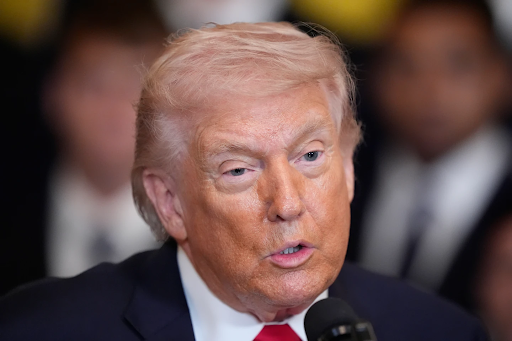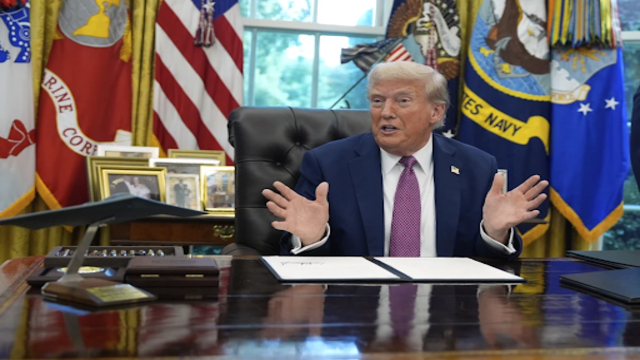
President Donald Trump speaks in the Oval Office of the White House, Friday, Sept. 5, 2025, in Washington. Associated Press
President Donald Trump has signed a new executive order aimed at protecting U.S. citizens abroad. The order gives Washington power to label countries as “state sponsors of wrongful detention.” This move introduces penalties designed to deter nations from detaining Americans or using them as bargaining chips.
The executive order mirrors the long-standing “state sponsors of terrorism” designation but focuses specifically on wrongful imprisonment and hostage-taking.
New Tool to Punish Wrongful Detention
The designation empowers the State Department to impose tough measures. Countries found guilty could face economic sanctions, visa restrictions, and limits on U.S. travel. These penalties target both governments and individuals involved in such detentions.
“Like the State Sponsor of Terrorism determination, no nation should want to end up on this list,” Secretary of State Marco Rubio warned.
The order also allows restrictions on Americans traveling to countries identified as sponsors of wrongful detention, adding another layer of deterrence.
Drawing a Line Against Hostage Diplomacy
White House officials highlighted the significance of the move.
“With this EO, you are drawing a line in the sand that U.S. citizens will not be used as bargaining chips,” said Sebastian Gorka, senior director for counterterrorism at the National Security Council.
Importantly, the order allows the U.S. to lift penalties if a nation changes its practices. This flexibility ensures that governments engaging in hostage diplomacy have a clear path to repair relations.
Which Nations Could Face Penalties?
Although officials did not immediately specify targets, insiders pointed to China, Afghanistan, Iran, and Russia as potential countries under scrutiny.
The order’s reach is not limited to recognized governments. It can also be applied to non-state groups controlling territory, ensuring that extremist organizations or militias cannot exploit Americans without consequences.
Human Rights Groups Applaud the Move
The order drew praise from advocacy organizations that campaign for Americans detained abroad.
Global Reach, a nonprofit working to secure freedom for wrongfully detained citizens, called the move a “game-changer.”
“This designation will put real teeth behind U.S. efforts to bring home detained Americans,” said CEO Mickey Bergman. He noted that the Trump Administration had already secured 72 releases in just 228 days, nearly matching the previous administration’s four-year total of 75.
Trump’s Track Record on Bringing Americans Home
Freeing jailed Americans has become a signature priority of Trump’s second term. “We’ve gotten a lot of people out and we’ll continue,” Trump declared after signing the order.
In July, the administration organized a three-nation swap that freed 10 Americans and permanent residents from Venezuela. In return, migrants deported by the U.S. were returned to El Salvador.
Earlier this year, seven more Americans wrongfully detained in Venezuela were released.
Moscow also freed a Russian-American woman jailed on treason charges after she donated $52 to a Ukraine charity. She was exchanged in a prisoner swap. In February, another swap secured the release of an American teacher imprisoned in Russia on drug charges.
A Strong Message to the World
The new order signals Washington’s determination to stand up for its citizens. It warns foreign governments that wrongful detention will carry real costs.
By creating this designation, the U.S. seeks to end the practice of holding Americans hostage for political gain. And with growing cases of wrongful imprisonment worldwide, Trump’s order is set to become a critical diplomatic tool.President Donald Trump has signed a new executive order aimed at protecting U.S. citizens abroad. The order gives Washington power to label countries as “state sponsors of wrongful detention.” This move introduces penalties designed to deter nations from detaining Americans or using them as bargaining chips.
The executive order mirrors the long-standing “state sponsors of terrorism” designation but focuses specifically on wrongful imprisonment and hostage-taking.
New Tool to Punish Wrongful Detention
The designation empowers the State Department to impose tough measures. Countries found guilty could face economic sanctions, visa restrictions, and limits on U.S. travel. These penalties target both governments and individuals involved in such detentions.
“Like the State Sponsor of Terrorism determination, no nation should want to end up on this list,” Secretary of State Marco Rubio warned.
The order also allows restrictions on Americans traveling to countries identified as sponsors of wrongful detention, adding another layer of deterrence.
Drawing a Line Against Hostage Diplomacy
White House officials highlighted the significance of the move.
“With this EO, you are drawing a line in the sand that U.S. citizens will not be used as bargaining chips,” said Sebastian Gorka, senior director for counterterrorism at the National Security Council.
Importantly, the order allows the U.S. to lift penalties if a nation changes its practices. This flexibility ensures that governments engaging in hostage diplomacy have a clear path to repair relations.
Which Nations Could Face Penalties?
Although officials did not immediately specify targets, insiders pointed to China, Afghanistan, Iran, and Russia as potential countries under scrutiny.
The order’s reach is not limited to recognized governments. It can also be applied to non-state groups controlling territory, ensuring that extremist organizations or militias cannot exploit Americans without consequences.
Human Rights Groups Applaud the Move
The order drew praise from advocacy organizations that campaign for Americans detained abroad.
Global Reach, a nonprofit working to secure freedom for wrongfully detained citizens, called the move a “game-changer.”
“This designation will put real teeth behind U.S. efforts to bring home detained Americans,” said CEO Mickey Bergman. He noted that the Trump Administration had already secured 72 releases in just 228 days, nearly matching the previous administration’s four-year total of 75.
Trump’s Track Record on Bringing Americans Home
Freeing jailed Americans has become a signature priority of Trump’s second term. “We’ve gotten a lot of people out and we’ll continue,” Trump declared after signing the order.
In July, the administration organized a three-nation swap that freed 10 Americans and permanent residents from Venezuela. In return, migrants deported by the U.S. were returned to El Salvador.
Earlier this year, seven more Americans wrongfully detained in Venezuela were released.
Moscow also freed a Russian-American woman jailed on treason charges after she donated $52 to a Ukraine charity. She was exchanged in a prisoner swap. In February, another swap secured the release of an American teacher imprisoned in Russia on drug charges.
A Strong Message to the World
The new order signals Washington’s determination to stand up for its citizens. It warns foreign governments that wrongful detention will carry real costs.
By creating this designation, the U.S. seeks to end the practice of holding Americans hostage for political gain. And with growing cases of wrongful imprisonment worldwide, Trump’s order is set to become a critical diplomatic tool.