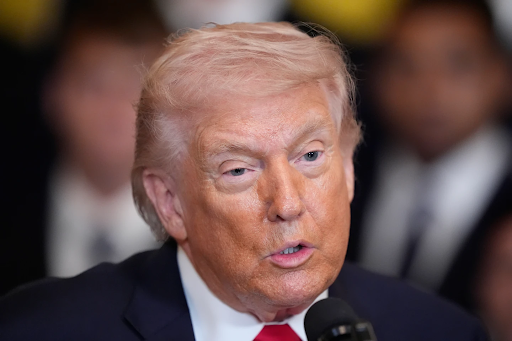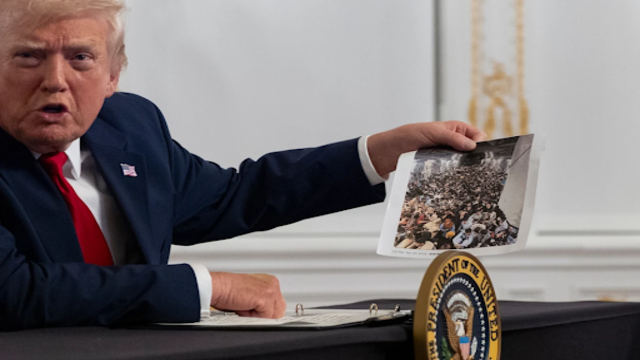
President Donald Trump holds up a photograph as he speaks to reporters after speaking to troops via video from his Mar-a-Lago estate on Thanksgiving, Thursday, Nov. 27, 2025, in Palm Beach, Fla. Associated Press
President Donald Trump ignited controversy on Thanksgiving night with a fiery social media message targeting immigration. His post declared a plan to “permanently pause migration” from poorer nations, triggering widespread debate across political and public spheres.
The statement followed the tragic shooting of two National Guard members deployed in Washington, D.C. under Trump’s orders. One of them died on Thursday, shortly before the president addressed U.S. troops via video.
Shooting Incident Fuels Trump’s Migration Push
Authorities confirmed that a 29-year-old Afghan national, who previously worked with the CIA during the Afghanistan War, has been charged in connection with the shooting. The attack intensified discussions around national security and immigration policies.
Trump seized the moment to strengthen his anti-immigration stance, linking the incident to his broader claims about threats posed by foreign nationals.
Trump’s Harsh Claims on Immigrants
In his Truth Social post, Trump alleged that “most” foreign-born U.S. residents rely on welfare and come from countries he described as “failed nations.” He further accused immigrants of arriving from prisons, mental institutions, gangs, and drug cartels, and suggested they were responsible for rising crime rates.
These claims contradict official crime data, which consistently shows that U.S. citizens commit the vast majority of crimes nationwide. Still, Trump framed immigration as a primary security challenge that demands aggressive action.
A Call for a ‘Permanent Pause on Migration’
Trump’s message centered on one clear proposal: a “permanent pause on migration” from poorer nations. This idea mirrors his earlier policies on travel bans and tighter border restrictions, but with a broader, more drastic scope.
He claimed such a pause would protect American safety and reduce national crime. Critics argue it would isolate the U.S., harm international partnerships, and violate constitutional protections. Supporters say it reflects growing voter concerns about border control and security.
Thanksgiving Speech Turns Political
Trump’s video call with U.S. troops was expected to focus on gratitude and morale. Instead, it took on a sharper political tone. He referenced the D.C. shooting, praised the National Guard, and pivoted back to immigration, reinforcing his promise to clamp down on migration from impoverished regions.
The shift from holiday message to political rallying cry drew mixed reactions. Some viewed it as insensitive; others saw it as decisive leadership in a moment of crisis.
Immigration Debate Intensifies
The vow to pause migration has revived discussions about the role of immigrants in American society. Analysts note that foreign-born residents contribute significantly to the economy, workforce, and national growth.
Civil rights groups condemned Trump’s remarks as xenophobic and misleading. Political allies defended them as necessary for safeguarding the nation. The divide signals more turbulence in the ongoing national immigration debate.
What Comes Next?
As investigations continue in the D.C. shooting case, Trump’s comments are expected to shape campaign messaging, policy proposals, and public discourse. His call for a migration pause may become a cornerstone topic in upcoming political debates.
For now, the nation remains split—between those who see immigration as a threat and those who view it as a defining strength of the United States.