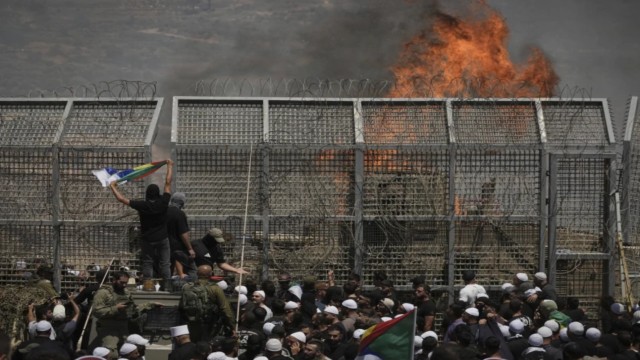
Druze from Syria and Israel protest on the Israeli-Syrian border, in Majdal Shams in the Israeli-controlled Golan Heights, Wednesday, July 16, 2025, amid the ongoing clashes between Syrian government forces and Druze armed groups in the southern Syrian city of Sweida.
A fresh ceasefire has been declared in Syria’s southern Sweida province, but tensions remain dangerously high. The Syrian government and Druze religious leaders made the joint announcement on Wednesday, following days of intense clashes and Israeli airstrikes.
However, doubts linger about the ceasefire's durability. A previous agreement collapsed within 24 hours. Despite the announcement, Israeli military strikes continued, raising fears of a broader regional conflict.
Israeli Airstrikes Hit Heart of Damascus
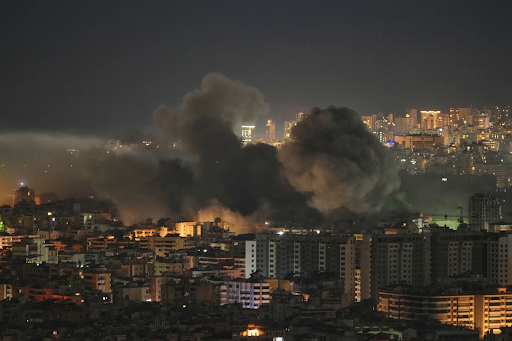
Just hours before the ceasefire news, Israel launched rare airstrikes deep into Damascus. One strike targeted Syria’s Defense Ministry headquarters, killing three and injuring 34. Another missile landed near the presidential palace.
Israel claimed the strikes were aimed at protecting Druze communities and deterring Islamist militants from approaching the Golan Heights. The Druze, a small but significant religious minority in Syria, are also present in Israel, where they are seen as loyal citizens and often serve in the military.
Israeli Defense Minister Israel Katz issued a stern warning.
“Painful blows have begun,” he posted on X, pledging continued military pressure until Syrian regime forces retreat from contested areas.
Sectarian Clashes Sparked the Crisis
The conflict erupted earlier this week after escalating violence between Sunni Bedouin tribes and Druze militias in Sweida. What started as tit-for-tat kidnappings quickly spiraled into open clashes involving Syrian government forces.
Instead of calming tensions, state troops reportedly joined attacks on civilians, triggering outrage in the Druze community.
These developments threaten Syria’s fragile post-war political transition, which began after Bashar al-Assad was ousted last December.
Interim President Calls for Unity, Blames Israel
In a televised address, Syria’s Interim President Ahmad al-Sharaa appealed for national unity. He assured Druze citizens that their rights and security were top priorities. Without naming Assad, al-Sharaa condemned Israel’s involvement as an attempt to “sow division and chaos.”
“We will not allow anyone to distort Syria’s diverse and beautiful identity,” he said. “This is a time for cooperation, not conflict.”
He added that local factions and Druze leaders have been entrusted with Sweida’s security to avoid deeper conflict.
Rising Casualties and Civilian Trauma
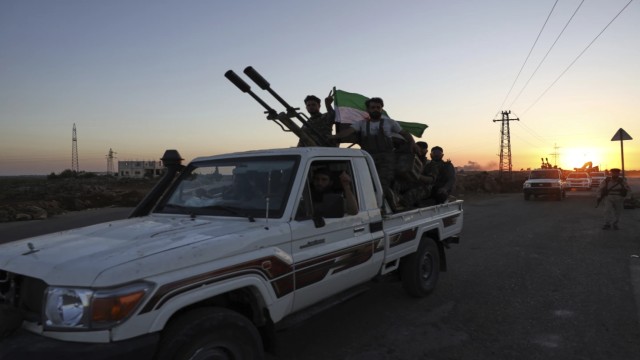
No official casualty toll has been confirmed since the violence began on Monday. However, the Syrian Observatory for Human Rights estimates over 300 people have died, including soldiers, women, and children. At least 165 of the dead were from Syria’s military and security forces.
On the ground, fear grips families. Evelyn Azzam, a 20-year-old newlywed from Jaramana, fears her husband is dead after being shot by security forces during questioning. “Since then, we have no idea what has happened,” she said, fighting back tears.
Others like her are desperately trying to reach loved ones in Sweida, where gunfire and shelling continue despite ceasefire promises.
Druze Worldwide Fear a Repeat of 2018 Massacres
Druze communities outside Syria, especially in the UAE and Golan Heights, are alarmed. Many recall the 2018 ISIS attack on Sweida when local Druze fought back with little state support. Now, they fear history is repeating.
One woman said her entire family is hiding in a basement near a Sweida hospital. “I heard them cry. I have never heard them this way before,” she said. Another Druze woman reported that a house sheltering her relatives was burned down with them inside.
Graphic Videos Fuel Anger
Social media is flooded with disturbing videos. In one, government fighters forcibly shave Druze clerics’ mustaches and trample their flags. Other clips show Druze militants beating and posing with captured soldiers.
The Syrian Observatory reported at least 27 field executions.
In response, Druze residents in the Israeli-occupied Golan Heights gathered at the border fence to protest violence against their community in Syria.
Global Concerns Grow Over Syria-Israel Crisis
U.S. Secretary of State Marco Rubio said Washington is “deeply concerned” by the rising violence. He attributed it to a “misunderstanding” and confirmed that U.S. officials are in contact with both parties to de-escalate tensions.
Meanwhile, Israel appears prepared for prolonged involvement. A full brigade has been pulled from Gaza and redeployed to the Golan Heights, preparing for “a multitude of scenarios,” according to military sources.
A Fragile Truce in a Volatile Region
While the new Syria-Druze ceasefire offers a temporary pause, its future remains uncertain. With Israel determined to keep militants at bay and Syria’s internal divisions deepening, the region stands on a knife’s edge.
The world watches closely as a fractured Syria navigates its post-Assad chapter — now shadowed by a new layer of conflict.