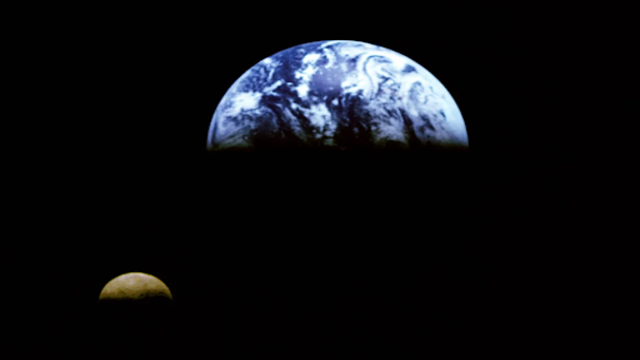
Many things affect how fast Earth spins, but the moon and ocean tides have always been among the biggest influences, according to NASA. NASA
On July 22, Earth spun faster than it usually does. This made the day one of the shortest ever recorded. Scientists didn’t expect this. Normally, the Earth’s rotation slows down a bit over time. But recent data is showing the opposite.
Why Is the Earth Spinning Faster?
Marie-Michèle Limoges, a science expert at the Laval Cosmodome, says many things can affect the Earth’s rotation. One reason is the shape of the planet. Earth isn’t a perfect round ball. It has bumps, dips, and uneven parts both on the outside and inside. These uneven areas change how the mass is spread, and that affects how fast the Earth spins.
Another factor is the Moon. The Moon pulls on Earth with its gravity. This tug slows Earth’s spin slightly. But sometimes, the Moon is farther away, so it doesn’t pull as hard. That makes the Earth spin a little faster.
The Climate Connection
Limoges also believes climate change could play a part. Melting ice and shifting water may change the weight balance across the planet. That could make Earth spin a bit faster. Since 2020, this faster spin has been noticed more often.
Earth spun faster not only on July 22 but also on July 9. Scientists expect it to happen again on August 5. The trend has continued for five years.
Why Rotation Speed Matters
So why do we care if the Earth spins faster? It’s because we measure time using very exact atomic clocks. These clocks help keep global systems like GPS and internet networks working correctly.
Usually, scientists add a leap second to adjust time when the Earth slows down. This leap second helps keep our clocks in sync with the planet. It’s like pausing time for one second to let Earth catch up.
But now, because Earth is spinning faster, we might need to do the opposite. Instead of adding a second, we may have to remove one. That would be a first.
What Could Go Wrong
Even a one-second change can cause trouble. GPS systems, telescopes, and computer servers rely on exact timing. If time shifts suddenly, these tools might stop working properly or make errors.
The Bottom Line
Scientists are watching Earth’s speed very closely. Any changes could affect important systems. They are preparing for what to do if this faster rotation continues.