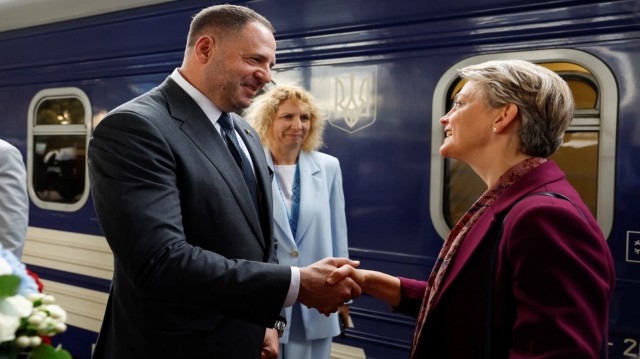
Head of the Office of the President of Ukraine Andriy Yermak, left, shakes hands with British Foreign Secretary Yvette Cooper upon her arrival at a railway station, amid Russia’s attack on Ukraine, in Kyiv, Ukraine, Friday Sept. 12, 2025.
NATO has announced a major boost to its eastern flank defense after Russian drones breached Polish airspace this week. The move comes amid rising concerns that Russia’s war in Ukraine could spill further into NATO territory.
U.S. Gen. Alexus Grynkewich, the alliance’s supreme commander in Europe, unveiled the new mission named “Eastern Sentry.” He said the plan introduces a “new defense design” to plug security gaps and reinforce communication along NATO’s eastern border with Belarus, Russia, and Ukraine.
NATO Deploys Advanced Forces and Equipment
Eastern Sentry will see new assets deployed from France, Denmark, Germany, and the U.K. French Rafale fighter jets, Danish F-16s, a frigate, and ground-based air defense systems have all been pledged.
“These resources will allow us to move forces quickly and defend wherever needed,” Grynkewich explained in Brussels.
Poland’s Defence Minister Wladyslaw Kosiniak-Kamysz praised the move as “active deterrence and readiness to defend wherever required.”
Russian Drones Heighten Fears of Escalation
The urgent reinforcement follows multiple Russia drone incursions into Poland on Wednesday. NATO scrambled jets to intercept them. While Moscow claimed the drones were diverted due to jamming and not aimed at Poland, European leaders called the violation a deliberate provocation.
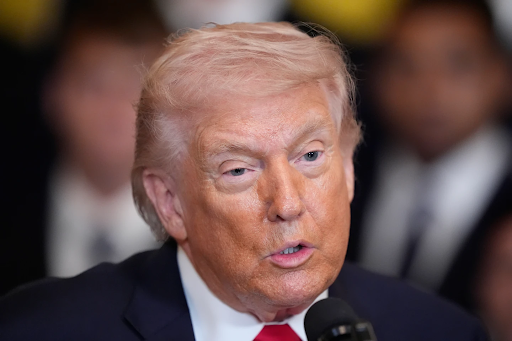
Polish Prime Minister Donald Tusk rejected suggestions from former U.S. President Donald Trump that the incursion might have been accidental. “We would also wish it was a mistake,” Tusk posted on X. “But it wasn’t. And we know it.”
Foreign Minister Radek Sikorski went further, saying anyone who calls it an accident is “spreading Russian propaganda.”
Europe Steps Up Action Against Russia
In response, European leaders have tightened sanctions and expanded military cooperation.
- France: President Emmanuel Macron pledged three Rafale jets to Poland.
- Britain: Announced new sanctions targeting Russia’s oil revenue and its “shadow fleet” of 70 vessels bypassing embargoes.
- Denmark: Agreed with Ukraine to increase joint defense production and encourage cooperation between defense industries.
“The security of Europe is our top priority. We will not yield to Russia’s intimidation,” Macron stressed.
Britain and Allies Show Solidarity With Kyiv
British Foreign Secretary Yvette Cooper visited Kyiv in her first official trip since her appointment. She condemned Russia’s surge in drone attacks, which she said increased tenfold in July compared to last year.
“The UK will not stand idly by as Putin escalates this barbaric war,” she declared.
Cooper’s trip coincided with a surprise visit by Prince Harry, who met wounded Ukrainian soldiers. Poland’s Sikorski also traveled to Kyiv to discuss Ukraine’s EU and NATO accession and anti-drone cooperation.
U.S. Reaffirms NATO Defense Commitment
At an emergency UN Security Council session, acting U.S. Ambassador Dorothy Shea said, “The United States stands by NATO allies. We will defend every inch of NATO territory.”
Poland’s Deputy Foreign Minister Marcin Bosacki called the drone incursions a “flagrant violation of international law.” He warned that Russia’s reckless actions push the region “closer to conflict than at any time in recent years.”
Russia, Belarus Conduct Joint Military Drills
Even as NATO tightens its defenses, Moscow began joint exercises with Belarus. The drills highlight close military cooperation between the two nations. Kremlin spokesperson Dmitry Peskov said peace talks are “on pause,” though Russia claims it remains open to dialogue.
Ukrainian President Volodymyr Zelenskyy dismissed any chance of concessions. “The Russian war machine will only stop when it runs out of fuel,” he said.
Ukrainian Drones Hit Russian Oil Port
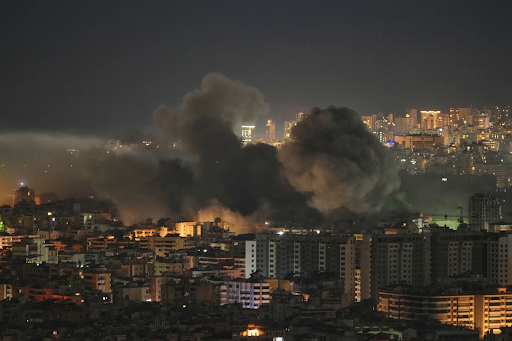
In retaliation, Ukraine launched one of its largest drone offensives yet. Russia reported downing 221 Ukrainian drones across multiple regions. A Ukrainian official said strikes targeted Russia’s biggest oil port at Primorsk, disrupting facilities tied to Moscow’s sanction-busting fleet.
The official noted Primorsk generates about $15 billion annually for Russia, making it a critical revenue source for the Kremlin’s war.