

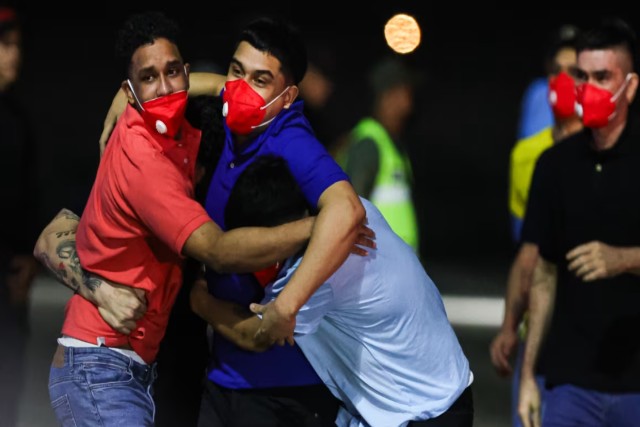
Detained Venezuelans embrace upon arrival at Simon Bolivar International Airport as part of a detainee exchange agreement between Venezuela and United States on July 18, 2025 in Caracas, Venezuela.
Venezuela has launched a formal investigation into top officials in El Salvador, including President Nayib Bukele. The probe follows allegations of serious abuse against Venezuelan migrants previously held at El Salvador’s Cecot prison after being deported from the United States.
The Venezuelan government announced the return of 252 citizens who had been imprisoned at Cecot since March. These individuals were part of a larger deal that saw their release in exchange for 10 U.S. nationals and several Venezuelan political detainees.
Allegations of Torture and Mistreatment
Attorney General Tarek William Saab revealed disturbing details during a press conference held on Monday. Saab confirmed that 123 complaints had been filed by the returnees. These include serious allegations of sexual assault, physical torture, and repeated beatings at the hands of Salvadoran prison guards.
Edited footage shown during the briefing included testimonies from former detainees. In one clip, a man described being sexually assaulted. In others, detainees showed scars, bruises, and injuries allegedly caused by pellet guns and pepper spray.
The video accounts have not yet been independently verified. Authorities have reached out to El Salvador’s government for comment but have received no official response.
El Salvador Defends Prison Practices
The Bukele administration has previously rejected claims of abuse, stating that its prisons uphold human rights standards regardless of nationality. Officials also claimed the deported Venezuelans had connections to the Tren de Aragua gang—a point heavily disputed by immigration lawyers, human rights advocates, and relatives.
Several families insist the detainees had no criminal history. They say the accusations were used to justify their detention under inhumane conditions.
Routine Checks Delay Family Reunions
Despite their release and return, most of the former detainees have not yet reunited with their families in Venezuela. Government officials report that returnees are undergoing medical exams, immigration reviews, and background checks—a routine procedure, they said, for all deportees.
Two family members told CNN they were still waiting to welcome their loved ones home. One woman expressed hope that her nephew would be handed over soon.
The detainees flew back to Venezuela on two flights from El Salvador, landing at Simón Bolívar International Airport near Caracas.
Relief and Joy Among Families
Families of the ex-detainees expressed both joy and anticipation following the news of their loved ones’ return.
Mariyin Araujo, the wife of released detainee Jerce Reyes, described her emotions as “overjoyed.”
“My two daughters are super happy. They’re anxious and can’t wait to see their father,” she said.
Blanca Martínez, whose partner Miguel Ángel Rojas was also freed, shared her excitement about reconnecting with him.
“To think that we’ll hear from him again... it excites me,” she said. “We’re happy—his son, his parents, all of us.”
A New Chapter, Ongoing Questions
While Venezuela celebrates the return of its citizens, the investigation into alleged abuse continues. The government says it’s committed to ensuring accountability for what it calls violations of human rights.
Though Venezuela itself has faced scrutiny over prison conditions, it insists that all inmates in its system are treated with dignity and fairness.
This latest episode adds tension to regional discussions about deportation policies, migrant treatment, and human rights enforcement across Latin America.













