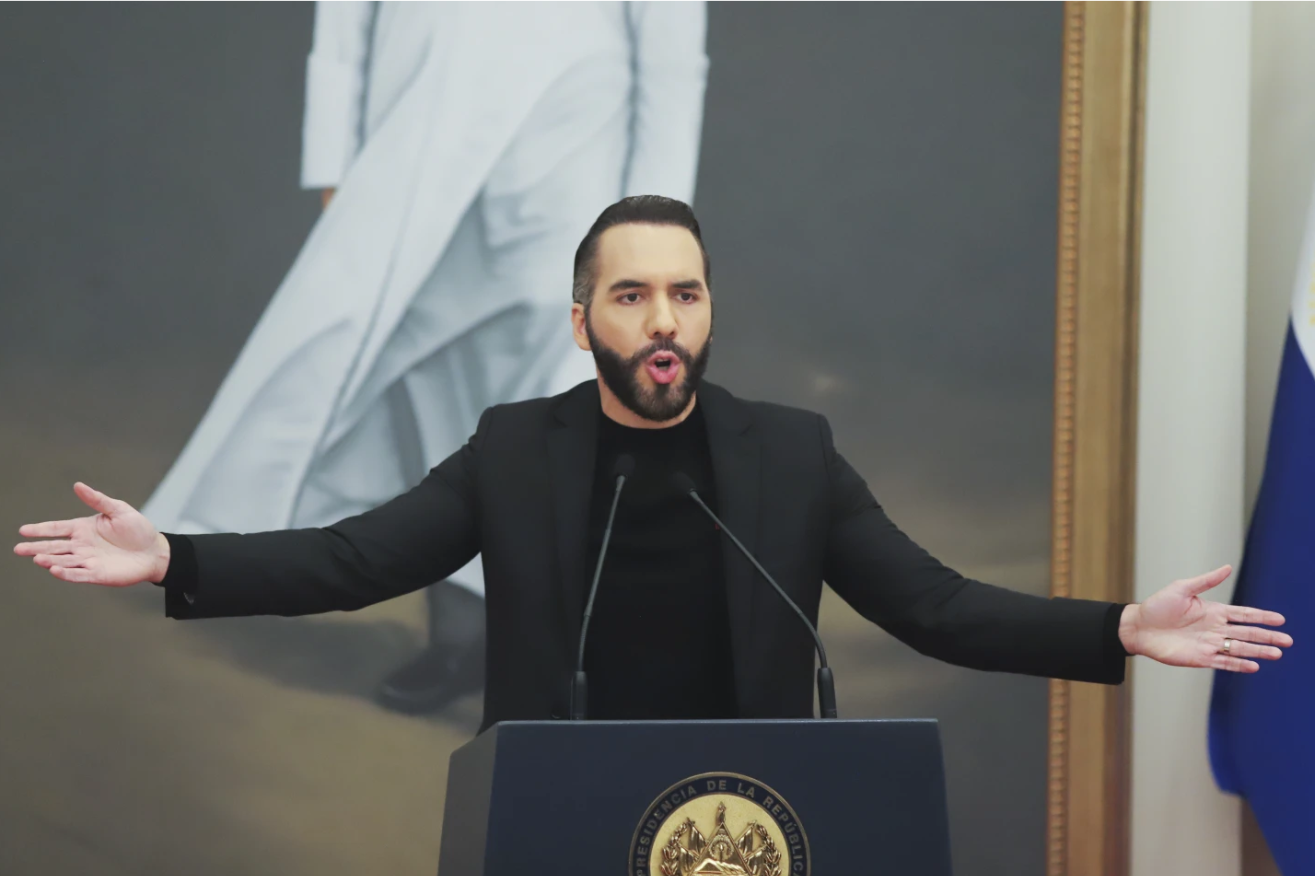
El Salvador’s President Nayib Bukele gives a press conference in San Salvador, El Salvador, Jan. 14, 2025.
In a historic and controversial move, El Salvador’s legislature has approved sweeping constitutional changes. The reforms allow for indefinite presidential reelection and extend the presidential term from five to six years.
Key Changes Passed with a Supermajority
On Thursday, lawmakers from President Nayib Bukele’s New Ideas party proposed amendments to five articles of the constitution. Among the major changes were the approval of unlimited presidential reelection and the elimination of the second-round vote in presidential elections.
Backed by a supermajority in the Legislative Assembly, the proposals were quickly passed—57 votes in favor, just three against.
Reelection Debate Sparks Democracy Concerns
This move intensifies growing fears of democratic backsliding in the country. The opposition, civil rights advocates, and global watchdogs have long warned about Bukele’s increasing grip on power.
Marcela Villatoro, from the opposition party ARENA, strongly opposed the reforms. “Democracy in El Salvador has died,” she declared during the session. She warned that indefinite reelection weakens checks and balances, encourages corruption, and limits political diversity.
Bukele’s Power Play Started in 2021
In 2021, a Congress dominated by Bukele’s allies removed Supreme Court justices who had opposed reelection. The newly installed justices swiftly ruled in favor of allowing a second consecutive term, despite a constitutional ban.
That ruling paved the way for Bukele’s 2024 landslide reelection victory. Now, with this latest amendment, the door is open for him to run indefinitely.
Term Adjustment Could Fast-Track Reelection
One of the most strategic changes proposed by lawmaker Ana Figueroa was shifting the end of Bukele’s current term. Originally set to end in June 2029, the new timeline would move it up to June 2027.
This change aligns presidential and congressional elections—and could enable Bukele to run again, for a longer six-year term, two years earlier than expected.
Figueroa justified the change, pointing out that lawmakers and mayors already have the right to run indefinitely. “The presidency was the only exception—until now,” she said.
Bukele’s Popularity Fuels the Push
Despite criticism, Bukele remains one of Latin America’s most popular leaders. He built his support on a fierce crackdown on violent street gangs, which drastically improved public safety.
Many Salvadorans credit him with restoring order, even as his methods—mass arrests, indefinite detentions, and suspended rights—spark global concern.
His self-styled image as “the world’s coolest dictator” hasn’t deterred fans. For many, his authoritarian streak is a price worth paying for peace and progress.
Critics, Arrests, and Rising Repression
Yet, the human cost is growing. Bukele’s government has recently been accused of targeting dissent. Several prominent lawyers critical of his administration were arrested, and the country’s leading human rights group has moved operations abroad, citing threats and repression.
International groups warn that Bukele’s leadership style, though effective in the short term, erodes democratic institutions.
Power to the People—or Just Power?
Assembly vice president Suecy Callejas defended the reforms, claiming the changes return control to the people. “Power has returned to the only place it truly belongs—to the Salvadoran people,” she said.
Bukele has yet to comment publicly on the amendments, but the message is clear: his hold on power is only growing stronger.
With the constitutional door now open for indefinite reelection, El Salvador enters a new and uncertain political era—one where democracy and authoritarianism may walk a very fine line.