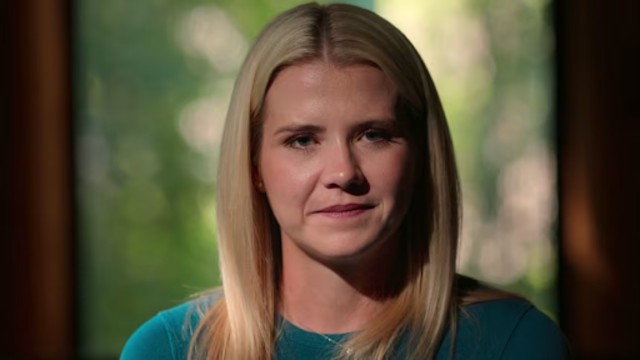
A still image from the documentary “Kidnapped: Elizabeth Smart,” premiering on Netflix January 21.
A new Netflix documentary, Kidnapped: Elizabeth Smart, premiering January 21, revisits one of America’s most widely followed kidnapping cases. Elizabeth Smart was just 14 when she was abducted from her Salt Lake City home in 2002. Nine months later, she was rescued, but her story continues to resonate across the country.
“I’m not just the girl who was kidnapped. That happened to me, but I’m so much more,” Smart told CNN’s Anderson Cooper in 2013. Now 38, she has dedicated over two decades to advocating for child safety and supporting survivors of sexual abuse.
The documentary offers fresh insights through interviews with Smart, her family, and others, including previously unseen footage. It highlights her life beyond the abduction: her family, advocacy, and efforts to educate the public about abuse prevention. Smart married Matthew Gilmour in Hawaii in 2012, after meeting him while doing missionary work in France. Together, they have three children: Chloe, James, and Olivia.
Through the Elizabeth Smart Foundation, which she established in 2011, Smart provides programs like Smart Defense and Smart Talks to empower survivors and prevent abduction and assault. She has testified before Congress and championed key legislation, including the AMBER Alert system and the Adam Walsh Act.
After experiencing an assault during a flight, Smart launched Smart Defense, focusing on practical self-defense education. She has authored two books: My Story (2013) and Where There’s Hope (2018), detailing her journey of survival and resilience.
Some of her family members chose not to participate in the documentary. “Some members of my family want to leave things in the past. That’s OK with me,” she said. For Smart, sharing her story serves a purpose: “It needs to bring some good into the world,” she explained.
The Abduction That Shocked the Nation
On June 5, 2002, Brian David Mitchell forced 14-year-old Elizabeth from her Salt Lake City bedroom. Her younger sister, Mary Katherine, pretended to be asleep as Mitchell threatened Elizabeth with a knife. Mitchell took Elizabeth to a remote mountainside camp, where his wife Wanda Barzee awaited. Smart endured sexual abuse throughout her nine-month captivity.
Authorities launched a nationwide search, drawing thousands of volunteers. A breakthrough came when Mary Katherine remembered a drifter known as “Immanuel,” who had worked at their home. On March 12, 2003, Elizabeth was found alive, walking with Mitchell and Barzee just five miles from her home.
Mary Katherine Smart: The Key to Solving the Case
Mary Katherine’s memory was crucial in identifying Mitchell. “I was 9 years old. I missed my sister. She was my best friend,” she recalled. Her recollection eventually led to a police sketch and Elizabeth’s rescue. Today, Mary Katherine is a special education teacher pursuing certification as a Board Certified Behavior Analyst. She married John Paul O’Brien in 2020 and maintains a private life focused on her career and family.
Elizabeth Smart’s Parents: Advocates for Change
Ed and Lois Smart tirelessly led the search during Elizabeth’s disappearance, frequently appearing on media outlets. After her return, they co-authored Bringing Elizabeth Home: A Legacy of Faith and continued advocating for child safety and survivor support. Ed now works with Youth Futures Utah, supporting unhoused youth, while Lois educates and inspires through public speaking. The couple divorced in 2019, and Ed publicly shared his sexual orientation that same year.
The Kidnappers’ Fate
Elizabeth’s testimony was vital during Mitchell’s 2009–2010 trial, where she described her ordeal as “my nine months in hell.” Mitchell was convicted and sentenced to life in prison in 2011. Barzee, who cooperated with authorities against Mitchell, was released in 2018 after serving part of her sentence. Smart expressed frustration at Barzee’s release, citing the lack of compliance with mental health evaluations and risk assessments.
The Netflix documentary not only revisits a notorious crime but also celebrates Elizabeth Smart’s transformation from a victim into a resilient advocate. Her story continues to inspire survivors and families across the nation, demonstrating the power of hope, courage, and purpose.