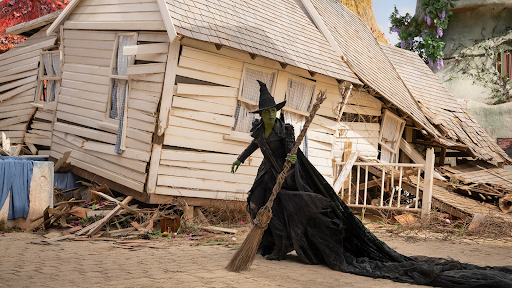
Cynthia Erivo’s Elphaba wears trousers beneath her long cloak in Wicked: For Good, directed by Jon M. Chu. Universal Pictures
Elphaba, the central witch in the new film Wicked: For Good, brings a small but meaningful change to the screen. Fans will still see her green skin and dark clothing, but she now wears trousers for the first time. The shift comes in a year that celebrates 75 years of the Peanuts comic and a long history of witch imagery shaped by old films like The Wizard of Oz.
The choice to introduce pants reflects a clear design decision by Paul Tazewell, the Oscar-winning costume designer for both Wicked films. He explains that the style change gives Elphaba a sense of movement and independence as she enters a new chapter of her story.
Building Elphaba’s Story Through Clothing
Tazewell recalls Elphaba’s earlier looks, from the pinafore she wears as a child to the fitted black coat she wears at Shiz University. He says her clothing always shows her strength. “She’s othered because of the color of her skin,” he explains. Her outfits help her push back against judgment and hold on to her own identity.
He also says he wants balance between Elphaba and Glinda. Their styles contrast, but they still complement each other. Glinda’s brighter tones and soft shapes stand next to Elphaba’s darker, sharper lines. Tazewell keeps this balance in mind as he designs every look.
Why Pants Matter
The decision to give Elphaba trousers connects to her story. As she enters life on the run, she needs more freedom to move. “She’s in exile in the forest,” Tazewell says. Her dress is worn down, so he switches her to a look that supports her survival, her confidence, and her new sense of control.
The change also connects to a longer history of women wearing pants as a sign of independence. Designers and actors across past decades helped break old norms that limited women’s clothing choices. Trousers became a symbol of strength, and Tazewell uses this same idea in Elphaba’s journey.
Creating a Powerful Presence on Screen
Even though Elphaba dresses in all black, Tazewell builds her look with rich fabrics so she never disappears on screen. Pleated textures, layered cloth, and subtle colour underlays help create depth. These elements catch light in different ways and make her stand out even beside characters in bright costumes.
He also pairs her trousers with tall boots and a wider hat brim to emphasize her boldness. These details support her growing confidence as she steps into her own power.
A Deeper Message
For Tazewell, Elphaba’s clothing holds meaning beyond style. He says Cynthia Erivo’s casting shaped much of his approach. “It’s fueled by the fact that we have a Black woman playing a role about a woman who is vilified for the color of her skin,” he explains. Her journey reflects themes of justice, identity, and moral courage.This, he believes, is why Wicked continues to reach so many viewers. The story speaks to issues of power, self-growth, and compassion—echoing real conversations about society and the ways people judge one another.