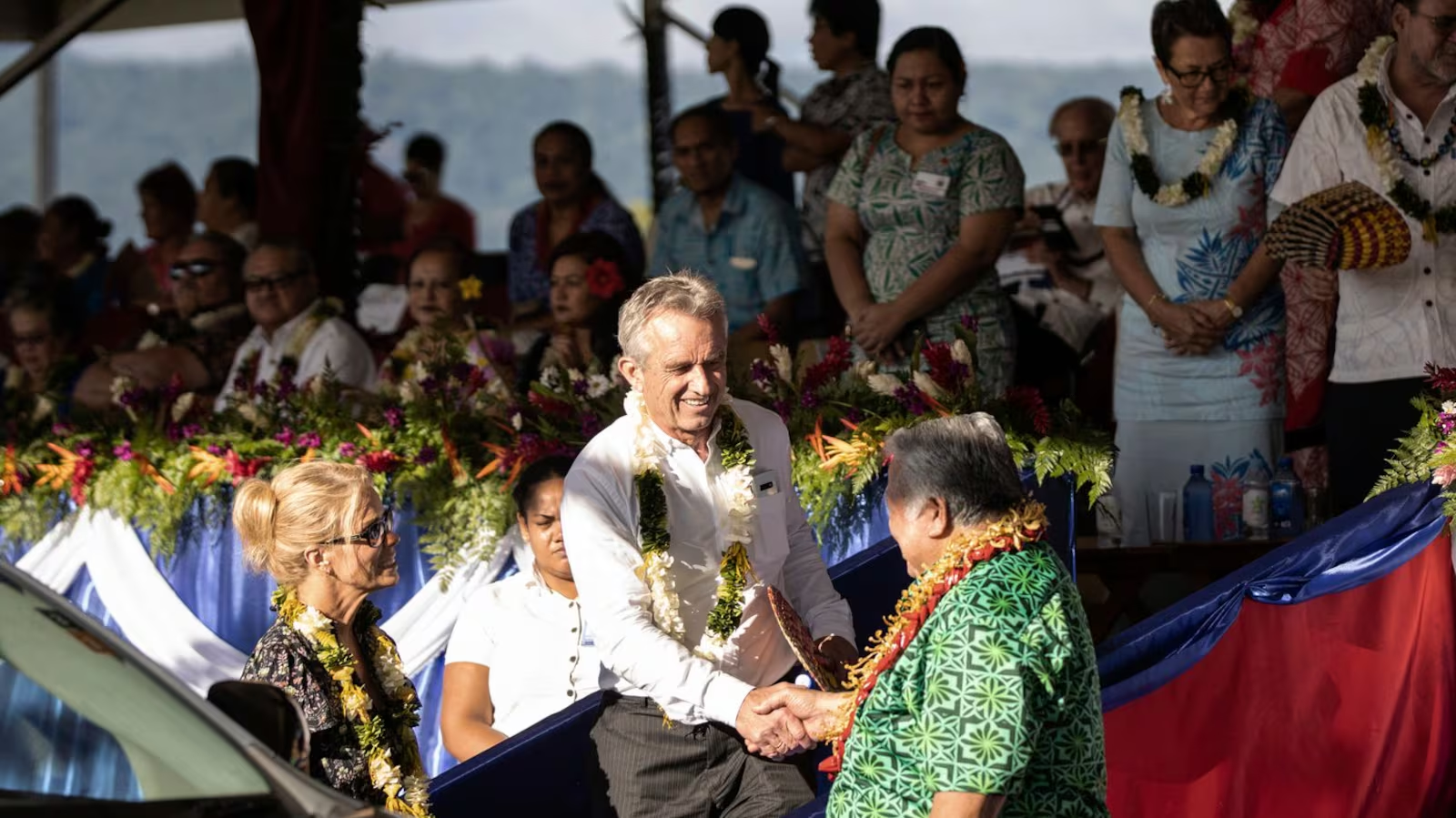
Prime Minister Tuilaepa Sailele Malielegaoi, foreground right, shakes hands with Robert F. Kennedy Jr. at the the 57th Independence Celebration in Mulinu'u, Samoa, June 1, 2019. At foreground left is Kennedy's wife, actress Cheryl Hines.(AP Photo)
Robert F. Kennedy Jr.’s long-defended claim that his 2019 visit to Samoa had “nothing to do with vaccines” is facing fresh scrutiny after newly obtained diplomatic emails surfaced, offering a deeper look into the origins and motivations behind the controversial trip. The documents, released through an open-records lawsuit, provide internal accounts suggesting vaccine concerns were central to the visit — contradicting Kennedy’s earlier Senate testimony.
Emails Paint a Different Picture
The emails, exchanged between U.S. Embassy staff, United Nations officials, and members of Kennedy’s organization Children’s Health Defense, suggest the trip was closely tied to vaccine safety discussions. Embassy communications described the visit as an effort to raise awareness about perceived health concerns surrounding vaccinations — a characterization at odds with Kennedy’s public statements.
During Senate confirmation hearings, Kennedy repeatedly insisted the Samoa trip was unrelated to vaccines. However, the newly disclosed messages outline planning conversations, coordination with Samoan officials, and references to investigating vaccine safety — details that critics say challenge the narrative he presented to lawmakers.
Political Fallout and Growing Criticism
The revelations have prompted sharp reactions from some U.S. senators, who questioned whether Kennedy misled Congress during his confirmation process. Critics argue the findings deepen concerns about his leadership in national health policy, particularly given his longstanding skepticism toward vaccines.
Kennedy, who now serves as U.S. health secretary under President Donald Trump, has reshaped federal immunization messaging and policies. The timing of the disclosures is notable, as measles outbreaks continue to spread across multiple U.S. states, raising public health alarms and reigniting debates about vaccine trust and misinformation.
The Samoa Context and Measles Outbreak
Kennedy’s trip occurred months before Samoa faced a devastating measles outbreak that infected thousands and killed 83 people, most of them young children. Samoan officials later stated that visits from high-profile vaccine critics had boosted the credibility of anti-vaccine activists during a period when vaccination rates were already falling.
Those rates had declined sharply after two infants died in 2018 from improperly prepared measles vaccines, leading to a temporary halt in the country’s immunization program. The pause created a climate of fear and confusion, conditions that health experts say made communities more vulnerable when measles returned.
Behind-the-Scenes Coordination
The emails show Kennedy’s team reaching out to Samoan leaders months before the visit, including efforts to secure meetings with the prime minister and health officials. A U.S. Embassy employee reportedly helped connect Kennedy’s delegation with government representatives — a role that later drew concern from diplomatic staff.
In one communication, an embassy official noted that Kennedy’s primary purpose was to discuss vaccination issues and potential health risks from his perspective. The same official reportedly instructed the staffer involved to step back from further involvement in the trip.
Kennedy has maintained that his visit focused on introducing a medical data system and that any conversations about vaccines were incidental. He has also denied influencing immunization decisions in Samoa, stating he never advised anyone to avoid vaccination.
Experts Weigh the Impact
Public health specialists say the new disclosures raise broader questions about how influential figures shape vaccine perceptions. During the outbreak, Kennedy sent a letter to Samoa’s prime minister suggesting unproven theories about defective vaccines — a move critics argue added confusion during a national health crisis.
Researchers and policymakers emphasize that vaccination programs depend heavily on public trust. The emergence of measles cases across the United States today, alongside the renewed attention on Kennedy’s past activities, underscores the lasting impact of vaccine debates on global health efforts.
As the controversy unfolds, the newly released emails are likely to fuel ongoing political scrutiny and public discussion about transparency, accountability, and the influence of public figures on health policy — particularly at a time when infectious diseases once considered eliminated are re-emerging.