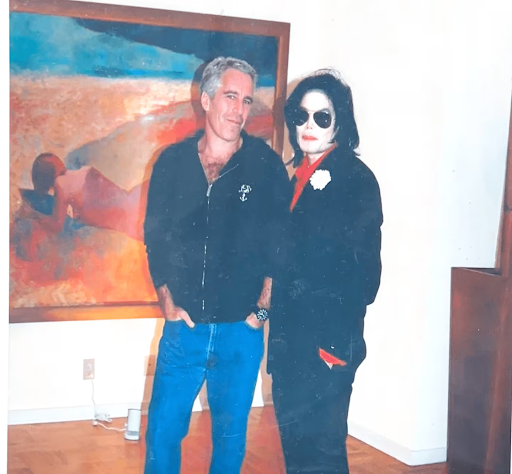
Credit: The United States Justice Department
United States Department of Justice released long-awaited Epstein records Friday. Officials published the files after years of public pressure. Many pages appeared heavily blacked out. The release disappointed critics seeking full transparency.
Photos show famous names
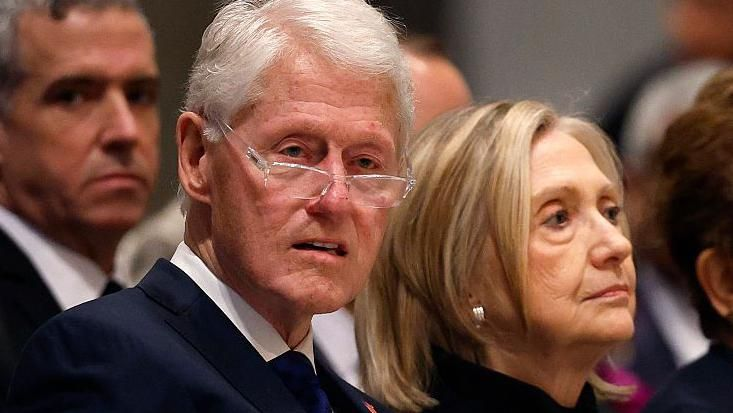
The released files include photographs from Jeffrey Epstein’s social circle. Images show former U.S. president Bill Clinton. Other photos include singer Michael Jackson and musician Mick Jagger. The photos show social gatherings, not crimes. Officials added no new allegations.
One photo shows Clinton sitting in a hot tub. Parts of the image appear blocked. Another shows him swimming beside a woman believed to be Ghislaine Maxwell. She later became Epstein’s accomplice.
Heavy redactions fuel doubt
Most documents include wide black bars. Names and details remain hidden. One file listed 254 masseuses. Every name appeared removed. A note said officials redacted names “to protect potential victim information.”
Other files contain censored images. Some show nude or partially clothed figures. Faces appear hidden. Another file shows Epstein and others posing with firearms. Officials blocked identities.
Political reaction erupts
The White House reacted quickly. Communications director Steven Cheung posted online. He wrote, “Slick Willy! @BillClinton just chillin, without a care in the world. Little did he know...” The post drew strong reactions.
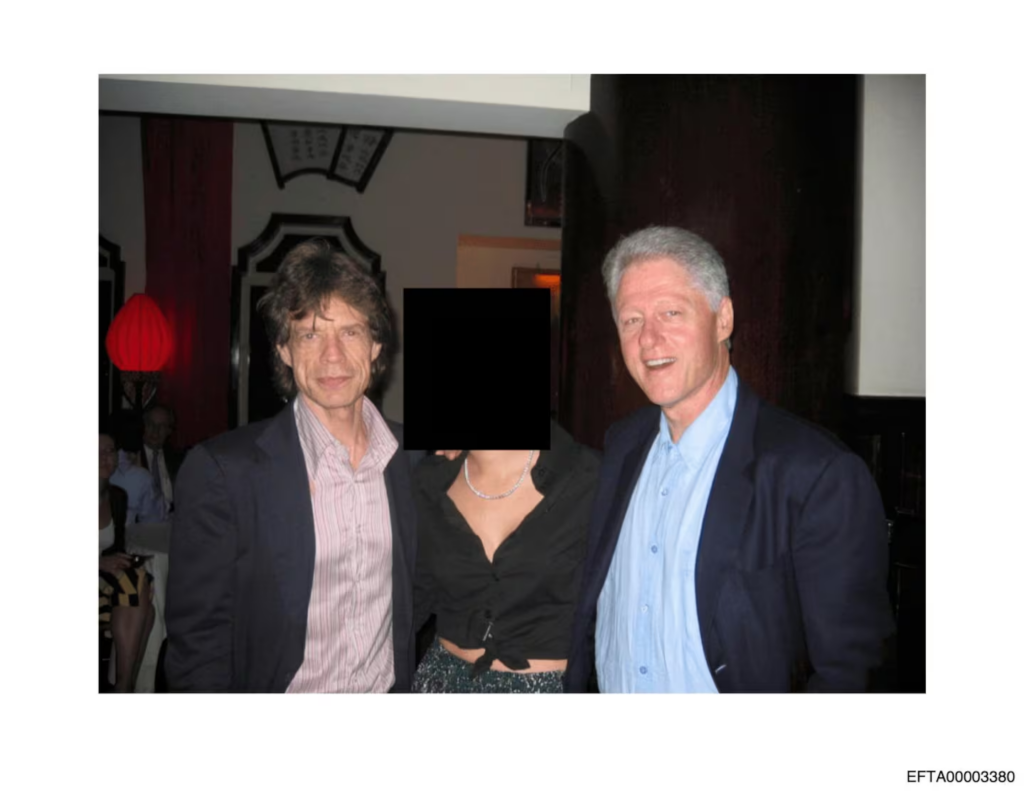
An undated photo released by the U.S. Justice Department shows Mick Jagger and former president Bill Clinton standing with an unidentified person, with parts of the image blacked out. AP
Democrats criticized the release. Senate Minority Leader Chuck Schumer spoke out. He said, “This set of heavily redacted documents released by the Department of Justice today is just a fraction of the whole body of evidence.” He added, “Simply releasing a mountain of blacked-out pages violates the spirit of transparency and the letter of the law.”
Law forced disclosure
Congress passed the Epstein Files Transparency Act last month. The law ordered full public release. It allowed redactions for victims and legal limits. Officials released the files on deadline day.
Deputy Attorney General Todd Blanche addressed the process. He said several hundred thousand documents would appear. He said more files would follow. Prosecutors kept authority to withhold active case material.
Trump’s role draws focus
President Donald Trump once moved in Epstein’s social circle. He attended events with Epstein during the 1990s. Trump later cut ties. He faces no accusations.
Trump initially opposed releasing the files. He later signed the law after pressure. On the campaign trail, he promised disclosure. After returning to office, he called the push a “Democrat hoax.”
Epstein case remains unresolved
Epstein died in a New York jail cell in 2019. Authorities ruled his death a suicide. Maxwell remains the only person convicted. She serves a 20-year sentence. She recruited underage girls for Epstein.
Many questions remain unanswered. Critics say transparency still falls short. Victims’ advocates want more clarity. Public scrutiny continues.