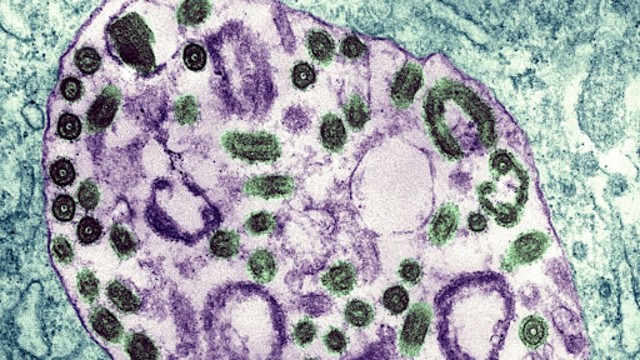
The Marburg Virus. Photographer: BSIP/Universal Images Group Editorial/Getty Images (BSIP/Universal Images Group Edit/Photographer: BSIP/Universal Ima)
Ethiopia has confirmed three deaths from the Marburg virus in the southern Omo region. The announcement has prompted immediate containment efforts and raised concern across East Africa. Health officials say the outbreak is close to the South Sudan border, increasing regional risks.
Outbreak Detected Near Border Zone
Health Minister Mekdes Daba confirmed the deaths on Monday. The declaration came three days after the government officially identified Marburg virus activity in the area. Lab tests verified the three fatalities, while investigators are examining three more deaths showing similar symptoms.
Officials detected the virus last Wednesday in the Jinka area after reports of a suspected haemorrhagic illness. Seventeen people were tested. Nine infections were confirmed before authorities announced the initial deaths.
Rapid Containment Measures Begin
Ethiopia has isolated 129 individuals who had contact with confirmed patients. Health workers are monitoring all of them around the clock. South Sudan has issued public warnings urging residents near the border to avoid contact with bodily fluids.
Daba said teams are working through a coordinated emergency response. Rapid response units are already active, and emergency centres have been set up at several administrative levels.
At the moment, Ethiopia reports no active symptomatic cases undergoing treatment.
Symptoms Prompt Early Testing Calls
Early symptoms include high fever, severe headaches, and muscle pain. Vomiting and diarrhoea often follow. In advanced cases, patients may develop internal and external bleeding.
The minister urged anyone with these symptoms to seek testing immediately. Ethiopia has strengthened its capacity by establishing local Marburg diagnostic testing at the national public health institute. This allows experts to process samples without depending entirely on outside laboratories.
International Teams Join the Effort
Specialists from the World Health Organization and the Africa CDC have arrived to bolster the response. Their support includes technical assistance, surveillance, and infection-control guidance.
The health ministry has launched a public information drive. Infographics in Amharic describing symptoms and prevention steps are being shared widely. A dedicated hotline is also available for reporting suspected cases.
High Fatality Virus Demands Strict Precautions
Marburg spreads through direct contact with infected bodily fluids or contaminated objects. The virus kills about half of all infected patients on average. In some outbreaks, fatality rates have reached 88 percent, according to WHO data.
Health workers face elevated risk when infection-control practices are not strictly followed.
East Africa Faces Series of Haemorrhagic Outbreaks
The Ethiopian outbreak adds to a growing list of haemorrhagic fever emergencies in the region. Tanzania recorded 10 deaths from Marburg earlier this year. Rwanda ended its first Marburg outbreak in December, with 15 deaths. Rwanda also tested an experimental vaccine during its response.
Africa CDC Director-General Jean Kaseya warned of potential spillover into South Sudan. He noted that the country’s fragile health system could struggle to contain cross-border transmission.