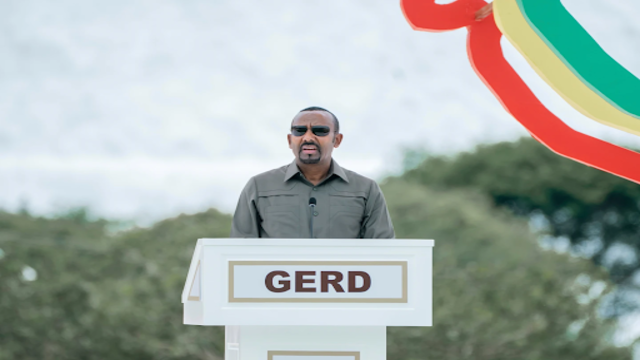
Ethiopia’s prime minister delivers a speech during an inauguration. Associated Press
Ethiopia is racing ahead with huge national projects. Prime Minister Abiy Ahmed has completed the Grand Ethiopian Renaissance Dam, unveiled plans for Africa’s largest airport, and announced ambitions for a nuclear power plant. But these bold steps come with a growing threat: rising tensions as the landlocked nation seeks access to the sea.
Ethiopia’s Ambitious Vision
Abiy celebrated Ethiopia’s rapid transformation in an October address. Addis Ababa has seen a construction boom with new parks, museums, and infrastructure. The long-awaited dam on the Nile was inaugurated in July, hailed by Abiy as a symbol of a self-sustaining future. He said it would reduce Ethiopia’s dependence on foreign aid, despite the country being one of the world’s largest aid recipients for decades.
But behind the optimism lies a complex reality. Ethiopia faces severe economic challenges, worsening regional tensions, and internal ethnic conflicts that threaten its newly built progress.
Sea Access Push Sparks Regional Tension
Ethiopia has been landlocked since Eritrea’s independence in 1993, which cut it off from the Red Sea. Regaining sea access is now a top priority for Abiy’s government. Officials insist they want a peaceful arrangement, not a military one.
But Eritrea has accused Ethiopia of preparing for war. In June, Eritrea claimed Ethiopia harbored a “long-brewing war agenda” aimed at seizing its Red Sea ports. Ethiopia fired back, accusing Eritrea of arming rebel groups inside its borders.
Experts warn the situation could escalate.
Magus Taylor of the International Crisis Group said miscalculation is possible, adding the situation “could deteriorate further in the coming months.”
The former allies — who once fought together in the war in Tigray — now face renewed distrust.
Egypt’s Pressure Over the Nile Dam
Egypt sees the Nile as its lifeline. It has fiercely opposed the Ethiopian dam, fearing reduced water access. Talks between Egypt and Ethiopia have repeatedly stalled, especially over drought-year regulations.
Since the dam’s inauguration, Egypt has intensified its warnings. In September, Cairo said it would take “all necessary measures” to protect its people’s water rights.
Egypt has strengthened ties with Ethiopia’s rivals, including Eritrea and Somalia. Somalia reacted angrily last year when Ethiopia signed a port deal with Somaliland, a territory Somalia still claims. Egypt quickly moved to deepen security cooperation with Mogadishu, signaling shifting alliances in the region.
Internal Conflicts Threaten Stability
Ethiopia’s internal landscape remains fragile. Although the war in Tigray formally ended in late 2022, new conflicts have erupted in Amhara and Oromia, the country’s two largest regions.
Militias like Fano in Amhara and the Oromo Liberation Army claim to defend their communities from federal oppression. Violence continues through massacres, kidnappings, and attacks on civilians. Aid groups report difficulty delivering supplies due to insecurity.
Tensions in Tigray are resurfacing as well. Clashes between regional forces and federal-aligned militias have broken out in southern areas. Tigray’s leaders say the federal government violated the peace deal after a drone strike hit their forces. The government now accuses Tigray of colluding with Eritrea.
Amnesty International describes the cycle of conflict as a “revolving door of injustices.”
Economic Reform Meets Deep Inequality
While Addis Ababa shines with new development, many regions feel left behind. Abiy has introduced sweeping economic reforms — floating the currency, opening banks to foreign investors, and launching a stock exchange. These moves helped secure a $3.4 billion IMF bailout last year.
But investors remain cautious due to Ethiopia’s instability and diplomatic tensions. Poverty has risen sharply: 43% of Ethiopians now live below the poverty line, up from 33% in 2016. Rising fuel and food prices, combined with heavy defense spending, have worsened hardship.
The contrast between the capital and rural areas is stark.
Taylor notes: “Abiy has a firm grip at the center, but the periphery feels ignored. They feel poor while the center is rich.”
This divide fuels further instability, making Ethiopia’s ambitious future uncertain.
The Road Ahead
Ethiopia stands at a crossroads. Its bold development plans promise transformation, but the pursuit of sea access, tensions with Eritrea and Egypt, and internal ethnic strife create dangerous pressure points.
Unless Ethiopia balances ambition with diplomacy and reconciliation, its biggest projects could be overshadowed by the threat of another war — a risk the region cannot afford.