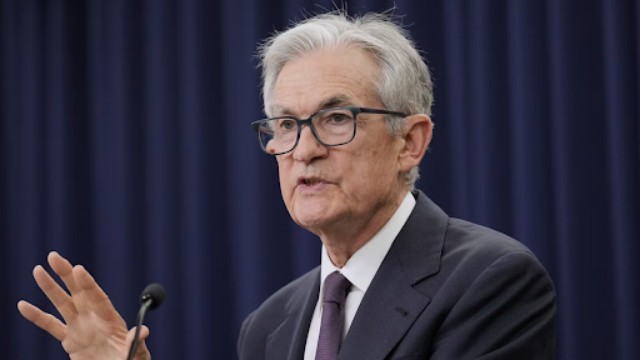
Federal Reserve Chairman Jerome Powell addresses the media during a press conference at the Federal Reserve headquarters in Washington (AP Photo/Mark Schiefelbein)
Federal Reserve Chair Jerome Powell made it clear on Tuesday that the central bank is not ready to slash interest rates just yet. Despite mounting pressure from former President Donald Trump and some Republicans, Powell said the Fed needs more time to assess how the economy is performing before making any changes.
Speaking before the House Financial Services Committee, Powell explained, “We’re in a good position to wait and gather more information about where the economy is headed.” His cautious tone directly contrasts with Trump’s growing demands for immediate rate cuts.
During the hearing, several Republican lawmakers urged Powell to lower borrowing costs at the Fed’s next meeting in late July. However, Powell stayed firm and avoided giving any specific timeline. The session was calm overall, with members from both parties appreciating Powell’s steady focus on keeping inflation under control and supporting jobs.
Trump didn’t hold back on social media, calling Powell “hardheaded” and blaming him for economic missteps. Still, Powell brushed off the criticism, saying the Fed’s only concern is delivering a strong and stable economy for the American people.
When asked why the Fed hasn't cut rates already, Powell pointed to ongoing uncertainty around inflation, especially with tariffs in play. He noted that economists still expect tariffs to push prices higher, and the Fed wants to see how that unfolds in the coming months.
Powell admitted that inflation might not rise as much as expected. If that’s the case, he said, the Fed could act sooner than planned. A sudden spike in unemployment could also trigger faster rate cuts. But when pressed about the possibility of a cut in July, Powell kept silent.
He also mentioned that the effects of tariffs on consumer prices might begin to show from June onward, with an official report due on July 15.
Rep. Josh Gottheimer, a Democrat from New Jersey, asked whether Trump’s repeated attacks might influence the Fed’s decision-making. Powell responded with composure, saying the Fed won’t be swayed by outside pressure. “We do what we think is right,” he said. “And we accept the consequences.”
The Fed’s 19-member policy committee, which Powell leads, unanimously decided last week to keep rates unchanged. However, opinions are split on future cuts: some members foresee no cuts this year, while others expect one or two.
Although Powell indicated that any inflation caused by tariffs could be temporary, he stressed the Fed’s duty is to prevent short-term price jumps from turning into long-term inflation problems.
There’s still internal debate at the Fed. While Powell has hinted that no rate cut is likely before September, two officials appointed by Trump—Michelle Bowman and Christopher Waller—believe a cut could happen as early as July. Waller is even seen as a potential successor to Powell when his term ends next May.
Others are urging caution. Beth Hammack, head of the Cleveland Fed, said interest rates might remain untouched for a while due to the uncertain economic climate.
Trump continues to push for cuts, claiming they’ll help reduce national debt payments. But Powell and his team have dismissed the idea of considering government borrowing costs in monetary policy decisions.
Meanwhile, Trump’s claims about the European Central Bank cutting rates ten times have been debunked. The ECB has made eight cuts in the past year, while the Fed has trimmed rates three times—mostly late last year.
Currently, the Fed’s rate stands around 4.3%. It paused further reductions out of concern that rising tariffs could drive up inflation. Despite these fears, inflation has remained soft. Consumer prices rose just 0.1% between April and May, suggesting that economic pressure from tariffs may not be as severe as initially expected.