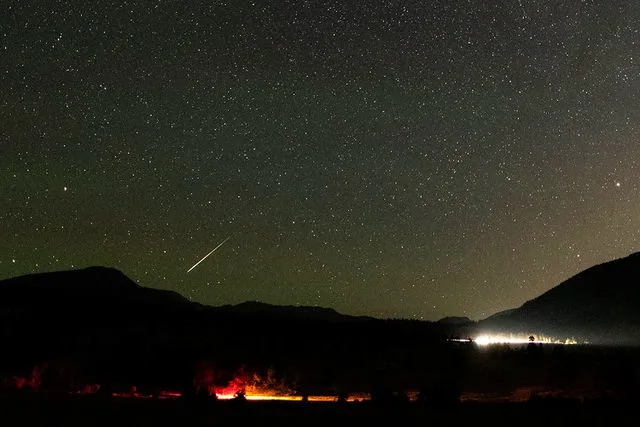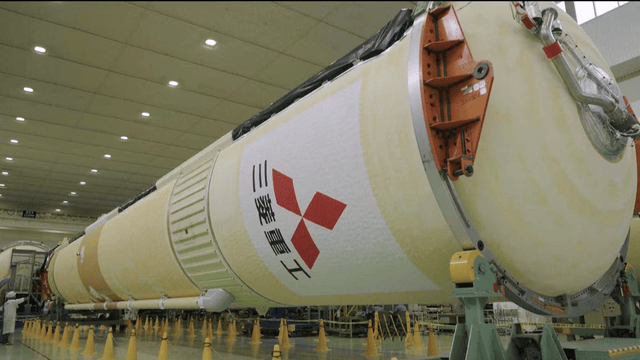
A video still shows the H2A rocket from Mitsubishi Heavy Industries launching in Tobishima, Japan, on September 25, 2024. AP
Successful Launch from Tanegashima
Japan launched a climate monitoring satellite on Sunday using its well-known H-2A rocket. This flight marked the last journey for the H-2A, which is now being replaced by a more modern and affordable rocket. The launch took place at the Tanegashima Space Center in southwestern Japan.
The rocket carried the GOSAT-GW satellite, designed to track climate-related data. About 16 minutes after liftoff, the satellite reached its planned orbit. Cheers and handshakes filled the control room as the team celebrated the success.
A Nervous Farewell
Keiji Suzuki, a senior official who has worked on the H-2A for years, shared how emotional the launch felt. “I’ve spent my entire life at work not to drop H-2A rocket,” he said. “All I can say is I’m so relieved.”
This launch was originally delayed due to electrical problems in the rocket, making Sunday’s success even more meaningful.
A Rocket with a Proud History
The H-2A first launched in 2001. Since then, it has flown 50 times with a 98% success rate. Only one launch failed—in 2003. Japan used the H-2A to send various important missions into space, including the SLIM moon lander and the famous Hayabusa2 asteroid mission.
Mitsubishi Heavy Industries has managed the rocket’s launches since 2007. With H-2A now retired, all future missions will use its successor—the H3.
New Rocket, New Goals
The H3 is already in use and has passed four straight test flights after a failed first attempt in 2023. The new rocket can carry heavier payloads and costs almost half as much to launch. Japan hopes the H3 will help it compete in the growing international satellite launch market.
Officials are also working on the Epsilon rocket, a much smaller system designed for different mission needs. These two new rockets—H3 and Epsilon—will allow Japan to offer flexible launch options for both commercial and scientific uses.
What GOSAT-GW Will Do
The new GOSAT-GW satellite will track greenhouse gases like carbon and methane. It will also gather data on sea surface temperatures and rainfall patterns. Scientists from around the world, including the U.S., will use this data.
The satellite is the third in a series designed to help researchers monitor how the Earth’s atmosphere is changing. It will begin sending useful data within a year.
Hiroshi Yamakawa, the head of Japan’s space agency, called it a touching moment. “It is a deeply emotional moment for all of us at JAXA as a developer,” he said.
Looking Ahead
As the curtain closes on the H-2A, focus shifts to the future. Engineers now plan to improve and use the H3 more widely. Japan sees reliable and affordable space travel as key for both science and national security.