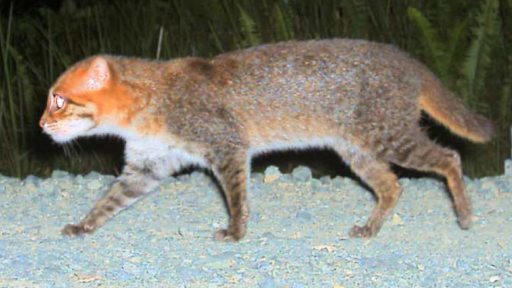
An undated photo shows a flat-headed cat, a rare wild species found in parts of Southeast Asia. CTV
Conservation workers in Thailand have confirmed the return of a rare wild cat that many believed had disappeared from the country decades ago. The flat-headed cat, one of the world’s most threatened wild felines, has been spotted again nearly 30 years after its last recorded sighting in Thailand.
Officials from Thailand’s wildlife authorities, along with the conservation group Panthera, shared the discovery on Friday. The sightings came from a recent ecological survey carried out in southern Thailand.
Camera Traps Capture Rare Evidence
Researchers began the survey last year in the Princess Sirindhorn Wildlife Sanctuary, a protected area known for its dense wetlands. Using motion-activated camera traps, the team recorded 29 separate detections of flat-headed cats.
The small wild cat, about the size of a domestic cat, has a unique appearance with round, closely set eyes and a flattened head. The last confirmed sighting in Thailand dated back to 1995, which led experts to list the species as “possibly extinct” in the country.
Signs of Hope for the Species
One video clip gave researchers special reason for optimism. The footage showed a female flat-headed cat with her cub, a rare sight for a species that usually gives birth to only one offspring at a time.
While scientists cannot yet determine how many individual cats appear in the recordings, they say the number of detections suggests a stronger presence than expected. The species does not have clear markings, which makes counting individuals difficult.
Experts Warn of Ongoing Risks
Veterinarian and researcher Kaset Sutasha from Kasetsart University welcomed the discovery but urged caution.
“The rediscovery is exciting, yet concerning at the same time,” he said, pointing to the growing isolation of the species due to broken-up habitats.
Flat-headed cats rely on wetlands such as peat swamps and freshwater mangroves. These environments prove hard for researchers to reach and have suffered heavy damage from land development and farming.
Habitat Loss Remains a Major Threat
Thailand’s peat swamp forests have shrunk over the years as land use changed. According to experts, this habitat loss has left small animal populations cut off from one another. The cats also face risks from diseases passed on by domestic animals and struggle to move between isolated areas to breed.
Worldwide, the International Union for Conservation of Nature estimates that about 2,500 adult flat-headed cats remain in the wild. The group lists the species as endangered across its range in Southeast Asia.
A Starting Point for Protection
Researchers stress that the discovery alone will not save the species. Instead, it opens the door for stronger conservation action.
“What comes after this is more important — how to enable them to live alongside us sustainably, without being threatened,” Kaset said.
The rediscovery offers rare hope but also highlights the urgent need to protect Thailand’s remaining wetlands.