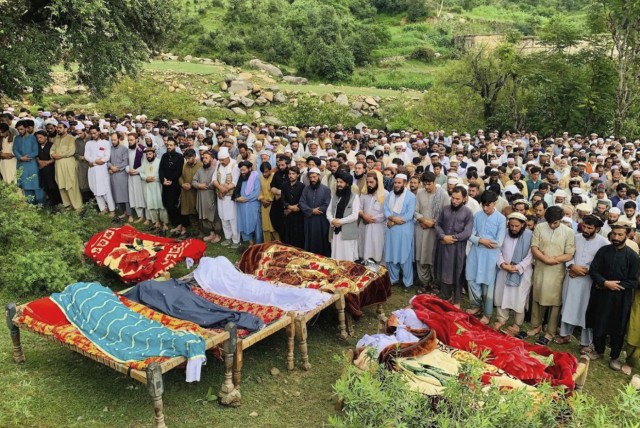
People attend funeral prayers of the victims of cloudburst incident, in Salarzai, Pakistan, Friday, Aug. 15, 2025.
Flash floods triggered by torrential rains have devastated India and Pakistan. Over 280 people have died, with many still missing. Thousands have been forced to flee their homes as rescue operations continue across both countries.
Sudden Rains Turn Deadly
The floods began after sudden cloudbursts in Indian-controlled Kashmir. Heavy rain then spread to Pakistan’s northern and northwestern regions. The intense downpours caused rivers to swell, leading to landslides and destruction.
Officials confirmed that more than 1,600 people were rescued from the affected mountainous districts. Dozens were left injured, while many remain unaccounted for.
Experts say climate change is fueling more frequent cloudbursts in the Himalayan regions of both countries.
Tragedy in Kashmir’s Remote Village
In India’s Kashmir, the Himalayan village of Chositi was one of the worst hit. At least 60 people died there, and nearly 80 remain missing. Officials fear many may have been swept away by raging waters.
More than 300 residents were rescued after a massive cloudburst triggered floods and landslides. However, search operations were halted overnight.
A local resident, Harvinder Singh, said he helped retrieve 33 bodies from the debris. Hospitals treated over 50 seriously injured victims, many pulled from mud-filled streams.
Pilgrimage Suspended Amid Disaster
Chositi lies on the route of a popular Hindu pilgrimage to a shrine at 9,500 feet altitude. The pilgrimage was suspended after floodwaters swept away the main community kitchen, vehicles, and homes.
More than 200 pilgrims were inside the kitchen when it was hit. Many were injured, while others went missing. Sneha, a pilgrim, said her husband and daughter were swept away while eating inside.
Authorities built makeshift bridges to help stranded pilgrims cross water channels. Nearly 4,000 were evacuated as earthmovers cleared boulders and debris.
Floods Claim Lives in Pakistan’s Northwest
In Pakistan, flash floods killed at least 243 people, including 157 in the Buner district. Authorities declared a state of emergency as rescuers searched for dozens of missing residents.
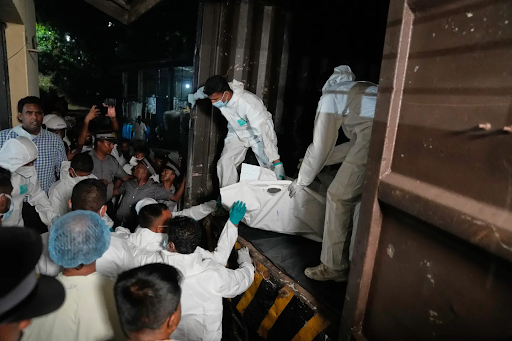
Rescue teams used helicopters and boats to reach stranded villagers. Ambulances carried more than 100 bodies to nearby hospitals.
Bilal Faizi, a provincial emergency spokesman, said 2,000 tourists trapped in Mansehra’s Siran Valley were rescued after landslides blocked roads.
Rescue Helicopter Crashes
Relief efforts suffered a setback when a helicopter carrying supplies to Bajaur crashed due to bad weather. All five onboard, including two pilots, were killed.
Prime Minister Shehbaz Sharif ordered disaster authorities to step up evacuations and ensure aid reaches remote areas.
Pakistan Faces Repeated Floods
Since June, Pakistan has reported 556 rain-related deaths, according to the National Disaster Management Authority. The northern Gilgit-Baltistan region has faced multiple floods since July.
Landslides along the Karakoram Highway disrupted travel and trade routes. The scenic region, home to major glaciers, supplies 75% of Pakistan’s stored water.
Despite warnings, many tourists continued to travel to flood-hit northern resorts this summer.
Climate Change Intensifying Rains
Pakistan’s disaster agency has issued fresh alerts for glacial lake outburst floods in the north. Tourists and locals have been urged to avoid dangerous areas.
A recent study by World Weather Attribution revealed rainfall in Pakistan was 10–15% heavier this season due to global warming.
In 2022, Pakistan endured its worst monsoon on record, which killed over 1,700 people and caused $40 billion in damages.
Rising Climate Risks for South Asia
The latest floods highlight the vulnerability of South Asia’s fragile ecosystems. Experts warn that extreme rainfall events will continue to increase unless stronger climate action is taken.
Communities in both India and Pakistan now face the challenge of rebuilding amid ongoing risks of more heavy rain.