Canada is walking a tightrope as tensions grow between Ottawa and Washington. A fresh wave of U.S. tariffs has hit Canadian industries hard, shaking the already fragile trade relationship between the two neighbours.
Former Foreign Minister Peter MacKay didn’t hold back his concern. Speaking on CTV News Channel, he called the development “bad news”—for the economy, for businesses on both sides of the border, and for the future of the trade deal between Canada, the U.S., and Mexico.
Last Friday, President Donald Trump slapped a 35% tariff on Canadian goods, singling out products that reportedly don’t align with the Canada-U.S.-Mexico Agreement (CUSMA). The U.S. administration blamed Canada for not doing enough to curb the flow of fentanyl and for retaliatory tariffs imposed by Ottawa in response to past trade actions.
But that’s not where it ends.
The White House also announced a sharp 50% tariff on semifinished copper products and confirmed it will keep duties on Canadian steel, aluminum, and vehicles. These new penalties have stirred anxiety in key sectors, particularly in industries that rely heavily on cross-border supply chains.
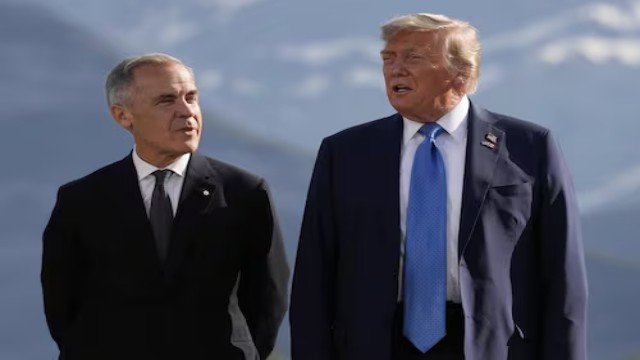
Trade Minister Dominic LeBlanc said on Sunday that he expects Prime Minister Mark Carney and President Trump to speak directly in the coming days. The hope is to cool down the situation before things get worse.
Peter MacKay believes this high-level dialogue is urgently needed. “A one-on-one between our prime minister and the president might be the only real shot we have at resolving this,” he said.
Even though about 75% of goods traded across the border still move without tariffs, MacKay pointed out that crucial industries—like steel, copper, and automobiles—are now under immense pressure. The former minister fears the financial burden could quickly hit Canadian workers and consumers.
He also offered a word of caution about the potential for the dispute to take on a personal tone. “We’ve seen before—especially with former Prime Minister Trudeau—how quickly personal politics can complicate things,” MacKay said. “And when it gets personal, Canada’s economy takes the hit.”
Trump signed the order imposing these tariffs late Thursday night. A previously discussed August 1st deadline for a potential deal came and went without progress, and so far, no clear path forward has been laid out.
For MacKay, the uncertainty is unsettling. “We’re in uncharted territory,” he said. “This feels worse than where we started. We just have to hope that Trump doesn’t go completely off-script when we’re this close to needing a solution.”
With industries rattled and negotiations stalled, Canada is left hoping that cooler heads will prevail—and that both countries can find common ground before the damage spreads any further.