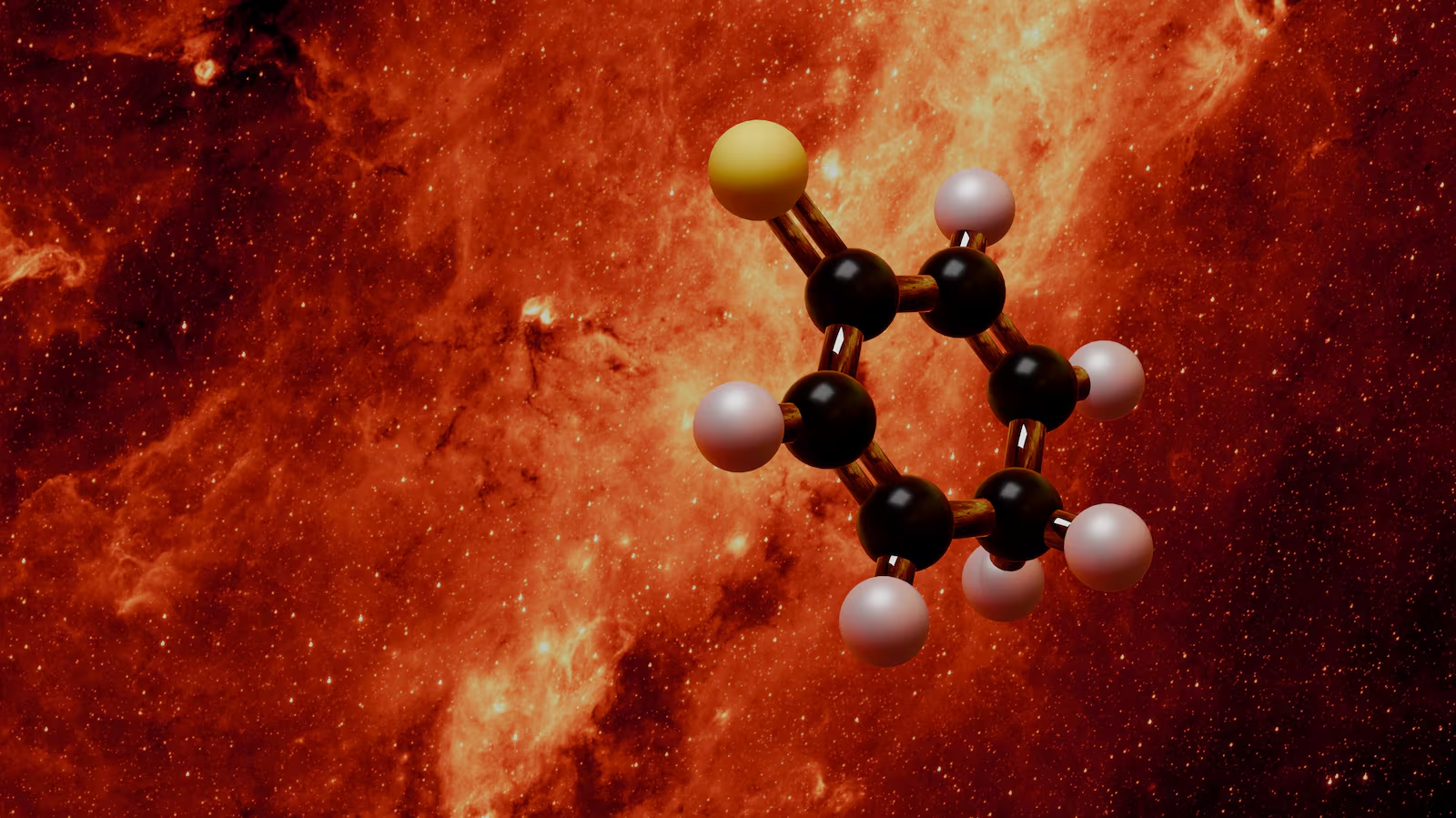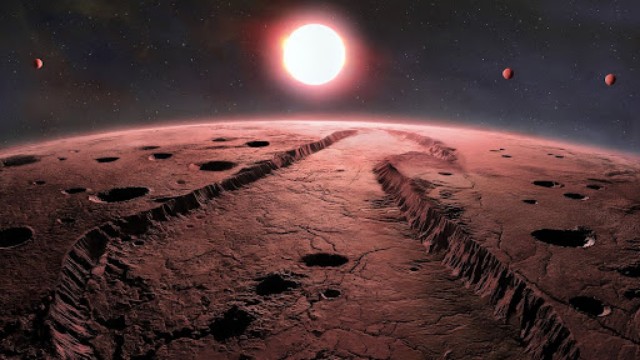
After years of searching, astronomers have found strong evidence of four small planets orbiting Barnard’s Star, the closest single-star system to Earth. These planets, much smaller than Earth, are estimated to be between 19% and 34% of our planet’s mass, according to recent research. (International Gemini Observatory/NSF's NOIRLab/International Gemini Observatory via CNN Newsource)
After years of speculation, astronomers have finally confirmed the existence of four planets orbiting Barnard’s Star, a red dwarf just six light-years from Earth. This breakthrough marks one of the strongest pieces of evidence yet of exoplanets near our solar system. The newly identified planets are classified as sub-Earths, meaning they are smaller than our home planet, with masses ranging from 19% to 34% of Earth’s.
A Cosmic Neighbor with Hidden Worlds
Barnard’s Star, first identified in 1916, has long intrigued astronomers. It is the closest single-star system to Earth and has been a prime candidate in the hunt for exoplanets. However, previous searches have failed to confirm any planets.
“It’s a truly exciting discovery,” said Ritvik Basant, the study’s lead author and a doctoral student at the University of Chicago. “Barnard’s Star is practically in our cosmic backyard, yet we’ve known so little about it. This finding showcases the power of next-generation instruments.”
Advanced Tech Unveils the Hidden Planets
Astronomers detected subtle movements in Barnard's Star using the MAROON-X instrument on the Gemini North telescope in Hawaii. This method, known as the radial velocity technique, identifies the tiny gravitational wobbles stars experience due to orbiting planets.
Among the findings, scientists pinpointed the least massive exoplanet ever discovered, a milestone that could pave the way for identifying more small worlds across the galaxy. Smaller planets tend to have diverse compositions, and studying them may unlock new insights into planetary formation and habitability.
The findings were published in The Astrophysical Journal Letters on March 11.
Tiny Planets with a Harsh Reality
Despite their promising discovery, these planets are unlikely to support life. “Compared to our solar system, all four planets orbit much closer to their star than Mercury does to the Sun,” Basant explained. The closest one completes its orbit in less than three days, while the farthest takes just under a week.
Due to their proximity, these planets endure intense radiation and scorching temperatures. Edward Guinan, an astronomy professor at Villanova University, noted that Barnard’s Star likely blasted these planets with high-energy radiation during its younger years. As a result, they may have lost their atmospheres and any possibility of sustaining liquid water.
A Historic Milestone in Planet Hunting
For decades, astronomers suspected planets might orbit Barnard’s Star, but previous attempts produced false positives due to limited technology. The latest discovery, confirmed by data from both the MAROON-X and ESPRESSO instruments in Chile, finally proves their existence.
“This is an incredible moment for exoplanet research,” said Jacob Bean, a coauthor of the study. “It’s one of those discoveries that humanity will always remember.”
With this revelation, astronomers now know that planets orbit the two nearest star systems to our solar system, bringing us one step closer to understanding the vast and mysterious universe around us.