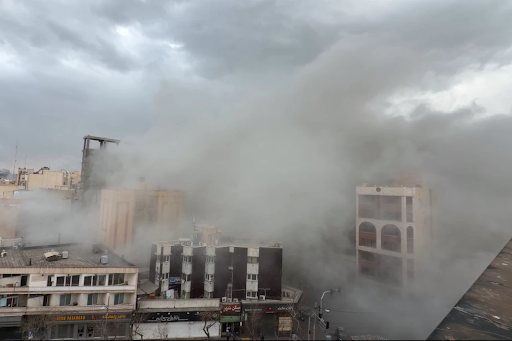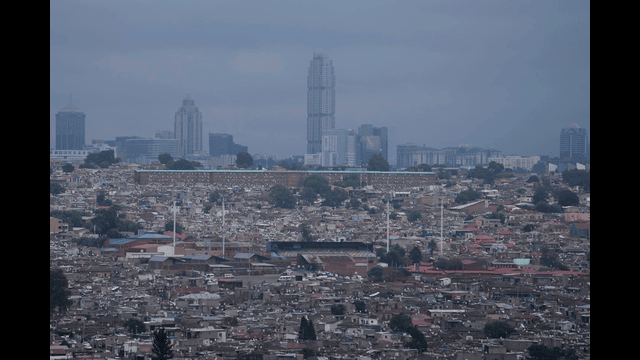
A view of Alexandria township, with the Stanton financial district in the back ground, South Africa, Friday, Nov 14, 2025.
World leaders and top delegates are arriving in Johannesburg for the landmark G20 Summit in South Africa, even as the event faces significant tension due to the U.S. boycott led by President Donald Trump. This is Africa’s first time hosting the G20, yet the absence of a founding member — and the next in line for the rotating presidency — has become the summit’s biggest talking point.
A Historic Summit Overshadowed by Boycott
The G20 Summit in South Africa will see participation from 42 nations, representing both the world’s wealthiest economies and influential developing countries. But the United States will not attend, following Trump’s accusation that South Africa discriminates against white farmers — a claim President Cyril Ramaphosa has dismissed as “completely false.”
The White House announced that no U.S. officials would join the gathering, deepening concerns about global unity. Trump’s stance has eclipsed discussions on the core G20 agenda, including climate resilience, debt sustainability, and global inequality.
This is not the first U.S. no-show in 2025. Earlier this year, Secretary of State Marco Rubio skipped the foreign ministers’ meeting, while Treasury Secretary Scott Bessent missed the finance summit. Washington has also urged members not to adopt a Leaders’ Declaration, challenging the spirit of multilateral cooperation.
Johannesburg Prepares Despite Challenges
Despite the political turbulence, Johannesburg is fully geared up for the G20 Summit in South Africa. The city has undergone major beautification, with workers cleaning streets and planting flowers along major roads. Bright G20 banners and billboards now decorate the summit route, signaling readiness for the high-level meet.
The Empty Chair and Its Message
South Africa acknowledges that the U.S. absence creates uncertainty about the summit’s impact. But Foreign Minister Ronald Lamola believes this moment also offers the world a chance to “move on” and explore new forms of global cooperation.
Lamola stressed that perfect attendance has never been achieved at any G20 summit. He noted that several key leaders are also absent this year.
China’s President Xi Jinping will skip the event, sending Premier Li Qiang as his representative. Russian President Vladimir Putin will also be absent due to an active arrest warrant issued by the International Criminal Court over the war in Ukraine — a warrant that South Africa is obligated to honor as a signatory to the Rome Statute.
Putin similarly missed the BRICS Summit in South Africa in 2023 because of the same legal risk.
South Africa Pushes an Inclusive G20 Agenda
As host, South Africa aims to use the G20 Summit to amplify the needs of developing nations, especially regarding climate finance, debt relief, and economic resilience. Experts estimate that countries vulnerable to climate impacts may require $1 trillion annually by 2030 to protect their economies.
A new expert panel report released this week urges the IMF and G20 nations to adopt expanded measures for refinancing the debts of poor countries. The African Union, now a permanent G20 member, plans to speak collectively for African nations facing rising climate threats and financial pressures.
Brian Kagoro of the Open Society Foundations says the U.S. boycott is “regrettable” but insists the summit’s real value lies in Africa’s ability to influence global governance.
According to Kagoro, the situation highlights the urgency of creating a system where all regions have a meaningful voice in global decision-making.
Strong International Backing for the Summit
Despite U.S. absence, support for the G20 Summit in South Africa remains strong. Leaders from France, Germany, and the United Kingdom are scheduled to arrive on Friday, along with several other heads of state and dozens of ministers.
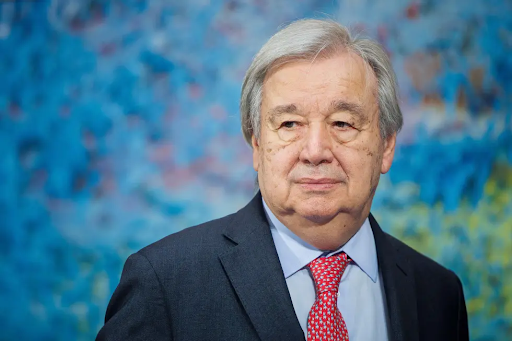
U.N. Secretary-General António Guterres has confirmed he will attend the two-day event. He emphasized his commitment to strengthening the global financial system and ensuring that development priorities — especially in Africa — remain at the forefront.
“I am fully committed to work within the G20,” Guterres said during a visit to Angola, stressing the importance of sustainable global reforms.
Looking Ahead
As the G20 Summit in South Africa begins, the absence of the United States remains a heavy cloud. Yet many leaders hope the gathering will showcase resilience, unity, and a renewed push for global cooperation.
With climate urgency rising, debt burdens increasing, and geopolitical tensions simmering, Johannesburg now stands at the center of a crucial test for the future of multilateral leadership — one that will unfold with an empty U.S. chair in the room.