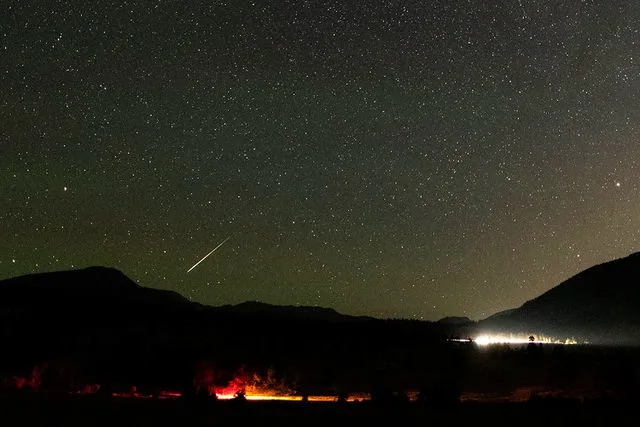
Cameraman Tom Stefanac recorded this vivid light display lighting up the night sky on April 22, 2017. CTV
A Canadian-led research team has uncovered surprising evidence that galaxy clusters formed faster and hotter than scientists once believed. The discovery centres on a young galaxy cluster that existed more than 12 billion years ago, not long after the birth of the universe.
A professor from Dalhousie University worked with international astronomers to study a distant cluster known as SPT2349-56. Researchers found the cluster only 1.4 billion years after the Big Bang, yet it already showed extreme conditions that challenge current scientific thinking.
Gas Hotter Than Expected
The team observed that the cluster contained gas heated to levels far beyond what existing models predict. According to the study, the gas burned at temperatures about five times hotter than expected for such an early stage in cosmic history.
Scientists believe this intense heat came from powerful forces already at work in the young cluster. The findings suggest that galaxy clusters may grow and evolve much faster than previously thought.
Black Holes May Play Key Role
Dr. Scott Chapman, a co-author of the study and professor at Dalhousie University, explained what may have caused this unexpected heat.
“This tells us that something in the early universe, likely three recently discovered supermassive black holes in the cluster, were already pumping huge amounts of energy into the surroundings and shaping the young cluster, much earlier and more strongly than we thought,” Chapman said.
The presence of these black holes suggests that intense activity began very early in the life of galaxy clusters.
A Compact but Powerful System
Despite its young age, the cluster already showed impressive size and strength. The research team measured it at roughly 500,000 light-years across. That size matches the halo that surrounds the Milky Way today.
The cluster contained more than 30 active galaxies. It also formed stars at an astonishing rate, more than 5,000 times faster than the Milky Way. This rapid growth points to a violent and energetic environment in the early universe.
Why Galaxy Clusters Matter
Chapman stressed the importance of studying clusters to better understand how the universe formed.
“Understanding galaxy clusters is the key to understanding the biggest galaxies in the universe,” he said. “These massive galaxies mostly reside in clusters and their evolution is heavily shaped by the very strong environment of the clusters as they form, including the intracluster medium.”
The intracluster medium refers to the hot gas that fills the space between galaxies in a cluster.
Rethinking Cosmic Timelines
Current theories suggest that this gas slowly collects and heats up as galaxy clusters grow over time. However, the new findings paint a different picture. The early cluster already showed extreme heat and activity, which hints at a much faster and more explosive birth.
Lead author Dazhi Zhou said scientists now want to better understand how these forces work together.
“We want to figure out how the intense star formation, the active black holes and this overheated atmosphere interact, and what it tells us about how present galaxy clusters were built,” Zhou said. “How can all of this be happening at once in such a young, compact system?”
The discovery opens new questions about how the universe took shape in its earliest days.