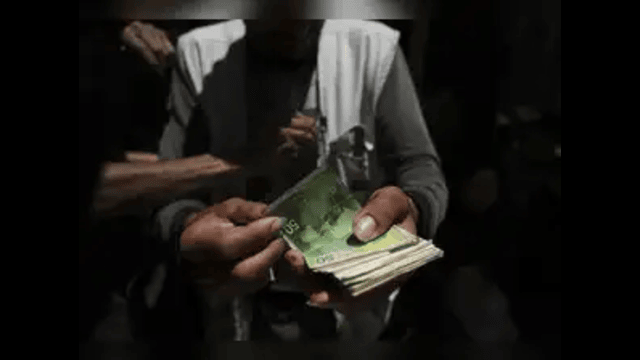
Gaza's punishing cash crunch has several root causes, experts say.
In war-ravaged Gaza, cash is more than a currency — it's a lifeline. But today, that lifeline comes at a steep cost.
With banks shuttered and ATMs out of service, residents are forced to rely on cash brokers who charge commissions as high as 40%. To access their own money, people transfer funds electronically, only to receive just a fraction in physical cash.
“The people are crying blood because of this,” said Ayman al-Dahdouh, a school director in Gaza City. “It’s suffocating us, starving us.”
This desperate system has taken root as families face soaring inflation, staggering unemployment, and depleted savings. Essentials like food, water, and medicine now come at an unbearable financial price.
Middlemen Dominate as Cash Supply Dries Up
Since the onset of the conflict, Israel has halted the flow of cash into Gaza to limit Hamas’s financial power. Wealthy families fled early, withdrawing money and leaving banks nearly empty. Foreign vendors now demand cash for goods, fearing Gaza’s unstable financial system.
This has left the door wide open for cash brokers.
What started as a 5% fee has now exploded to around 40%. For many Gazans, it means giving up nearly half their funds to simply buy flour or fuel.
“If I need $60, I must transfer $100,” said Mohammed Basheer al-Farra, displaced from Khan Younis. “We lose half our money just to spend it.”
Cash Is King — and It’s Falling Apart
In Gaza, daily survival depends on cash. Nearly every necessity — from vegetables to medicine — demands physical currency. And even that is in poor shape.
Bills are now so worn, they’re often rejected by merchants. Some suppliers insist on brand-new 200-shekel ($60) notes, while most civilians only have tattered 20-shekel bills.
“It feels like the money will melt in your hands,” said Mohammed al-Awini, living in a tent camp.
This crisis has spawned a new industry: money repair. People pay between $1 and $3 to patch up old bills, though even repaired notes are often refused.
Shahid Ajjour, who once ran a pharmacy, had to sell her gold to buy food. When she tried to use damaged bills to buy supplies, merchants turned her away.
“The worth of your $50 is zero in the end,” she said.
Unemployment, Inflation, and the Price of Survival
According to the World Bank, 80% of Gaza’s population was unemployed by the end of 2024 — and the number is likely higher now.
Those with jobs usually get paid through bank transfers, but that doesn’t help when everything requires cash. Even a simple trip for water or a blanket demands hard currency.
Meanwhile, inflation is out of control. In 2024 alone, prices surged by 230%. A kilogram of sugar now costs up to $100 — compared to just $2 before the war. Gasoline can run as high as $95 a gallon.
Brokers Unchecked in a Lawless Economy
With Gaza’s economy in free fall, brokers operate without oversight. Many advertise openly; others work in secret. Some grocery stores now serve as informal cash exchanges.
“People are at their mercy,” said Mahmoud Aqel, a displaced resident.
The war makes price regulation or currency monitoring impossible, experts say. A digital payment system introduced in 2023, called Iburaq, showed promise with 500,000 users. But merchants refused digital payments, demanding cash instead.
Who Benefits from Gaza’s Financial Chaos?
It remains unclear who profits most from the broker system. Some Israeli analysts claim Hamas gains, but experts argue there’s little evidence.
“It’s a dark place now,” said Omar Shabaan of Palthink for Strategic Studies. “You don’t know who is behind it.”
What is known is that a handful of traders — likely the same ones running food markets and cash exchanges — are profiting from massive commissions. The average family, meanwhile, is left to scrape by on aid.
Once savings are gone, there’s little choice but to queue at relief centers, jostling for flour and pasta.
“This is the only way I can feed my family,” al-Farra said.
Gaza’s Struggle for Cash Is a Struggle to Live
In Gaza, the cost of access to cash is pushing families to the edge. What was once a daily transaction has become a survival strategy.
Cash is no longer just money — it’s the price of hope, dignity, and life itself.