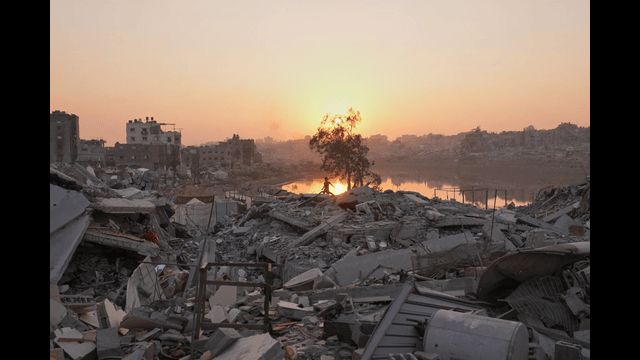
A Palestinian child walks through the destruction caused by the Israeli air and ground offensive in Sheikh Radwan neighborhood in Gaza City, Monday, Nov. 10, 2025.
Israeli Prime Minister Benjamin Netanyahu met with Jared Kushner, senior adviser and son-in-law of former U.S. President Donald Trump, on Monday to review the Gaza ceasefire’s next phase. The talks came as Israel returned the remains of 15 Palestinians to Gaza, marking another tense moment in a fragile truce nearing its first milestone.
Fragile Gaza Ceasefire Nears First-Phase End
The ceasefire, which began on October 10, was designed to halt fighting and exchange hostages and remains. Its first phase is ending, with a proposed second phase aiming to establish a governing body for Gaza and deploy an international stabilization force.
However, progress on both fronts remains unclear. Earlier this year, Israel ended a similar truce after failed negotiations on troop withdrawals and Gaza’s long-term governance. Mediators have struggled to get Hamas and Israel to the table for direct talks.
Emotional Exchange of Remains
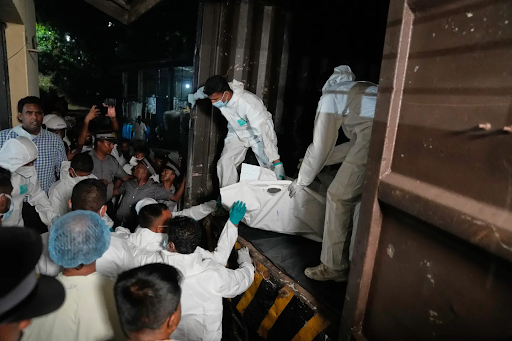
The exchange of remains has been a key component of the ceasefire’s first phase. For every Israeli hostage returned, Israel has handed over the remains of 15 Palestinians.
According to Gaza’s Health Ministry, 315 bodies have been received so far, but only 91 have been identified due to limited forensic resources. Many families wait anxiously, hoping to learn the fate of missing loved ones.
At Nasser Hospital in Khan Younis, one mother, Shaima Abu Ouda, waits for word on her missing 15-year-old son, Rayyan, who disappeared during the October 7, 2023, attack. “I don’t know if he’s alive or dead,” she said, her voice breaking.
On Sunday, Israel confirmed it had received the remains of Hadar Goldin, an Israeli soldier killed in Gaza in 2014, closing an 11-year chapter of uncertainty. His funeral was scheduled for Tuesday.
Ongoing Human Toll in Gaza
The war’s devastation continues to unfold. Gaza’s Health Ministry reports 69,176 Palestinians have been killed since the start of the conflict. While the ministry, run by Hamas but staffed by medical professionals, doesn’t separate civilian and militant deaths, it says more than half the victims were women and children.
In Israel, the October 7 attack by Hamas killed about 1,200 people, mostly civilians, and led to the kidnapping of 251 others.
U.S. Pushes for Ceasefire Progress
Kushner’s visit signals renewed U.S. involvement in pushing the peace process forward. Israeli spokesperson Shosh Bedrosian confirmed that both sides discussed the future of the ceasefire and ways to expand humanitarian aid.
The United Nations’ humanitarian chief, Tom Fletcher, reported that over one million Palestinians have received food aid since the ceasefire began. “We can save many more lives,” he said, urging for easier aid access through additional entry points.
Sources say Kushner is also mediating a deal to grant safe passage to 150–200 trapped Hamas militants who agree to surrender their weapons after the release of Goldin’s remains. However, Hamas has not commented on the proposal, and negotiations remain delicate.
Israel Reviews Oct. 7 Failures
On the same day, the Israeli military released a report examining its failures before and during the October 7, 2023, Hamas attack. The review highlighted major intelligence and operational lapses, stating that warnings were missed even hours before the assault.
“Had the information been properly analyzed, a significant operational response could have been launched,” the report said.
Critics accuse Netanyahu of blocking a broader inquiry into government-level decision-making until the war ends, fearing potential political backlash.
West Bank Braces for Demolitions
Meanwhile, tension flared in the West Bank village of Umm al-Khair, featured in the Oscar-winning documentary No Other Land. Villagers say Israeli forces are preparing to demolish 14 structures, including homes and community spaces.
Israel claims the buildings were constructed illegally, but residents argue that obtaining building permits is nearly impossible under Israeli control. The Bedouin community, displaced since the 1948 Arab-Israeli War, has faced repeated demolitions and settler violence since the 1980s.
Uncertain Road Ahead
As Netanyahu and Kushner continue diplomatic talks, the Gaza ceasefire remains fragile. The next phase — involving governance, security, and humanitarian recovery — faces political, logistical, and moral hurdles.
For now, families on both sides cling to hope — for closure, peace, and a chance to rebuild after years of conflict and loss.