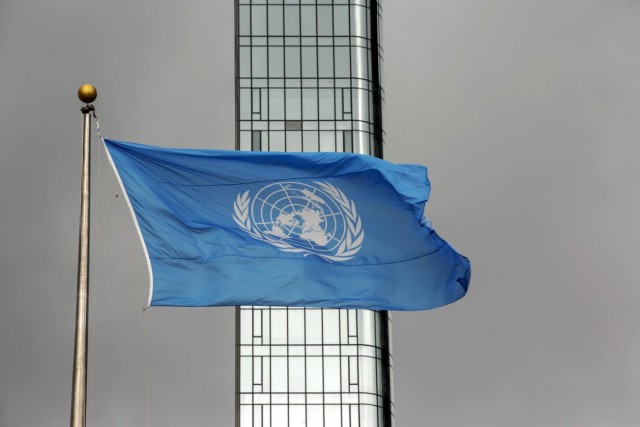
The UN flag flies on a stormy day at the United Nations during the United Nations General, Sept 22, 2022.
The United States has once again blocked a United Nations Security Council resolution demanding an immediate Gaza ceasefire and the release of hostages. The move has intensified global criticism, with 14 other council members supporting the resolution that described Gaza’s humanitarian crisis as “catastrophic.”
Washington argued the draft resolution failed to hold Hamas accountable and did not sufficiently affirm Israel’s right to self-defense. The U.S. said the language would empower Hamas rather than promote peace.
Why the US Rejected the Gaza Ceasefire Proposal
Morgan Ortagus, senior U.S. policy adviser, defended the veto. She said the resolution ignored U.S. warnings about “unacceptable” wording and legitimized “false narratives benefiting Hamas.” According to her, council members chose “performative action designed to draw a veto” instead of crafting balanced language.
The rejection highlights Washington and Israel’s growing isolation over the war in Gaza. It also comes ahead of the U.N. General Assembly, where the Gaza conflict and recognition of a Palestinian state are expected to dominate discussions.
Resolution Tied Ceasefire to Hostage Release
The resolution was drafted by the council’s 10 elected members, aiming to strengthen demands for a Gaza ceasefire linked to the release of hostages. It underscored the “deepening suffering” of Palestinian civilians as the war nears its second year.
Riyad Mansour, Palestinian ambassador to the U.N., expressed disappointment. He said Palestinians watching the session had hoped for relief, but their nightmare continues. Algeria, one of the resolution’s backers, apologized for failing to stop civilian bloodshed.
Algeria’s U.N. ambassador Amar Bendjama stressed that “14 courageous members” voted with conscience, reflecting global public opinion. Pakistan’s envoy called the failed vote during the Security Council’s 10,000th meeting “a dark moment.”
Israel Rejects UN Calls for Gaza Ceasefire
Israel strongly opposed the resolution. Danny Danon, Israel’s U.N. ambassador, argued the measure would neither secure hostage release nor bring peace. He vowed Israel would continue operations against Hamas, even if the Security Council “turns a blind eye to terrorism.”
Israeli forces launched a new ground offensive in Gaza City earlier this week. The military stated its goal is to dismantle Hamas’ infrastructure, but offered no timeline. Analysts believe the campaign could last for months, making a Gaza ceasefire increasingly unlikely.
UN and Global Pressure Over Gaza
The resolution reiterated calls for hostages taken in Hamas’s October 7, 2023 attack to be freed immediately. The U.S., however, has consistently opposed similar proposals, claiming they fail to directly link a ceasefire to hostage release. Washington insists unconditional freedom for hostages must remain a priority.
Meanwhile, international concerns continue to rise. A recent report by the world’s leading food crisis authority warned that Gaza is on the brink of famine. Without a ceasefire and unrestricted humanitarian aid, starvation could spread across the territory.
Adding further pressure, a U.N. Human Rights Council expert panel recently concluded that Israel is committing genocide in Gaza. The report urged immediate global action and accountability for those responsible.
Last week, the U.N. General Assembly overwhelmingly supported a two-state solution and urged Israel to recognize a Palestinian state. Israel and the U.S. remain firmly opposed.
Growing Divide Over Gaza War
The U.S. veto comes as American public opinion shifts. A survey by the Associated Press-NORC Center found about half of Americans now believe Israel’s military response has gone “too far.” This is a rise from 40% in November 2023.
Despite this, fewer Americans—particularly Republicans—believe negotiating a Gaza ceasefire should be a top U.S. priority. The change reflects waning support for diplomacy, even as humanitarian suffering escalates.
The failed resolution adds another layer to the international divide. While most countries call for immediate peace, Washington remains firm in shielding Israel’s actions, deepening tensions ahead of the U.N. General Assembly.