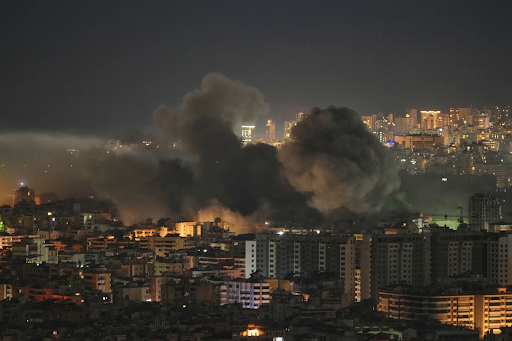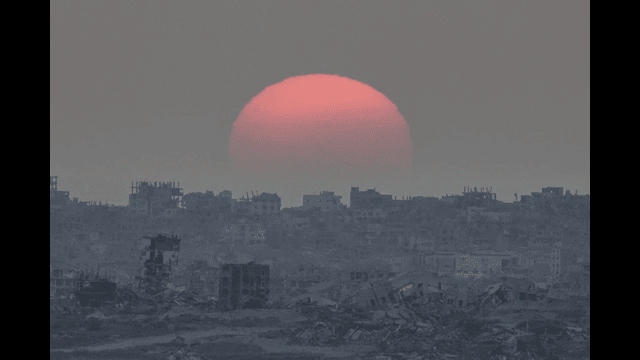
The sun sets behind buildings destroyed during Israeli ground and air operations in the Gaza Strip, as seen from southern Israel, Tuesday, Aug. 26, 2025.
The Israeli military said its strike on Gaza’s Nasser Hospital targeted a Hamas surveillance camera. The attack killed at least 20 people, including journalists, medical staff, and patients’ relatives. The explanation has sparked skepticism, as no evidence was presented.
Military Claims Target Was Hamas Camera
On Tuesday, the Israeli army released initial findings, saying soldiers believed Hamas was using a camera to monitor Israeli forces. Two consecutive strikes were carried out at southern Gaza’s largest hospital. Officials claimed six of the dead were militants, but the list included health workers and emergency responders.
Witnesses, however, say the account contradicts events. The first strike killed Reuters cameraman Hussam al-Masri, who was filming live. Another unidentified person died in the same blast.
Witness Accounts of the Double Strike
After the first explosion, health workers, journalists, and relatives rushed to the site. Photos showed at least 16 people on an external staircase, many wearing medical or emergency vests. None carried weapons.
Moments later, a second strike hit the staircase. Video from Al-Ghad TV showed smoke engulfing the group. Hospital officials confirmed 18 people died in the second blast.
Israel has not explained why it launched a follow-up strike or how it identified militants in the crowd. Prime Minister Benjamin Netanyahu called the incident a “tragic mishap” but gave no further details.
Casualties Include Journalists and Health Workers
Among the dead were Jumaa al-Najjar, a hospital staff member, and Imad al-Shaar, a civil defense driver. Israel identified them as militants without providing proof. Rights groups say Israel has previously labeled emergency responders as combatants.
At least five journalists died in the strikes, including Mariam Dagga, who contributed to The Associated Press. The Committee to Protect Journalists reports 189 Palestinian journalists have been killed since the war began.
The Israeli army confirmed that none of the journalists killed in the hospital attack were suspected militants.
Rights Groups Condemn ‘Double Tap’ Attack
International condemnation has followed. The United Nations Human Rights Office said the killing of journalists should “shock the world” into demanding accountability.
Consecutive strikes, known as “double taps,” have been denounced in Syria and Ukraine, especially when they hit civilians or medics. International law bans attacks on hospitals unless they are used for military purposes. Even then, strikes must be proportionate and avoid civilian casualties.
Israel argues Hamas operates from within hospitals, but it rarely provides evidence. Hamas officials denied using a camera at Nasser Hospital.
Israeli Protests Demand Ceasefire
As questions mounted abroad, protests erupted inside Israel. Demonstrators blocked highways, set tires on fire, and demanded a ceasefire to free hostages.
Netanyahu met his security cabinet on Tuesday, signaling an upcoming offensive into Gaza City. He vowed not to leave hostages behind and promised to eliminate Hamas’ threat.
Families of hostages pushed for negotiations instead of more fighting. “There’s a good deal on the table,” said Ruby Chen, whose son’s body remains in Gaza.
Heavy Toll of War in Gaza
The hospital strikes came as Israeli bombardments continued across Gaza. On Tuesday alone, at least 35 Palestinians were killed in different areas, according to hospitals in Khan Younis and Gaza City.
Gaza’s Health Ministry reported three more deaths from starvation, bringing the malnutrition toll to 186 since late June, including 117 children.
Overall, the ministry says 62,819 Palestinians have died since the war began, about half of them women and children. The figures are widely considered reliable by international experts, though Israel disputes them without releasing its own data.