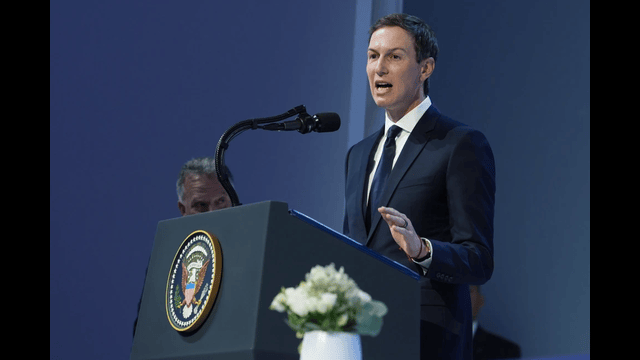
Jared Kushner speaks after the signing of a Board of Peace charter during the annual meeting of the World Economic Forum in Davos.
Jared Kushner has outlined an ambitious vision for rebuilding Gaza after years of war.
Speaking at the World Economic Forum in Davos, he described a modern coastal city.
His plan includes high-rise buildings, tourism zones, ports, and industrial hubs.
Kushner believes Gaza can be rebuilt quickly if security conditions are met.
The Kushner Gaza reconstruction plan imagines sleek cities rising from destruction.
However, experts, Palestinians, and global agencies warn the challenges are immense.
They say the timeline and assumptions do not match realities on the ground.
A Vision Built on Speed and Security
Kushner said Gaza could be rebuilt within three years under the right conditions.
He cited examples from across the Middle East to support his claim.
According to him, rapid construction is achievable if violence ends permanently.
The Kushner Gaza reconstruction plan depends entirely on long-term security.
Without stability, investors will not commit funds or resources.
Kushner estimated rebuilding costs at nearly $70 billion.
International agencies disagree with this timeline.
They argue Gaza’s devastation requires a much longer recovery period.
Gaza’s Destruction Paints a Stark Picture
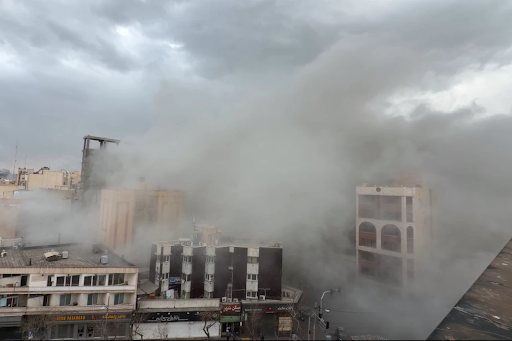
Large parts of Gaza remain unlivable after prolonged fighting.
Entire neighborhoods have collapsed into massive piles of rubble.
Water systems are contaminated, and disease risks continue to rise.
The United Nations estimates over 60 million tons of debris across Gaza.
Clearing this rubble alone could take more than seven years.
Demining unexploded weapons would require additional years of work.
These realities directly challenge the Kushner Gaza reconstruction plan’s speed.
Experts stress that safety must come before construction.
Security Remains the Biggest Obstacle
Kushner emphasized that reconstruction hinges on full demilitarization.
This includes disarming Hamas and other armed factions in Gaza.
Hamas has signaled it may freeze weapons under certain political conditions.
However, it has not committed to complete disarmament.
Israeli military operations have also continued despite the ceasefire.
Since October, hundreds of Palestinians have reportedly been killed.
Israel says it responds only to ceasefire violations.
Civilians, including women and children, remain among the casualties.
The Kushner Gaza reconstruction plan proposes oversight by a new Palestinian committee.
This body would eventually transfer control to a reformed Palestinian Authority.
Whether Hamas or Israel would accept this structure remains unclear.
Investor Confidence and Economic Promises
Kushner argued security would unlock private investment.
He said jobs and economic growth would follow reconstruction.
The plan highlights advanced manufacturing, data centers, and industrial zones.
However, details about supported industries remain vague.
No clear strategy was shared for attracting long-term investors.
Experts say economic revival cannot precede political clarity.
Uncertainty discourages both regional and global investors.
Unanswered Questions About Displacement
The Kushner Gaza reconstruction plan does not address resident displacement.
Millions currently shelter along Gaza’s coastline and urban centers.
Many of these areas are marked for tourism and redevelopment.
Kushner suggested workforce housing would be built first in Rafah.
Rafah remains under Israeli military control.
Rubble clearing has reportedly begun there.
There was no clear explanation about demining efforts.
The United Nations warns unexploded ordnance is widespread.
Heavy machinery access remains restricted in many civilian areas.
Political Resistance From Israel
Legal experts question Israel’s willingness to accept the plan.
High-rise buildings near the border raise security concerns.
Israeli military bases could become visible from tall structures.
Prime Minister Benjamin Netanyahu opposes Palestinian Authority involvement.
This directly contradicts the plan’s proposed governance transition.
The Palestinian Authority also faces legitimacy issues among Palestinians.
Corruption concerns and political distrust weaken its role.
A Vision Facing Reality Checks
Observers say the Kushner Gaza reconstruction plan reflects a developer’s mindset.
They argue peacebuilding requires deeper political and humanitarian engagement.
Without consensus, security, and clear governance, the vision may stall.
For Gaza’s people, rebuilding remains a distant hope, not a quick fix.