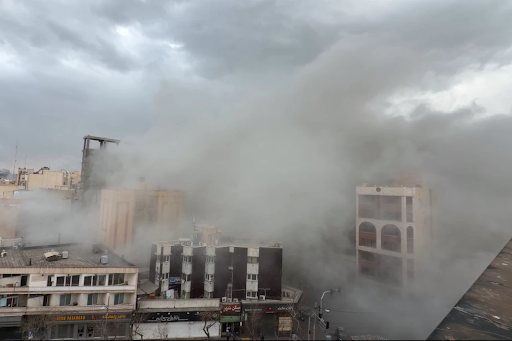
People make their way past the rubble of houses in Rafah on January 20, 2025.
Israel’s Defense Minister Yoav Gallant has proposed a controversial plan to establish a “humanitarian city” in southern Gaza. According to Israeli media, the city would be constructed on the ruins of Rafah and initially accommodate around 600,000 displaced Palestinians. These individuals have already been pushed into the narrow Al-Mawasi coastal strip amid ongoing military operations.
Gaza Relocation Plan Raises Alarm
In a press briefing Monday, Gallant said Palestinians entering the new zone would be screened to ensure no Hamas affiliation. Those who clear the check will not be allowed to leave the zone. The long-term vision, according to Gallant, is for this city to eventually house Gaza’s entire population of over 2 million people.
The idea, echoing a proposal once suggested by former U.S. President Donald Trump, also includes the possibility of encouraging Palestinians to emigrate to other countries. However, no country has publicly agreed to accept such a plan.
Prime Minister Benjamin Netanyahu, speaking at a White House dinner with Trump, said discussions are ongoing with several nations. “We’re working closely with the United States to find countries ready to offer Palestinians a better future,” Netanyahu said, although no further details were offered.

Israeli Defense Minister Israel Katz
International Oversight, But Questions Remain
Gallant claims the new zone would be managed by international bodies—not the Israel Defense Forces (IDF). The IDF would provide security from a distance, similar to the mechanism currently used in the controversial Gaza Humanitarian Foundation (GHF), where aid distribution sites are militarily secured but not operated by IDF personnel.
However, many humanitarian organizations have refused to collaborate with the GHF. Their main concerns include safety, neutrality, and the high number of Palestinian casualties near these aid sites. Gaza’s health authorities and the UN report hundreds have died attempting to reach GHF zones since their inception.
As of now, no international body has agreed to oversee Gallant’s proposed humanitarian city.
International Rejection and Condemnation
The global response to Israel’s plan has been overwhelmingly critical. British Foreign Secretary David Lammy expressed concern over the sudden shift from ongoing ceasefire talks to a plan that appears to sideline peace efforts.
“These comments from Mr. Gallant contradict the progress we were making toward a ceasefire,” Lammy said. “This is not a credible framework to deliver the aid and support Gaza needs.”
Meanwhile, the UAE, seen as a potential post-war stakeholder in Gaza’s future, condemned the plan outright. UAE diplomat Lana Nusseibeh reiterated her country’s firm stance against forced displacement. “We categorically reject the forced dislocation of Palestinians,” she said.
Qatar, another key regional player, echoed the same sentiment. “There will be no relocation, forced or otherwise, of Palestinians from their land,” stated Majed Al Ansari, spokesperson for Qatar’s Foreign Ministry.
Legal and Humanitarian Concerns Mount
Human rights groups have warned that Israel’s plan could breach international law. Michael Sfard, an Israeli human rights lawyer, said the proposal constitutes forcible transfer and potential deportation—both considered war crimes.
“When carried out at this scale, it could also amount to crimes against humanity,” Sfard said. “There is no voluntary departure. Life in Gaza is being made so unlivable that people will be forced to flee.”
Sfard added that under international law, coercion alone—not necessarily physical force—qualifies as illegal deportation.
Hamas Response: “Legendary Resilience”
In a statement issued Tuesday, Hamas condemned the relocation plan as a continuation of Israel’s “ethnic cleansing” agenda. The group praised the resilience of the Palestinian people, saying they have withstood killing, hunger, and bombardment and will continue to reject any future imposed by external powers.
IDF Awaits Government Orders
When questioned about the plan, IDF spokesperson Brig. Gen. Effie Defrin said the military would submit several operational options to the political leadership. “Each option carries its own consequences,” he noted, emphasizing that the IDF will follow official directives.
As international pressure mounts and the humanitarian situation in Gaza deteriorates, Israel’s proposed “humanitarian city” is now at the center of global debate—raising questions about ethics, legality, and the future of millions of displaced Palestinians.