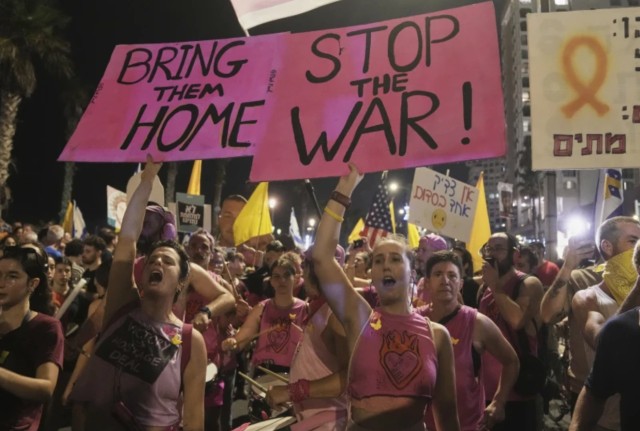
People take part in a protest outside US Embassy Branch demanding the end of the war and immediate release of hostages held by Hamas in the Gaza Strip, and against Prime Minister Benjamin Netanyahu’s government in Tel Aviv, Saturday, July 26, 2025.
Israeli Prime Minister Benjamin Netanyahu is reportedly weighing a full reoccupation of Gaza — a move that could significantly escalate the nearly two-year-long war and draw global condemnation. If implemented, this would not only inflame regional tensions but also risk the lives of both Palestinians and Israeli hostages, while pushing Israel into deeper international isolation.
Gaza Reoccupation: A High-Stakes Gamble
Netanyahu's possible decision is under intense scrutiny. Israeli media suggests that the full military takeover of Gaza may be back on the table. Critics say this could be a strategic bluff aimed at pressuring Hamas after recent ceasefire negotiations collapsed.
Others believe it's a political tactic to appease far-right allies in Netanyahu's coalition, who have long pushed for retaking Gaza, resettling Jewish communities there, and encouraging "voluntary emigration" of Palestinians.
But the implications of such a move could be far-reaching — politically, militarily, and ethically.
Internal and External Resistance to the Plan
The idea of reoccupying Gaza has sparked intense backlash both at home and abroad.
Many Israeli hostage families see this as a direct threat to their loved ones’ survival. Security officials reportedly oppose the move as well, warning it could trap Israel in another endless occupation and further stretch its military forces.
Meanwhile, global criticism continues to mount. Israel is already under fire for its conduct in Gaza, facing investigations and arrest warrants from international courts over alleged war crimes and use of starvation tactics.
Humanitarian Crisis Looms Larger
To regain full control of Gaza, Israeli forces would need to move into Deir al-Balah and Muwasi — densely populated areas where hundreds of thousands of Palestinians now live in overcrowded tent camps.
These areas are considered "humanitarian zones" by international agencies. Any military action here could trigger another massive wave of displacement and disrupt already fragile aid efforts, pushing Gaza further into famine conditions.
With about 75% of Gaza already under Israeli military control, further incursions leave little safe space for civilians to flee.
Hostage Lives Hang in the Balance
Roughly 20 Israeli hostages are still believed to be alive in Hamas custody. Many are likely hidden in tunnels or secret locations. Hamas has warned guards may kill captives if Israeli forces get too close.
Since the conflict began on October 7, 2023, with Hamas’ deadly attack that killed 1,200 Israelis, 251 people were abducted. Recent videos show hostages in critical condition, pleading for help.
Netanyahu’s government insists it won’t stop until all hostages are freed and Hamas is dismantled.
Mounting Civilian Death Toll
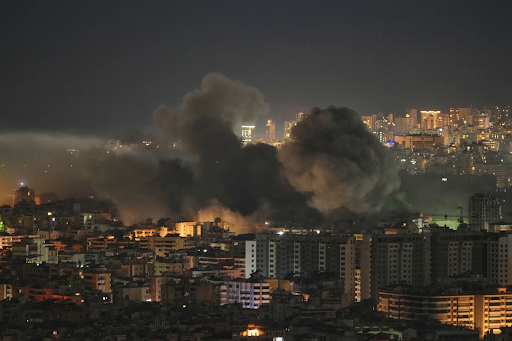
The war’s humanitarian toll continues to rise. Over 61,000 Palestinians have been killed, according to Gaza’s Health Ministry. Israel disputes these numbers but has not released its own.
Israel claims it's targeting militants and blames Hamas for hiding among civilians. But critics argue the scale of destruction and civilian casualties suggests otherwise.
A Step Toward Long-Term Occupation?
Israel unilaterally withdrew from Gaza in 2005, but international law still views the territory as occupied due to Israel's control over its borders, airspace, and population registry.
Reoccupying Gaza could trap Israel in a long, bloody insurgency. Public support for the war inside Israel is already waning, especially after Netanyahu resumed combat operations in March, ending a temporary ceasefire.
Despite these risks, Netanyahu has ruled out allowing the Palestinian Authority to govern Gaza post-war. No viable plan has been proposed for who will run the territory after the fighting ends.
Strategic Risks for Israel’s Future
Reoccupying Gaza might weaken Hamas, but it could also deepen Israel’s existential dilemma. With 7 million Jews and 7 million Palestinians between the Jordan River and the Mediterranean Sea, Israel faces a tough choice.
Either create a Palestinian state to preserve its democratic identity, or continue to govern millions without rights — a situation human rights groups already label as apartheid.
As international patience wears thin and allies distance themselves, Israel may find itself more isolated than ever. And with changing leadership in the U.S. on the horizon, Netanyahu’s options could narrow further.
Final Thoughts
The possibility of reoccupying Gaza signals a critical moment in the Israel-Hamas war. What unfolds next may determine not just the fate of Gaza, but the region’s path toward peace or prolonged conflict.