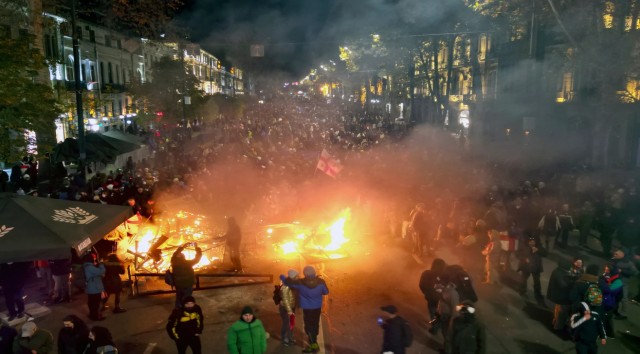
Protesters pour into the streets outside the parliament building in Tbilisi, Georgia, on Friday, Nov. 29, 2024.
For nearly a year, Georgian civics teacher Gota Chanturia has marched almost daily outside parliament in Tbilisi. He continues despite repeated police crackdowns, mass arrests, and crushing fines that now exceed $102,000 — ten times the annual salary of an average Georgian.
“We said we will be here until the end, and we’re still here,” Chanturia told AP while joining another protest this week.
The demonstrations began after the ruling Georgian Dream party halted talks on joining the European Union. Opposition groups accused the party of winning elections through fraud, igniting a wave of protests across the country.
Crackdown on Civil Society
Despite heavy repression, protests remain widespread. The government has introduced strict laws targeting demonstrators, NGOs, rights groups, and independent media. Human Rights Watch calls the situation in Georgia a “rights crisis,” describing it as the worst clampdown since independence.
Observers warn Georgia is edging closer to authoritarian rule, with parallels drawn to Russia’s model of silencing dissent.
Protesters Face Fines, Beatings, and Prison
Citizens like Ketuna Kerashvili keep protesting despite family hardships. Her brother Irakli was jailed for two years after being accused of disrupting public order. She calls his conviction baseless and politically motivated.
Amnesty International reports that between late 2024 and early 2025, over 400 protesters were detained. Many reported beatings, often in detention facilities. Transparency International says at least 76 people faced criminal prosecution between April 2024 and August 2025, with more than 60 imprisoned.
Chanturia himself has been fined 56 times, mostly for “blocking roads.” He refuses to pay, though under new rules, non-payment may lead to prison. Human Rights Watch estimates thousands of protesters may have been penalized, with fines often issued via surveillance cameras and facial recognition.
Even journalists are targeted. Mariam Nikuradze, co-founder of OC Media, has been fined $7,300 while covering rallies. Javid Ahmedov, an Azerbaijani student, was fined $3,700 after being filmed at a protest. He was later denied re-entry to Georgia, risking his degree.
Opposition and NGOs Under Fire
The crackdown extends beyond protesters. Opposition leaders, rights groups, and media outlets face mounting pressure. In summer, eight opposition leaders were jailed, and authorities later froze the bank accounts of seven NGOs accused of supplying equipment for rallies.
Prime Minister Irakli Kobakhidze accuses the opposition of being foreign-backed radicals seeking to destabilize the country. The government also introduced legislation branding NGOs and independent media as “foreign agents.”
Georgian Dream has threatened lawsuits against independent TV channels and even seeks to declare the main opposition party unconstitutional. Rights activists argue the government’s aim is to shrink democratic spaces and silence independent voices.
Push for EU Support
Civil society groups vow to resist. The seven NGOs with frozen funds pledged to fight “Russian-style laws” and defend Georgia’s democratic path.
Human Rights Watch and other rights organizations urge the European Union to increase pressure on Georgian authorities. They demand sanctions and accountability for officials responsible for rights abuses.
Despite the crackdown, EU membership remains popular among Georgians. Authorities still claim they aim for EU accession by 2030, though Brussels has criticized Georgia’s backsliding on democracy.
“The EU is ready to consider Georgia’s return to the accession path if credible steps are taken,” an EU official said.
A Nation at a Crossroads
Georgia’s struggle is now a test between civil society and authoritarianism. Citizens continue to rally, risking fines, arrests, and violence. For protesters like Chanturia, the movement is about preserving Georgia’s democratic future.
The coming months may decide whether Georgia moves closer to Europe or drifts deeper into Moscow’s shadow.