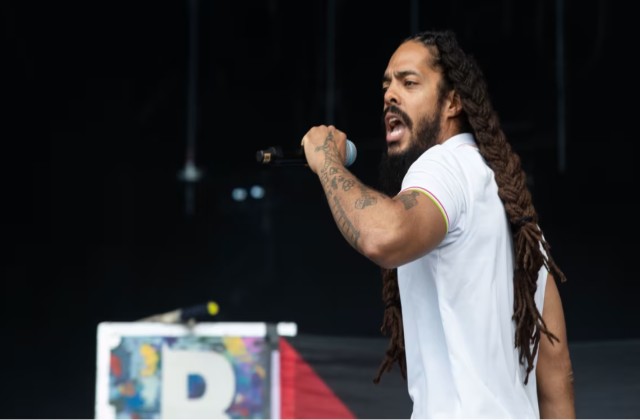
Bobby Vylan performs during day four of Glastonbury Festival 2025 at Worthy Farm in Glastonbury, England, on Saturday.
British police are reviewing footage from this year’s Glastonbury Festival after controversial anti-Israel remarks were made on stage by two music groups—Bob Vylan and Kneecap. Their statements, made during separate performances, have triggered criticism from political leaders, festival organizers, and international representatives.
“Death to the IDF” Chant Sparks Outrage
Rapper Bobby Vylan, one-half of the rap-punk duo Bob Vylan, performed on the West Holts Stage—one of Glastonbury’s biggest platforms. His act included a shout of “Free, free Palestine,” followed by a chant of “Death, death to the IDF (Israel Defense Forces).”
Behind him, a screen displayed the message: “United Nations have called it a genocide. The BBC calls it a ‘conflict.’” This was a pointed jab at the UK’s public broadcaster, which had been livestreaming the festival.
The Israeli Embassy in the UK condemned the performance, calling the rhetoric “inflammatory and hateful.” A spokesperson stated, “Such language in front of tens of thousands normalises extremism and glorifies violence.”
The embassy called on Glastonbury’s organizers and public figures to reject all forms of hatred and extremist speech.
Glastonbury Organizers Respond to Anti-Israel Comments
Following widespread backlash, Glastonbury Festival issued a firm response.
“We’re appalled by the remarks made by Bob Vylan,” organizers said. “The chants crossed a line. We’re reminding all involved that Glastonbury stands against antisemitism, hate speech, and incitement to violence.”
They stressed their commitment to creating an inclusive, respectful environment for all attendees and performers.
Kneecap’s Set Adds Fuel to Fire
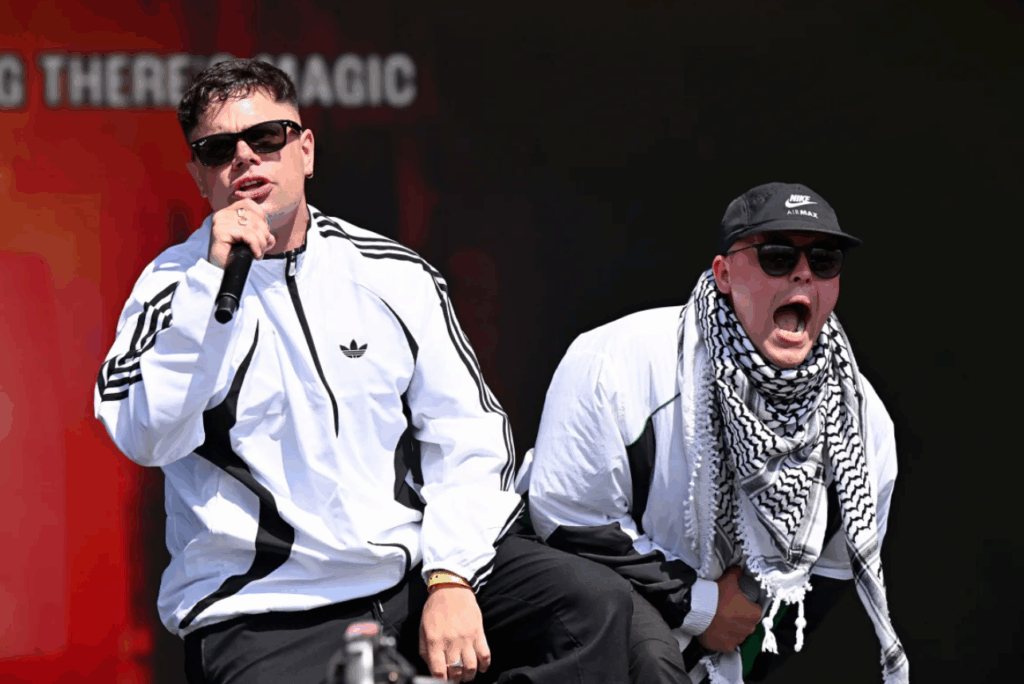
Irish-language hip hop trio Kneecap were also under scrutiny before even taking the stage. Member Liam O’Hanna, known as Mo Chara, was charged last month with a terrorism offense.
The charge stems from allegedly displaying a Hezbollah flag at a London performance in 2024—a violation of UK law. Mo Chara has denied the charge.
Despite the controversy, Kneecap performed as scheduled. During their set, Mo Chara reflected on the media pressure and legal issues, stating, “It’s been stressful, but not compared to what the Palestinian people are going through.”
His bandmate, Móglaí Bap (Naoise O Caireallain), directly criticized UK Prime Minister Keir Starmer, who had earlier suggested that Kneecap’s appearance was inappropriate.
“The Prime Minister of your country—not mine—said he didn’t want us to play. So f**k Keir Starmer,” Móglaí Bap declared during the performance.
Referring to Mo Chara’s court date, he added provocatively, “We’ll start a riot outside the courts.” He then clarified: “No riots—just love and support. And more importantly, support for Palestine.”
Police Investigation Underway
Somerset Police, who oversee the area where Glastonbury is held, confirmed they are examining footage of the performances.
“We are aware of the comments made by acts during the festival,” a spokesperson said. “Video evidence will be assessed to determine whether any criminal offences have occurred.”
The review could lead to further legal action depending on the outcome of the assessment.
Political and Media Reactions
UK Health Secretary Wes Streeting condemned the performances during an appearance on Sky News, calling them “appalling.” He said both the BBC and Glastonbury organizers needed to address what happened.
Meanwhile, a BBC spokesperson stated that some comments made during Bob Vylan’s set were “deeply offensive.” The broadcaster confirmed that the performance will not be available for replay on its iPlayer platform.
Freedom of Expression vs. Incitement
The incident has reignited the debate around artistic freedom and the boundaries of political expression on public stages.
While many artists use their platforms to raise awareness about global conflicts, critics argue that inciting violence crosses a dangerous line.
As investigations continue, the tension between cultural expression and legal accountability remains in sharp focus at one of the world’s most iconic music festivals.