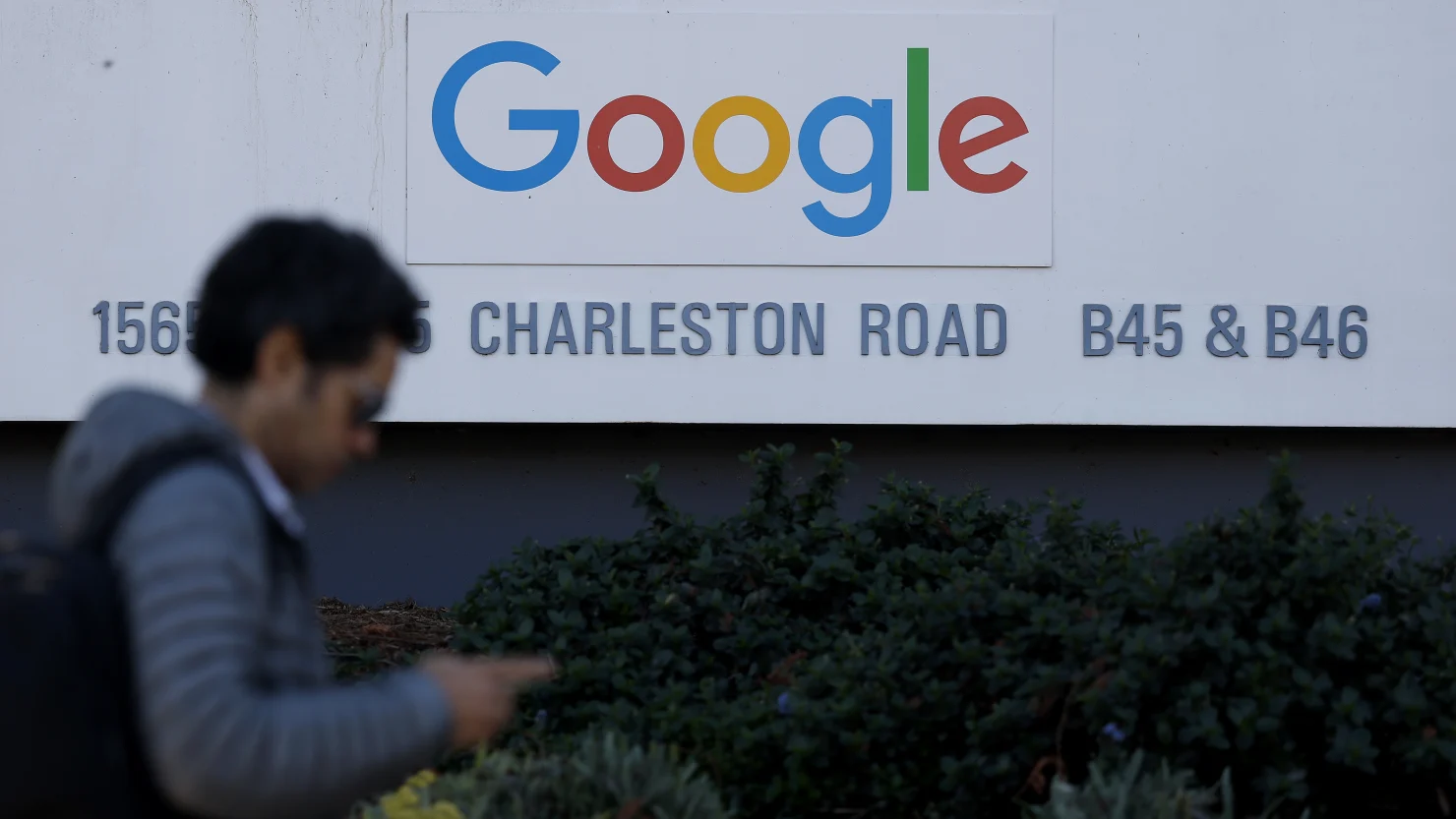
A pedestrian walks by a sign at Google headquarters on Feb. 4, 2026 in Mountain View, California.
Alphabet has staged a sharp turnaround in artificial intelligence.
Once seen as lagging rivals, Google now leads the AI conversation.
Investors who doubted its pace a year ago are reassessing fast.
Strong earnings and rapid AI adoption have changed the narrative.
Confidence returned during Alphabet’s latest earnings call.
Executives spoke firmly about momentum and long-term ambition.
The shift followed the release of the Gemini 3 AI model.
Users praised its performance, speed, and real-world applications.
Google AI Growth Gains Market Attention
Google AI growth has impressed Wall Street observers.
Alphabet’s fourth-quarter results beat market expectations.
Revenue climbed across key segments.
Profitability also exceeded forecasts.
The cloud business stood out clearly.
Cloud revenue jumped nearly 48% year-on-year.
Demand for AI-driven enterprise tools fueled the surge.
Analysts see cloud as central to Google AI growth.
Gemini 3 Changes Perception
The Gemini 3 launch marked a turning point.
It helped Google close the AI innovation gap.
The model attracted developers and enterprise users quickly.
It also strengthened confidence in Google’s AI roadmap.
A year earlier, sentiment looked very different.
Investors feared Google was behind OpenAI and others.
That concern dragged Alphabet’s stock lower.
Now, the market tone is notably more optimistic.
Massive Investment Plans Raise Eyebrows
Alphabet outlined bold spending plans for the future.
Capital expenditure for 2026 could reach $185 billion.
At the top end, spending would more than double.
The focus will remain on AI infrastructure and data centers.
The scale of investment unsettled some investors.
Alphabet shares briefly dropped nearly 3% after hours.
Losses later narrowed to under half a percent.
Concerns centered on near-term cash flow pressure.
Chipmakers Benefit From AI Push
Not all reactions were cautious.
Broadcom shares jumped more than 6% in extended trading.
The company supplies custom chips to Alphabet.
Higher AI spending supports long-term demand for its hardware.
Broadcom’s gains offset earlier losses.
Other chipmakers struggled during regular trading.
Advanced Micro Devices fell sharply after a weak forecast.
Oracle shares also declined.
Broader Market Shows Mixed Signals
Major U.S. indexes closed mostly lower.
Technology stocks led the pullback.
The Nasdaq Composite dropped over 1.5%.
The S&P 500 posted another daily loss.
The Dow Jones moved higher, however.
Gains in healthcare and industrial stocks helped.
Amgen and Honeywell lifted the index.
Market rotation remained evident.
Analysts Stay Selective on AI Bets
Some investors remain cautious on AI valuations.
Profitability concerns persist for several chipmakers.
Yet optimism has not vanished completely.
Jim Cramer voiced support for Asian chip leaders.
He called Samsung Electronics and SK Hynix visionary firms.
Their memory technology underpins global AI systems.
Long-term demand remains strong.
Global Markets Add to Uncertainty
Outside the U.S., market signals were mixed.
Silver prices dropped sharply, erasing recent gains.
European earnings delivered mixed results.
BNP Paribas beat expectations and raised profit targets.
Shell, however, missed its quarterly profit forecast.
Central banks in Europe held steady on rates.
Google AI Growth Shapes the Next Phase
The broader AI race remains intense.
Yet Google AI growth has shifted industry dynamics.
Alphabet now commands renewed investor respect.
Its leadership ambitions look increasingly credible.
With Gemini advancing and spending accelerating, momentum is building.
Challenges remain, but Google is no longer chasing.
It is setting the pace.