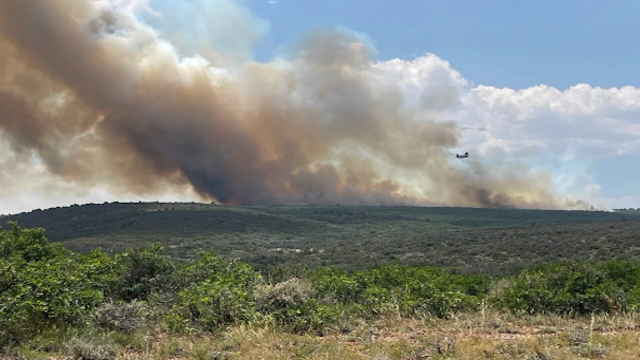
Fires in Colorado and Arizona led to the shutdown of two national parks. AP Photo
Two U.S. national parks — Grand Canyon's North Rim and Black Canyon of the Gunnison — faced evacuations this week. Wildfires sparked by lightning strikes led to the closures of both parks. Visitors and staff had to leave the areas for safety as dry weather, hot temperatures, and gusty winds fueled the fires.
Fires Burn Across Colorado and Arizona
Black Canyon of the Gunnison, located in Colorado, shut down after wildfires broke out on both rims of the canyon. The larger fire on the South Rim began Thursday and spread across 2.5 square miles. Crews worked quickly, but by Friday, they had not yet contained the flames. A smaller fire on the North Rim had already burned out.
The Grand Canyon’s North Rim in Arizona also closed due to a nearby wildfire that started on land managed by another federal agency. That fire began after a thunderstorm passed through the area on Wednesday evening.
Firefighters Act Fast to Protect Buildings
In Colorado, firefighters saved the park’s visitor center by clearing dry brush and covering the building with protective materials. Planes from the state fire agency dropped fire retardant to slow the spread. Still, the fire damaged some sheds and equipment inside the park.
Arizona Faces Worsening Fire Conditions
The wildfire near Jacob Lake, close to the Grand Canyon’s North Rim, spread fast due to “gusty and erratic winds.” By Friday afternoon, the fire had burned about 17 square miles. Firefighters had not managed to contain any part of it.
Visitors and Residents Evacuate
Around 500 people who had planned to stay overnight at the Grand Canyon were told to leave Thursday night. Residents and park workers on the North Rim were asked to stay indoors. In nearby areas, campers and locals were also evacuated for safety.
Local Business Feels the Impact
Melinda Rich, who owns the Jacob Lake Inn, had to evacuate her 75 employees and guests staying in 35 cabins. Some visitors had just checked in when the sheriff’s office called to say everyone must leave at once. The staff contacted guests still out hiking and sightseeing.
Rich said it was hard financially, since they had to cancel bookings and refund payments. But she also felt sorry for guests who had looked forward to their first visit. Despite the smoke in the air, she believed the evacuation was mostly precautionary due to the direction of the wind.
She remembered another close call in 2020 when a wildfire came within 20 feet of the cabins. That time, the wind shifted at the last minute, narrowly saving the property.