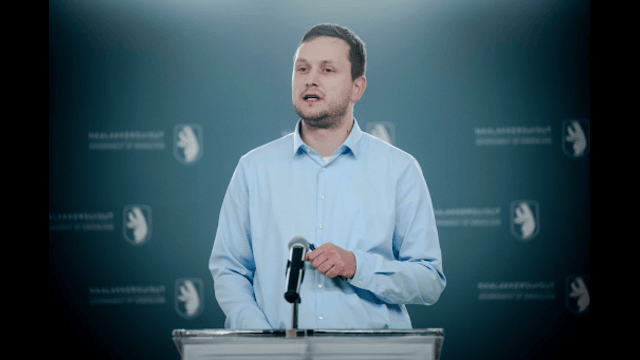
Greenland’s Prime Minister Jens Frederik Nielsen holds a press conference in Nuuk, Greenland, Monday, Jan. 5, 2026.
Tensions rose sharply in the Arctic after Denmark issued its strongest warning yet to Washington.
Danish Prime Minister Mette Frederiksen said a US takeover of Greenland would effectively destroy NATO.
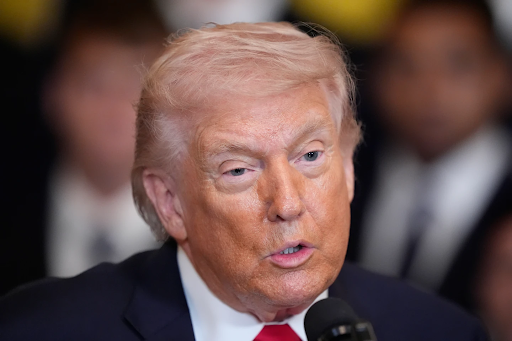
Her remarks followed renewed statements by US President Donald Trump about taking control of the island.
The comments came amid global shock over a recent US military operation in Venezuela.
Greenland is a semi-autonomous territory within the Kingdom of Denmark.
As part of Denmark, it also falls under NATO’s collective defense framework.
Any military move against it would therefore have historic consequences.
Greenland fears grow after US Venezuela operation
Concerns intensified after a surprise US operation in Caracas over the weekend.
American forces reportedly captured Venezuelan leader Nicolás Maduro and his wife overnight.
The dramatic move unsettled European capitals and raised alarm in Copenhagen and Nuuk.
Frederiksen and Greenland’s Prime Minister Jens Frederik Nielsen strongly rejected Trump’s remarks.
They warned that any threat to Greenland’s sovereignty would have devastating outcomes.
Several European leaders voiced support for Denmark and Greenland.
“If the United States attacks another NATO country, everything stops,” Frederiksen said.
She stressed that NATO’s security framework has protected Europe since World War II.
Trump’s Greenland timeline alarms allies
Trump has repeatedly pushed for US control of Greenland since his political transition.
He has not ruled out using military force to achieve that goal.
On Sunday, he told reporters to “talk about Greenland in 20 days.”
That statement intensified fears of a potential intervention.
Frederiksen said Trump must be taken seriously.
She added that Denmark would never accept threats against itself or Greenland.
The Greenland takeover narrative has now entered official security discussions.
Danish media noted a clear shift in Frederiksen’s tone.
What once seemed unthinkable is now being addressed publicly.
Greenland leadership urges calm and unity
Greenland Prime Minister Jens Frederik Nielsen sought to reassure the public.
He said Greenland should not be compared to Venezuela.
Nielsen urged citizens to remain calm and united.
“We are not facing an overnight takeover,” he said.
He emphasized the importance of cooperation with allies.
Nielsen added that the US cannot simply conquer Greenland.
Still, the comments reflect growing anxiety across the Arctic region.
Trump criticizes Denmark’s Arctic security role
Trump also dismissed Denmark’s efforts to defend Greenland.
He mocked Copenhagen for adding “one more dog sled” to its defenses.
Trump claimed Greenland is surrounded by Russian and Chinese ships.
He argued the island is vital for US national security.
Trump said Denmark lacks the capacity to protect it.
Security experts challenged those claims.
Ulrik Pram Gad of the Danish Institute for International Studies disagreed.
He noted that Russian and Chinese vessels operate far from Greenland’s shores.
US military presence already established in Greenland
The US already operates the Pituffik Space Base in northwestern Greenland.
The base was established under a 1951 defense agreement.
It supports missile warning, defense, and space surveillance missions.
Pituffik plays a key role for both the US and NATO.
Its presence underscores existing cooperation between Washington and Copenhagen.
However, recent rhetoric has strained that partnership.
Denmark-US defense ties under new scrutiny
Denmark has long maintained close military ties with the United States.
It purchases American F-35 fighter jets.
In 2024, Denmark approved US military bases on its soil.
Critics argue the decision weakened Danish sovereignty.
The move expanded a 2023 agreement granting US troops broader access.
That deal was signed under the Biden administration.
Now, the US takeover of Greenland debate is testing those alliances.
For Denmark, the issue goes beyond territory.
It strikes at the very foundation of NATO unity.