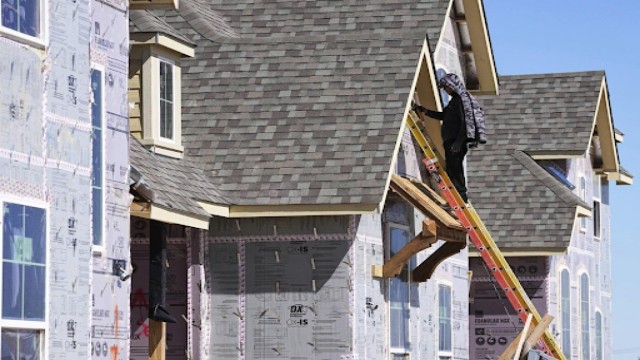
A new report suggests that first-time homebuyers in Canada could save up to $240 on their mortgage payments if Ottawa proceeds with its proposal to eliminate sales tax on newly built homes. (AP Photo/Tony Gutierrez)
A fresh housing proposal from Canada’s Liberal government might make homeownership more affordable for first-time buyers. A new report highlights that the recently announced Goods and Services Tax (GST) relief on newly built homes could cut monthly mortgage payments by up to $240.
The federal government introduced the measure on June 5, aiming to support first-time buyers by removing the GST from homes costing up to $1 million. This could translate into savings of up to $50,000 on the overall cost of a home — a major relief in high-priced cities like Toronto and Vancouver. However, the benefit reduces for homes priced between $1 million and $1.5 million, eventually phasing out beyond that range.
According to a report by Desjardins Economics, the new GST break has the potential to ease upfront costs and ongoing mortgage expenses for eligible buyers. For instance, a new home priced at $1 million — taxes included — could mean savings of $240 per month on mortgage payments. It could also result in a slightly smaller down payment.
Some developers currently charge GST upfront instead of including it in the mortgage. In such cases, removing the tax can reduce closing costs significantly and make homes more accessible.
Kari Norman, an economist at Desjardins and the author of the report, said this move could especially benefit buyers in cities where housing costs are well over the national average. It builds on the old New Housing Rebate, which has a lower price cap and is not exclusive to first-time buyers.
Norman also estimated that about 85% of new homes in Canada fall within the eligible price range and would qualify for the full benefit. In Toronto, that number could reach 92%, while in Vancouver, only 75% of units would likely qualify due to higher home prices.
Desjardins suggested the government adjust the qualifying price limit in the future to keep pace with inflation and prevent affordability from slipping again.
The federal government projects this tax rebate could cost around $3.9 billion over five years. Meanwhile, the parliamentary budget officer estimates it might cost closer to $2 billion. This gap in forecasts may indicate that Ottawa expects a surge in new home sales and construction activity.
However, there's a risk that this policy could also drive up home prices in the short term, especially if supply doesn’t keep up with demand. The construction sector already faces issues like high building costs, regulatory delays, a shrinking workforce, and lingering uncertainty linked to trade tensions with the U.S.
Desjardins also warned that some developers might raise their prices in response to increased buyer interest, which could cancel out the intended affordability benefits.
Still, with condo markets softening in major cities like Toronto, this could be a strategic time to stimulate demand and give the housing market a lift.
The legislation, which includes both the GST rebate and a scheduled income tax cut set for July 1, is still awaiting Parliament’s approval. The rebate would apply to homes bought between May 27 and 2031. Eligible projects must begin construction before 2031 and wrap up by 2036.