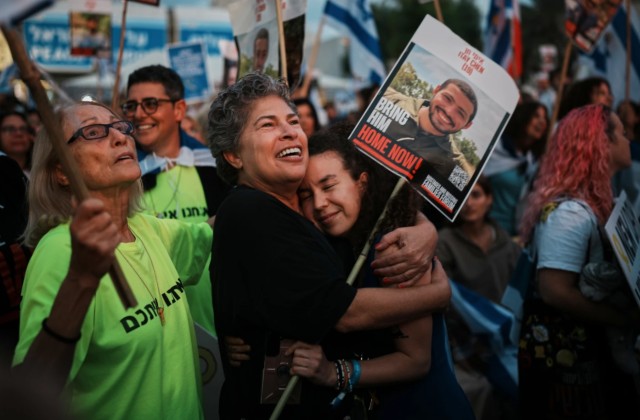
People gather prior to the release of Israeli hostages held in Gaza, at a plaza known as the hostages square in Tel Aviv, Israel, Monday, Oct. 13, 2025.
Hamas has released a list of more than 1,900 Palestinian prisoners expected to be freed as part of the Israel-Hamas ceasefire agreement. The announcement follows the group’s earlier disclosure of 20 living hostages to be released in exchange. The International Committee of the Red Cross (ICRC) will supervise the exchange process.
The ceasefire, which began at noon on Friday, marks the first major step toward ending the deadliest conflict ever fought between Israel and Hamas.
Hostages and Prisoners Exchange Begins
Israel is preparing to receive the final group of 20 living hostages from Gaza. Meanwhile, Palestinians await the return of hundreds of detainees held in Israeli prisons. The agreement is a key part of a U.S.-brokered truce aimed at reducing tensions after two years of devastating war.
U.S. President Donald Trump arrived in the region on Monday, accompanied by other world leaders, to discuss the ceasefire and postwar rebuilding efforts. Humanitarian aid convoys are also expected to enter Gaza, where hundreds of thousands remain displaced and face severe food shortages.
Hope and Relief Across Israel
Israeli citizens gathered in Tel Aviv’s Hostages Square overnight as the nation awaited the return of its captives. Television stations broadcast live coverage while families and supporters expressed hope after months of anguish.
“It’s very emotional,” said Meir Kaller, who joined hundreds of others waiting through the night.
The hostages’ return symbolizes closure for many Israelis who spent months campaigning for their freedom. Yellow pins and ribbons, once worn in solidarity, have now become symbols of resilience and hope.
Political Pressure Behind the Ceasefire
The agreement came after growing global pressure on Israeli Prime Minister Benjamin Netanyahu, who faced criticism for delaying negotiations. Demonstrators accused his administration of political maneuvering, while he blamed Hamas for stalling talks.
Ultimately, both sides agreed to the truce under international mediation. With hostages returning, many Israelis feel the urgency of war has eased — at least temporarily.
Oversight and Logistics of the Prisoner Release
Under the deal, the ICRC will manage the safe transfer of hostages to Israeli forces. They will then be taken to the Reim military base for reunions with their families.
Meanwhile, the release of Palestinian prisoners is expected soon but without a confirmed timeline. Those freed include 250 inmates serving life sentences for attacks on Israelis and another 1,700 detained from Gaza without charge.
Israel will release them either to the West Bank, Gaza, or exile. The country has also warned Palestinians against public celebrations following their release.
Trump Visits Israel and Egypt
President Trump met with Israeli leaders and families of the freed hostages, declaring confidently, “The war is over.” He later traveled to Egypt, where he co-chaired a regional peace summit alongside President Abdel Fattah el-Sissi.
Palestinian Authority leader Mahmoud Abbas also attended, despite Israel’s resistance to his participation in Gaza’s postwar governance. The U.S. plan, however, leaves room for Abbas’s government to return—if it undergoes major reforms.
Future of Gaza Remains Unclear
Despite the truce, uncertainty surrounds Gaza’s political and security future. Israel has withdrawn troops from many regions but still controls key southern and northern areas.
The U.S.-led plan proposes an international administration overseeing Palestinian technocrats and security forces trained by Egypt and Jordan. Around 200 U.S. troops are already in Israel to monitor the ceasefire.
However, Prime Minister Netanyahu continues to reject any talk of a Palestinian state, while Hamas refuses to disarm.
Humanitarian Crisis Deepens
The United Nations reports that Israel has permitted around 190,000 metric tons of aid to enter Gaza since the truce. The volume is expected to rise to 600 trucks daily under the agreement.
“Much of Gaza is a wasteland,” said U.N. humanitarian chief Tom Fletcher. The U.N. plans to restore healthcare, clear rubble, and deliver food and fuel over the next two months.
Two Years of War and Destruction
The conflict began on October 7, 2023, when Hamas militants launched a deadly attack on southern Israel, killing around 1,200 people and taking 250 hostages. Israel’s counteroffensive devastated Gaza, leaving over 67,000 Palestinians dead, according to Gaza’s Health Ministry.
Nearly 90% of Gaza’s two million residents have been displaced. The war also fueled regional tensions and international outrage, with Israel facing accusations of genocide, which it denies.
As both sides begin the delicate process of exchange and recovery, the ceasefire brings a fragile sense of hope — and a cautious look toward what peace might finally mean for the region.