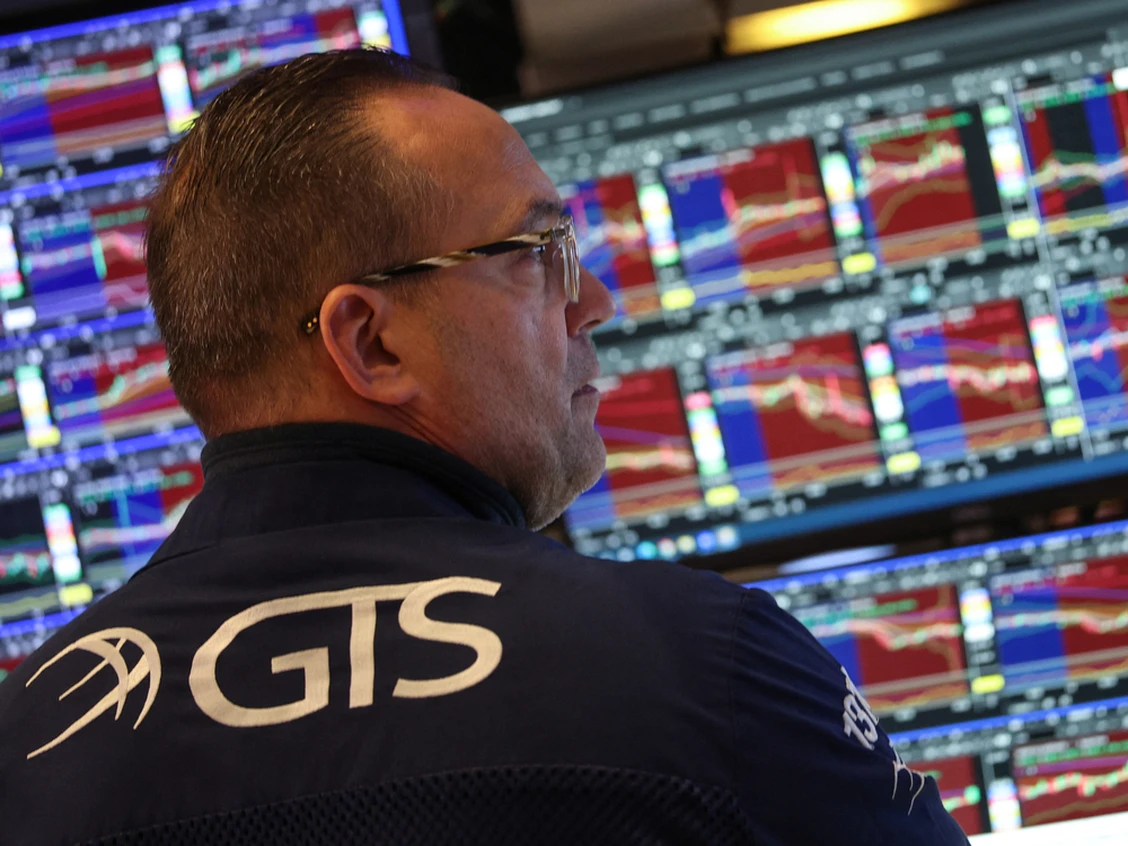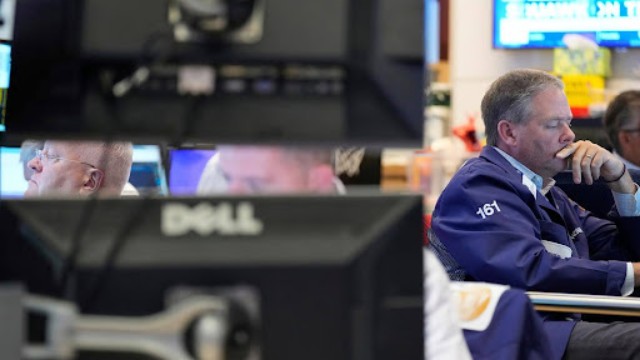
Traders are seen at work inside the New York Stock Exchange on Wednesday, July 30, 2025, in New York. (Photo: Seth Wenig/AP)
Wall Street wrapped up another volatile day on a sour note Thursday, as falling health care shares dragged the market lower. An early tech-fueled rally fizzled out by midday, leaving major indexes in the red.
The S&P 500 slipped 0.4%, recording its third straight drop. Still, the benchmark index managed a 2.2% gain for July and remains up 7.8% in 2025. Meanwhile, the Dow Jones Industrial Average shed 0.7%, and the Nasdaq inched down slightly, closing less than 0.1% lower.
Around 70% of the stocks listed in the S&P 500 ended the session lower. The health care sector bore the brunt of Thursday’s decline, following new pressure from the White House.
The Biden administration sent letters to major drug companies demanding lower prices and reforms within 60 days. In response, shares of Eli Lilly fell 2.6%, UnitedHealth dropped 6.2%, and Bristol-Myers Squibb sank 5.8%.
Despite the drag, a few big tech names helped cushion the blow. Meta Platforms soared 11.3% after surpassing expectations on both revenue and profit, fueled by its investments in artificial intelligence. Microsoft climbed 3.9% after posting strong earnings and offering a positive update on its cloud business, Azure, which plays a key role in its AI strategy.
These tech giants continue to be the main drivers of stock market gains this year, with investor confidence heavily tied to AI growth.
Elsewhere, design software firm Figma made a massive entrance into public markets. The company’s stock skyrocketed 250% above its IPO price of $33, a rare surge that grabbed attention on an otherwise bleak day for most sectors.
By the end of trading:
- The S&P 500 fell 23.51 points to close at 6,339.39
- The Dow dropped 330.30 points, settling at 44,130.98
- The Nasdaq slipped 7.23 points, ending at 21,122.45
Outside of tech, earnings season remains in full swing. CVS Health saw a slight dip of 0.3%, even after surpassing Q2 estimates and raising its full-year outlook.
On the economic front, the U.S. Commerce Department reported a 2.6% rise in prices in June year-over-year, based on the Fed’s preferred inflation gauge — the Personal Consumption Expenditures Index. That’s slightly above economist expectations and an increase from 2.4% in May.
The job market showed minor movement, with unemployment claims rising slightly. But eyes remain fixed on inflation and trade policy — both of which continue to inject uncertainty into markets.
Tariff tensions have reemerged, with President Trump threatening 25% tariffs on imports from countries that don’t make trade deals with the U.S. by Friday. A 90-day negotiation period with Mexico is now underway, while Trump also announced a 50% tariff on Brazil.
Meanwhile, the Federal Reserve has kept interest rates steady for the past five meetings as inflation inches above its 2% target. Though Trump has urged a rate cut, the Fed remains cautious, aiming to avoid further inflation spikes.
Traders have reduced their expectations of a rate cut at the Fed’s next meeting in September. Current odds sit at 39%, down from 75% a month ago.
Treasury yields remained flat, with the 10-year at 4.37% and the 2-year at 3.94%.