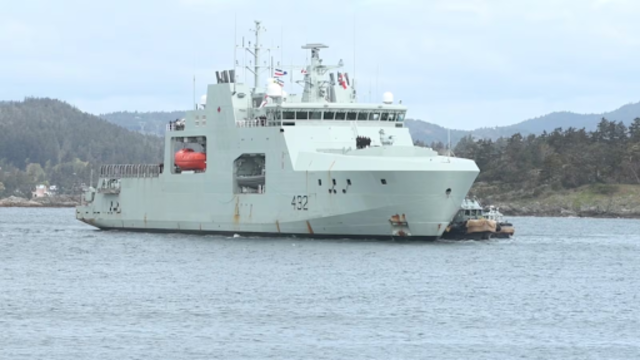
HMCS Max Bernays reached CFB Esquimalt in British Columbia on April 15, 2024. CTV
A last-minute mechanical problem delayed the Arctic deployment of one of Canada’s newest naval ships. HMCS Max Bernays, an Arctic and offshore patrol vessel, was scheduled to leave Canadian Forces Base Esquimalt on Monday. Engineers discovered an issue with the davit used to lift and launch one of the ship’s rescue lifeboats.
Acting Sub-Lt. Christopher Hofing confirmed repairs began immediately. “Our engineering teams are actively working to investigate and then repair the problem, and the ship is now expected to sail later this week,” Hofing said in a statement.
Uncertain Impact on Operations
Officials have not said whether the delay will affect the planned Arctic operations. Once repairs finish, the vessel will head north to work alongside a Halifax-class frigate and a naval supply ship. The mission aims to improve knowledge and monitoring of maritime activity in the western Arctic.
Royal Canadian Air Force patrol aircraft and U.S. Navy vessels will join the operations in the Bering Sea and Chukchi Sea.
Importance of Arctic Presence
National Defence Minister David McGuinty stressed the need for a strong presence in the region. “Asserting sovereignty in the Canadian Arctic is becoming ever more important as our adversaries increase their activity in the region,” he said. He also highlighted the value of joint operations with allied nations.
“These northern operations create excellent opportunities for strengthened collaboration with our allies and partners. Ensuring that Canada’s North is well defended is a critical component of maintaining a secure North American homeland.”
Background on HMCS Max Bernays
HMCS Max Bernays is the third Arctic patrol ship built for the Royal Canadian Navy. The fleet will eventually include six vessels to help Canada monitor its territorial waters and maintain sovereignty.
The ships were built to carry the CH-148 Cyclone, Canada’s primary maritime helicopter. However, design problems have so far prevented helicopters from operating on them.