People offer flowers for the victims near the site of the deadly Wednesday fire at Wang Fuk court.
A devastating Hong Kong fire that killed at least 151 people has triggered a deeper investigation into unsafe scaffolding netting and mounting public frustration. While donations and sympathy continue to pour in, government authorities are moving swiftly to suppress criticism and online dissent.
Unsafe Netting at the Center of the Hong Kong Fire Probe
Officials revealed Monday that several samples of the construction netting used around the burning buildings failed fire-safety standards. Investigators examined 20 samples from different floors and discovered that seven did not meet regulations.
Chief Secretary Eric Chan said the findings suggest contractors may have used substandard materials to cut costs. The initial tests showed the netting was compliant, but further checks exposed discrepancies across multiple towers.
How the Blaze Spread Across Seven Buildings
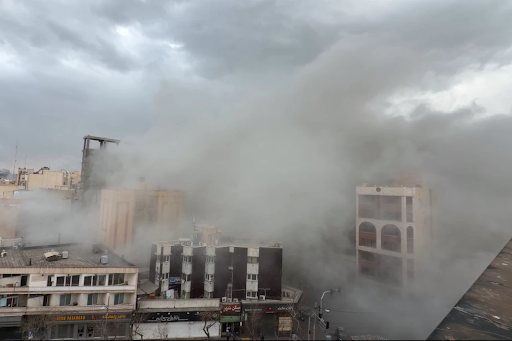
Wednesday’s inferno began on the lower-level netting covering bamboo scaffolding at Wang Fuk Court in Tai Po. Flames quickly ignited foam window panels, which burst outward as the glass shattered. Strong winds then pushed the fire from one high-rise to another.
Seven of the eight buildings under renovation were engulfed before firefighters finally brought the blaze under control on Friday.
The residential complex housed 4,600 people, many of whom fled with nothing as the fire tore through their homes.
A City in Mourning: Donations Surge to HK$900 Million
Public sympathy has surged. By Monday, donations for victims surpassed HK$900 million (US$115 million). Residents formed long queues to leave flowers, notes, and candles at a growing memorial site.
“I have a heavy heart,” said resident Loretta Loh, echoing the grief shared across Hong Kong.
Search Operations Continue as Hundreds Remain Unaccounted
Police said teams have searched five of the burned blocks so far, but two remain too unstable for full entry.
On Monday, rescuers recovered eight more bodies, including three previously detected but unreachable.
Dozens are still missing, though some may be among the 39 yet-unidentified bodies, said Tsang Shuk-yin of the Disaster Victim Identification Unit.
A final report will be released only after all seven damaged towers are fully searched.
Government Support and Emergency Housing
Authorities announced a combined relief fund supported by private donations and HK$300 million in government seed funding. The money will help survivors rebuild homes and access long-term support.
Cash subsidies are already being issued for urgent needs, including funeral expenses.
By Monday:
- 683 survivors had been moved to hotels and hostels.
- 1,144 residents relocated to transitional housing.
- Two emergency shelters remained open for others.
Residents Previously Warned About Faulty Netting
The Hong Kong Labor Department confirmed that residents had raised concerns about the unsafe netting for nearly a year.
Officials have conducted 16 inspections since July 2024 and repeatedly warned contractors to comply with fire standards. The most recent inspection occurred just one week before the fire.
Authorities have since arrested 14 people, including engineering consultants and company directors, on corruption and safety-related charges.
Anger Turns Political as Government Tightens Control
Public frustration is rising, with many questioning whether government officials should also be held accountable.
But Hong Kong’s political environment allows little space for open dissent. Since the National Security Law, authorities have routinely cracked down on criticism.
Security Secretary Chris Tang dismissed online claims about firefighter misconduct and alleged price gouging in temporary shelters, calling them “false rumors.”
“We will arrest these rumor mongers,” he warned.
Arrests Over Alleged Sedition Add Fuel to Tensions
The Office for Safeguarding National Security accused unnamed actors of exploiting the disaster to “create trouble.”
Over the weekend, police arrested:
- A man who helped launch an online petition demanding government accountability,
- A volunteer assisting victims in Tai Po,
- Another individual accused of spreading “seditious” content.
Political analysts say the response resembles mainland China's approach of preventing protests before they start.
Authorities insist they are acting against threats to national security, not silencing genuine grief.
A City Still Scarred by Past Crackdowns
Hong Kong’s space for dissent has shrunk dramatically since the 2019 mass protests. Public marches are now rare, and most opposition figures are barred from elections.
The devastating Hong Kong fire has reopened painful questions about safety, accountability, and the limits of public expression in the city — even as thousands grieve those lost in one of its deadliest disasters.