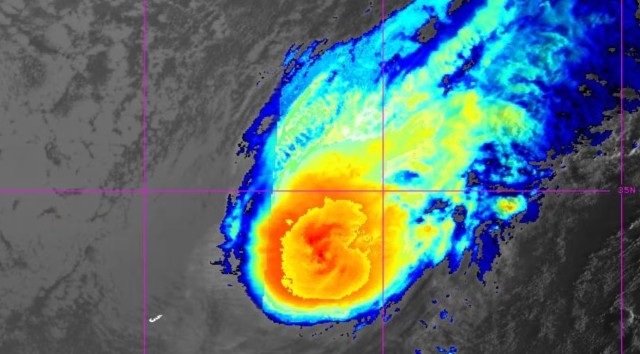
This satellite image from GOES-19, taken on Thursday, Oct. 2, 2025, shows Hurricane Imelda. (NOAA)
Bermuda started cleaning up Thursday after Hurricane Imelda passed by as a Category 2 storm. The hurricane knocked down trees, power lines, and transformers across the small British territory. Thankfully, no serious damage or injuries have been reported.
Premier David Burt said, “There has been no significant damage and, most importantly, no reported casualties.”
Precautions Taken Before the Storm
On Wednesday, Bermuda closed schools, offices, and its international airport. The government sent 100 soldiers to protect important sites, clear roads, and help in emergency shelters. Schools and government offices stayed closed Thursday as Imelda weakened and moved away into the Atlantic Ocean.
The airport reopened early Thursday afternoon.
Power Restored Quickly
At the storm’s peak, about 18,000 homes and businesses lost power. Crews worked quickly and restored electricity to most areas by Thursday.
Before reaching Bermuda, Imelda hit the northern Caribbean hard. It caused flooding in eastern Cuba, where two people died. In Haiti, one person went missing and two others were hurt.
Other Storms Affecting the Region
Earlier in the week, Hurricane Humberto passed west of Bermuda but broke apart by Wednesday. The storm’s leftovers were renamed Storm Amy by UK forecasters. Amy is expected to bring bad weather to parts of Ireland and the UK starting Friday.
Both Imelda and Amy have created dangerous waves and rip currents along beaches in the northern Caribbean, Bahamas, Bermuda, and the US East Coast. These conditions make swimming and beach activities very risky.
Season Still Active
Even though the Atlantic hurricane season is nearing its end, experts warn people to stay alert. Alex DaSilva, a lead hurricane expert, said, “We expect atmospheric conditions that could support tropical storms and hurricanes well into late October and November this year.”
Imelda was the fourth hurricane this season. The Atlantic hurricane season runs from June 1 to November 30.
What Forecasters Expected
The U.S. National Oceanic and Atmospheric Administration had predicted a busier-than-normal season. They expected 13 to 18 named storms. Of those, five to nine were forecast to become hurricanes. Among them, two to five were expected to be major hurricanes, with winds reaching 111 mph or more.